
Germany taz
BND files evaluated: The agent in Jerusalem
After decades, the BND opens secret files on the Eichmann trial. Klaus-Dietmar Henke now shows how prominent ex-Nazis were protected. more...
Deutsch (original) ·Auto-translated to English
Konrad Adenauer knew how many Nazis made careers in the Federal Republic. They were politicians, lawyers, teachers, architects and entrepreneurs.
But Chancellor Konrad Adenauer, although himself a victim of Nazi persecution, defended this more or less seamless continued employment of many Nazi perpetrators. If you don't have pure water, you don't throw away the dirty water, he said in 1952. The Federal Republic couldn't be rebuilt without it. Did Adenauer also mean his closest colleague and later head of the Chancellery, Hans Globke?
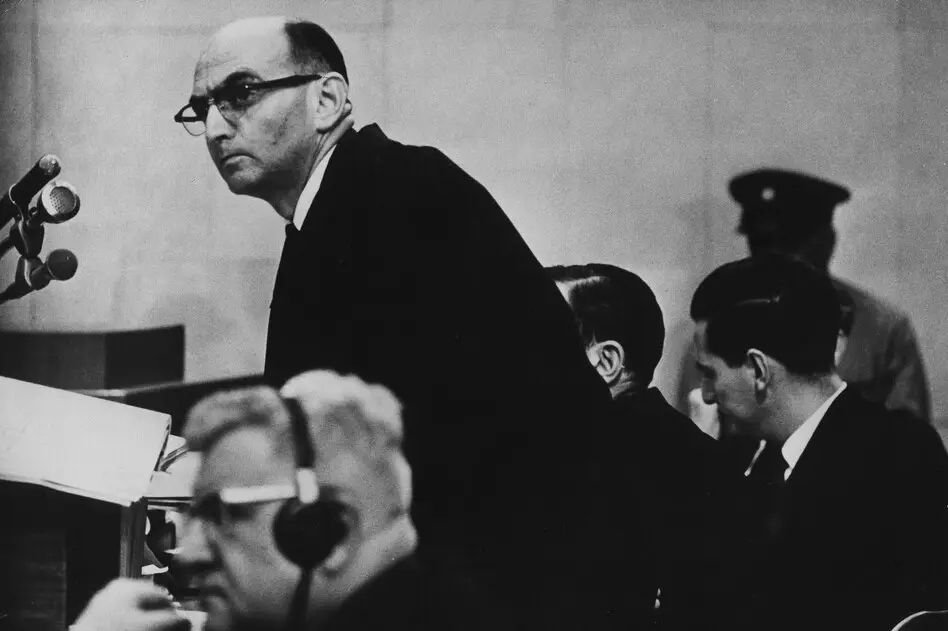
The historian Klaus-Dietmar Henke has published a comprehensive book about Hans Globke, the Federal Intelligence Service (BND) and their interference in the Eichmann trial in Jerusalem. And that's what it's all about.
Klaus-Dietmar Henke: "Defending the past. Adenauer's State Secretary Hans Globke, the BND and the Eichmann trial". Ch. Links Verlag, Berlin 2026, 672 pages, 50 euros
The Nazi past of Chancellor Globke is on record; allegations were repeatedly made against the lawyer even during his time in post-war Bonn. Globke had already worked in the Prussian Ministry of the Interior and then made a career under National Socialism. In 1936 his commentary on the “Nuremberg Laws” was published. This provided lawyers with a practical guide to the application of dehumanizing laws.
Globke was one of the pioneers of anti-Semitic legislation and its implementation under National Socialism. Some Germans were probably already aware of this in the 1960s, after all, GDR propaganda campaigns spread the allegations against Globke.
The groundbreaking insight from Henke's book is different: Hans Globke and the Federal Intelligence Service placed an agent in the Eichmann trial in Jerusalem in 1961. This agent's task: to keep the names of prominent West German ex-Nazis like Globke out of the proceedings. This emerges from BND files, which Henke was the first historian to examine unredacted 65 years later.
The Federal Republic and men like Globke had a lot to lose in 1961: they were just rehabilitating themselves on the international stage, had concluded a reparations agreement with Israel a few years earlier and had no use for negative reporting. In times of the economic miracle and a change in the image of a purified Germany, they urgently had to prevent debates about the Nazi involvement of West German elites.
For Globke and others, it was also about their jobs. Many had glossed over their biographies and had acquaintances issue them “clearance certificates” that glossed over their role in National Socialism. Globke had also planned a career as a resistance fighter, a dutiful civil servant who had prevented worse things from happening.
It quickly became clear to the German authorities and Globke how explosive the kidnapping of Eichmann to Israel and the resulting trial could become in this regard. A detailed public debate could have quickly exposed the biographical whitewashing. The BND therefore made numerous attempts to influence the proceedings and their perception in advance.
The most successful one was to come in January 1961: They infiltrated the young lawyer Dieter Wechtenbruch into the team of Eichmann's defense attorney Robert Servatius. As undercover agent “V-7461” and with the code name “Laqueur,” he supplied the BND with trial documents and information for the defense.
He presented a different public image in order to conceal his activity as an agent: During the proceedings he was critical of Adenauer and his parents' generation. He described Eichmann himself as a “sausage”. At the same time, he carried out his most important task: to ensure that the defense kept the focus on Eichmann and did not allow any debates about the perpetratorship of others.
When Eichmann's defense attorney Servatius considered requesting that Globke be examined as a witness, Wechtenbruch dissuaded him. In addition, the BND was informed about every step of the defense and its strategy by breaking the cornice and intervened actively if there was a danger to Globke. There were also meetings with the Israeli authorities, who had no interest in investigating Globke's past. After all, the Adenauer government had become an important ally and arms supplier.
In the book of the same name, Henke uses several examples to outline why the term “defense of the past” is much more appropriate for the West German post-war period than, for example, “repression”: In contrast to repression, defense is an active action.
This defense happened on several levels. On the one hand, there were large parts of society that long refused to accept any responsibility. On the other hand, institutions also prevented people from confronting their own crimes. The BND agent in Jerusalem and the influence on the Eichmann trial are a prime example of this. Klaus-Dietmar Henke shows how much West German society resisted the past.
This finding is particularly relevant in 2026. Because a critical examination of one's own history must be fought for. Otherwise, the interpretation of history by people like the AfD politician Alexander Gauland, for whom Hitler and the Nazis are “just a piece of bird shit in over 1,000 years of successful German history,” will prevail. Society's defense of the past is still in full swing.