
Labour · taz · · 3h
“Armed strike” in Colombia: Silence in Santa Marta – and the president comes with a weapon
Deutsch (original) · Auto-translated to English
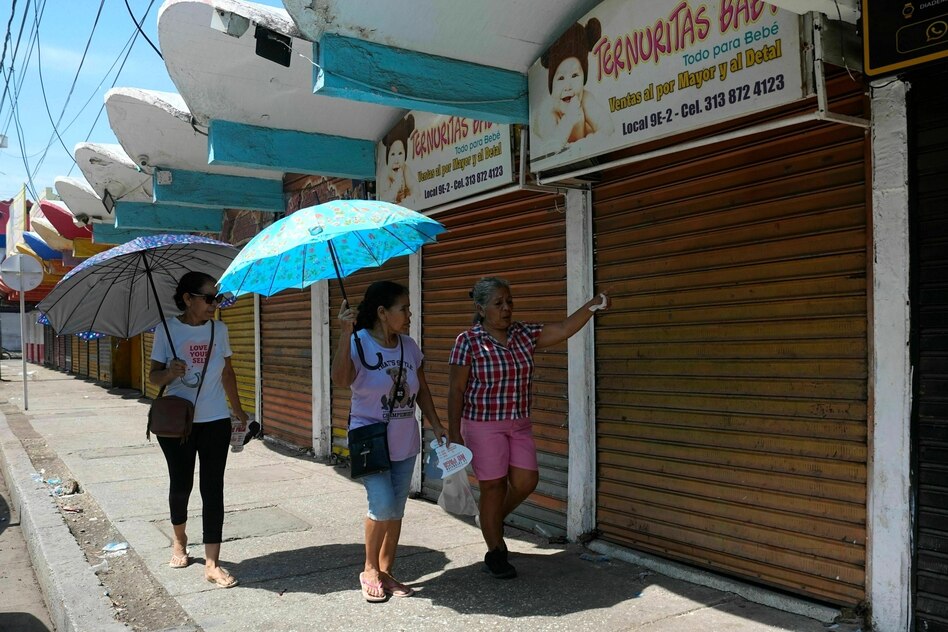
Santa Marta is a ghost town on Wednesday. The Caribbean beaches are deserted, as are the streets, and most shops are closed. If you don't have to leave the house, you stay at home. It is the second day of the “armed strike” called by the self-defense troops of the Autodefensas Conquistadoras de la Sierra Nevada (ACSN for short). Anyone who doesn't comply faces violence.
The strike is set to end on Friday at 7 a.m. local time, the group announced on An attack on the railway line of the Cerrejón coal company may also have been caused by the ACSN. In addition, there have been road closures on the main transport artery Troncal del Caribe since Monday.
The strike is a response by the paramilitaries to the death of José Luis Pérez Villanueva – alias “Cholo”. He died during a police operation in the Sierra Nevada on Monday and is the deputy to the paramilitary group's top leader. Among Monday's seven dead was Ricardo Andrés Rodríguez Martínez, an innocent 18-year-old farm worker, says his mother - and so does the ACSN. And not the son of Freddy Castillo Carrillo, alias “Pinocho,” as the security forces say.
On Tuesday, Santa Marta was almost dead. Videos show what witnesses report: Minors in particular ride through the city on motorcycles and check that the shops are adhering to the ban on opening - and shoot. According to what is known, there were no deaths or injuries. But buses and taxis burn, shops are demolished, universities are occupied. Public transport has completely stopped and schools remain closed.
The governor of the department of Magdalena, María Margarita Guerra, and the mayor of its capital, Santa Marta, downplayed the armed “strike.” The governor even denies its existence. Guerra called on businesses to reopen. It couldn't be that "two guys on a motorcycle" brought everything to a standstill. Mayor Carlos Pinedo imposed a 48-hour ban on riding on the back seat of a motorcycle. Because that's where the shooters and contract killers usually sit. He had previously banned motorcycles on the streets - an announcement that the ACSN did not adhere to.
The Sierra Nevada Self-Defense Forces are also known as “Los Pachenca.” An estimated 700 fighters are part of the paramilitary group with a wide network of militia members. The area in which they operate is huge. Like the eponymous Sierra Nevada de Santa Marta, its power extends over three provinces: Magdalena, La Guajira and Cesar. In the latter, they are also active in the south in the border region with Venezuela - where they are in conflict with the ELN guerrillas. On the Caribbean coast and in the mountains they fight primarily with the Gaitanist Self-Defense Forces of Colombia (AGC).
“Whoever controls the mountains also controls the plains,” says Lerber Dimas. The anthropologist has been researching the armed conflict in the Colombian Caribbean region and indigenous rural groups in the Sierra Nevada for years. He is part of the group for interdisciplinary peace and conflict research at the Latin American Institute of the FU Berlin and leads the Sierra Nevada Human Rights Defenders Platform. On Tuesday he was trapped for more than five hours.
The ACSN are part of the 60-year-old history of paramilitarism in the Caribbean - and are also active on Tiktok, Instagram, Facebook, X and Whatsapp - usually with real names and pictures. There they idealize a certain masculinity and an aesthetic of murder. They also announced the armed strike via social media.
They earn their money through drug trafficking - but above all through extortion of protection money. However, their most important source of income is tourism, where they collect horrendous protection money. You are active in a region that is home to some of the most famous international attractions: the Tayrona National Park, the hiking trek to the archaeological site of Ciudad Perdida, the beach town of Palomino and, in the mountains, the village of Minca, a popular place for dropouts. Without knowing it, the tourists are also good customers of the paramilitaries because they control the micro-drug trade, from which marijuana comes. In addition, there is a “war tax” of 10 percent when, for example, you sell property – and fines for everything that, in the opinion of the ACSN, affects coexistence.
Santa Marta is among the 50 most violent cities in the world. “Many here like paramilitarism because, in their opinion, it solves their problems, because it is very lenient in business matters,” says Lerber Dimas. All of this in an area where the state is weak - or in cahoots with criminals.
President Abelardo de la Espriella traveled to Santa Marta on Tuesday night and visited a neighborhood there, surrounded by soldiers, police and a security caravan. All residents barricaded themselves in their houses. Pictures show he had a gun on his hip. Never in Colombia's history has a democratically elected president been seen patrolling a city with a gun on his belt. For Colombians who voted for him, this is a sign of authority and commitment to public order. For others, this performance weakens institutions.
“The fatal message is that everyone, even the president, has to arm themselves,” says Lerber Dimas. The president acted like a “small paramilitary”. And this is what he says: “A bandit who does not submit, we kill him, as the law says,” says a video of the president from the Caribbean city of Barranquilla before he set off from there for Santa Marta.
Until Tuesday afternoon around 4 p.m., there were hardly any state security forces on the streets. Security expert and senator Ariel Avila attributes this to two things: fear and corruption in the police and military - and especially in politics. The approximately 1,000 police officers and soldiers that de la Espriella sent to Santa Marta for “militarization” only arrived later.
And on Wednesday, long after the president had left, most of the shops remained closed, despite all the appeals of the governor and the mayor. “Because anyone who doesn’t stick to the strike has to fear the consequences of the ACSN when the militarization is over in a few days and they are alone with the problem again,” says Dimas. So murder and fines.
Read the full story at the source
Source: taz