
Germany taz
Berlin's Left Party leader Kerstin Wolter: “We have to lead social struggles more aggressively”
Kerstin Wolter talks about the campaign against the left and how she has to react to it. She sees a real policy change in the exploratory paper. more...
Deutsch (original) ·Auto-translated to English
taz: Ms. Wolter, the campaign against the left has taken on crazy dimensions in the past few weeks. Which accusation did you find most blatant?
Kerstin Wolter: What I found worst was that Bundestag President Klöckner basically said that if the Left ruled in Berlin, then the credo “Never again” would become a farce. While the AfD in Saxony-Anhalt is setting out to appoint the Prime Minister, we on the Left are being equated with the politics of the National Socialists. I find that really crazy. This is a very special form of forgetting history. After all, we on the left are the ones who stand in the tradition of anti-fascism. The conservatives should finally accept that the left won the election.
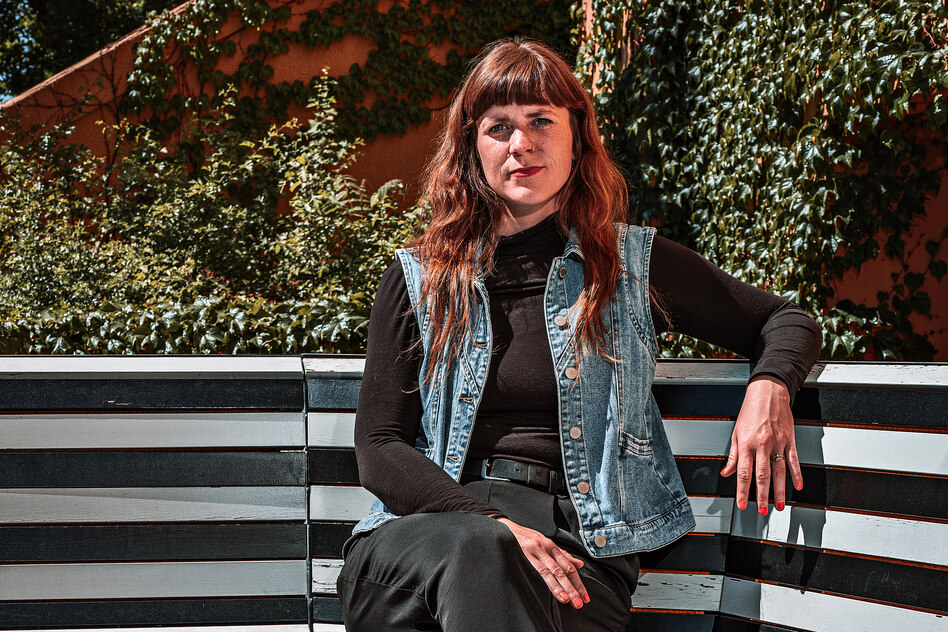
Kerstin Wolter is co-chair of the Berlin Left. She was born in Perleberg in Brandenburg in 1986, studied geography, environmental policy, agricultural and social sciences and was managing director of the student association Die Linke.SDS. In the election to the Berlin House of Representatives on September 20th, Wolter won the direct mandate in the Friedrichshain-Kreuzberg 3 constituency.
taz: How narrowly did the talks with the SPD and the Greens avoid failure?
Wolter: There are few examples in which explorations have been under such enormous pressure, neither in Berlin itself nor nationwide. Even Chancellor Friedrich Merz got involved.
taz: Given this background, how do you assess the results?
Wolter: I think the exploratory paper is a real policy change, for a very ambitious rent policy and also a paradigm shift in dealing with a difficult budget situation. It's about a policy that focuses on people's everyday problems.
taz: SPD leader Steffen Krach sold the results as a success for the SPD and also praised the compromise on the socialization of housing companies. Did the Left Party have to give in too much – and that as the election winner?
Wolter: It is a great success for the people of Berlin that we have agreed on socialization and other important measures to combat the rent crisis. And yes, we got 25.7 percent, but that's not 50 percent either. That means, of course, compromises are needed – between the parties, but also with urban society.
taz: Why should a socialization law only be passed in 2028?
Wolter: That’s a very ambitious schedule. We are breaking new ground, also legally. For the first time in the history of the Federal Republic, Article 15 of the Basic Law is to be applied - and of course in a legally secure manner.
taz: Isn't there a danger that the corporations will simply set up subsidiaries by then so that they are below the threshold, and in the end not a single apartment will be socialized?
Wolter: Don't worry, we can rule that out. We want to set a deadline by which the corporations' inventory is recorded so that a sale is ruled out.
taz: It was agreed to cap the compensation at 16 billion euros. That sounds like a lot. Where does this number come from?
Wolter: According to our calculations, if companies with 3,000 apartments or more were incorporated, up to 15 billion euros would have been necessary. Now there are fewer apartments. 16 billion is a maximum limit with which we can implement this well. If we end up below that, we won't be sad either.
taz: Which of the compromises was the most painful for you personally?
Wolter: One of them is that corporations are only socialized if they have more than 10,000 apartments. But that still means that we will take almost 160,000 apartments away from the market and speculation. We also need to sharpen the issue of social cohesion again. We want to introduce the right to vote for everyone who has lived here for five years, as well as a city ID. There also needs to be a lot more dialogue and understanding between the different communities here. And yes, of course this also applies to the entire Middle East issue.
taz: We note that in our conversation it is not “the media” that addresses the topic.
Wolter: Well, it concerns us too. Even though all surveys show, the most important issues for people are rents and social justice. Nevertheless, here in Berlin, more than in other cities, there is a debate about the Middle East question. We have a large Jewish community here, and also the largest Palestinian diaspora in Europe. I think this needs to be more prominent in the coalition negotiations. I would like to see more dialogue and that we find a common language.
taz: Do you understand that leftists in solidarity with Palestine are disappointed by the exploratory paper?
Wolter: Protecting Jewish life and the fight against anti-Semitism are just as important as the fight against racism. For me as a leftist, this goes together. I would like to say to the young movement that advocates for the rights of Palestinians: The Shoah was planned and started here in this city. That is why the protection of Jewish life and thus Israel's right to exist has a very special meaning for a leftist in Berlin. And that does not contradict condemning the genocide in Gaza.
taz: The parliamentary group executive committee will meet on Tuesday and will probably also talk about Vanessa Emde. If you have your way, what should happen to the MP?
Wolter: This is about the extent to which members of our group, who are part of a larger whole, stand on the feet of our program. I still remember how tough the debate surrounding Sahra Wagenknecht was, when MPs and officials from our party individualized their mandates almost like little ego groups. That didn't do our party any good. And I will not allow this to continue to happen.
taz: The headwind for the left could become even harsher. Conservatives want to deprive the capital of all possible funds and Federal Interior Minister Alexander Dobrindt wants to make expropriations more difficult with a so-called investment protection law. Does the Left Berlin have a plan for this?
Wolter: I don't see that everything that's being thrown out there can be implemented. When it comes to financing the capital city, I can only warn the conservatives: This also supports state museums, including the Jewish Museum. I don't think cutting back is a good idea. But it is still important that we arm ourselves against these attacks. I think that the left needs to lead the social struggles that exist more aggressively than was perhaps the case in the last few weeks.
taz: The impression was that Elif Eralp had largely been on a dive since the election.
Wolter: Well, we rejected these attacks, including Elif Eralp at the state party conference. But I understand that the impression was created. The exploratory talks were conducted by a few people. When we now go into coalition negotiations, we as the Left are planning a lot of formats for our members. The party will play an important role.
taz: Some in the party don't feel completely taken by this sentence from the exploratory paper: "We are strengthening the police and the Office for the Protection of the Constitution in their mission to protect Jewish life in Berlin." What does that mean: set different priorities with the same capacities - or upgrade?
Wolter: What this means is that if there are currently only two police officers in front of Jewish institutions, and there should be three in the future, it will not fail because of us. Above all, we want to strengthen our collaboration with social workers in the sense of prevention. Because, and this is what many security experts say: More police does not necessarily lead to more protection and security.
Wolter: It's about redistributing staff to these tasks. We have agreed to maintain the number of police personnel. We also want to ensure that the police better guarantee the right to assembly instead of restricting it. And we want to strengthen parliamentary control of the Office for the Protection of the Constitution.
taz: If security is so important to you, how about the Left appoint the Interior Senator? So far you have been happy to leave that to the SPD.
Wolter: We can imagine a lot, but we will decide on personnel at the end of coalition talks.