
Germany · taz · · 58m
Berlin Marathon 2026: “Better than biting your fingernails”
Deutsch (original) · Auto-translated to English
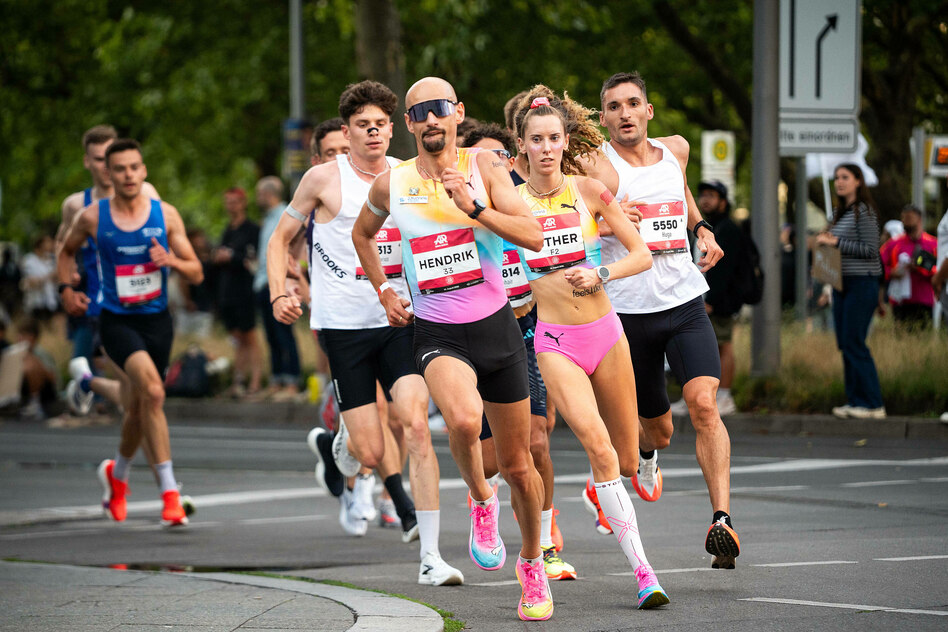
taz: Esther Pfeiffer, you are considered one of the favorites and the most promising German in the Berlin Marathon. Do you see yourself that way too?
Esther Pfeiffer: This year and last year I was able to improve significantly over the 10 kilometers and in the half marathon. Die Zeiten der aktuellen deutschen Marathon-Rekordhalterin habe ich auf diesen Strecken schon unterboten. I believe that if you are a professional athlete, your career goal should definitely be to get the German marathon record, and I will start the hunt on Sunday.
Esther, 28, and Hendrik Pfeiffer, 33, are a running couple from Düsseldorf. She became German marathon champion in 2023 and ran at the Olympics in 2021.
taz: You lost your engagement ring during your last marathon. What happened?
Esther Pfeiffer: I received the ring from Hendrik three days before the race and I was really happy. But it didn't sit perfectly on my finger and I thought I wouldn't lose it if I put a chain around it. During the winner's interview, I put out a call for people to look for it along the route. A runner had actually given it to a spectator. He contacted the organizer and I got him back.
taz: You are now married.
Esther Pfeiffer: Exactly. And the ring fits better now.
taz: You are actually a specialist for shorter routes.
Esther Pfeiffer: It was always clear to me that I wanted to do the marathon distance. Every athlete has the dream of taking part in the Olympic Games, and the half marathon is not an Olympic event. Accordingly, I now have to change the distance.
taz: Hendrik Pfeiffer, you have already been an Olympic runner. But on Sunday you'll be at the start as Esther's pacesetter. How does pacemaking work?
Hendrik Pfeiffer: You have to communicate a lot. Especially to point out aid stations or obstacles such as unevenness in the ground - especially when Esther is walking behind me in the crowd and she simply doesn't see them. But the biggest challenge for me is hitting the target time exactly. At the beginning, when you first have to get used to the pace, it makes a difference whether you run two or three seconds per kilometer faster or slower. This all feels very, very similar to me. And then the third important point, in addition to encouraging people, which at some point is simply part of making sure that the group works well together and that women like Esther don't get lost because they are physically more delicate, especially in the curves.
taz: Is it difficult for you not to run on your own?
Hendrik Pfeiffer: No, everything we achieve, regardless of who we are, is a success for us as a team. And then for me it's just a much nicer feeling to be able to actively help on the track than to be excited off the track and no longer be able to intervene and bite my fingernails off.
taz: Is the use of men as pacemakers for women controversial?
Hendrik Pfeiffer: As a male pacemaker, it's absolutely normal. If you look at the importance of the women-only world record in comparison to the classic world record, then the classic world record is the one that really counts. Accordingly, this is a completely normal procedure.
taz: Mr. Pfeiffer, you set a special world record in the half marathon in 2018 because you competed in a business suit. Why?
Hendrik Pfeiffer: I wanted to draw attention to the fact that paths must be created for aspiring professional athletes that enable the transition to professional life. At that time I was semi-professional and worked in a company, wearing a business suit twice a week. In everyday working life the suit, in training the running shoes. That was a nice picture for this situation.
taz: In Germany it is common for top athletes in Olympic sports to have to work normally in order to finance their passion.
Hendrik Pfeiffer: It's very, very hard not being able to make a living from sport. I am in the favorable situation of having a sports funding position in the Bundeswehr. But this is also checked every year. There is health insurance and retirement provision attached to it, which would then quickly disappear again. Really making a living from this sport and perhaps putting a little something away for later is something only one percent, if at all, manage to do.
taz: Esther Pfeiffer, a new German women's record would be a great success. Besides a good pacer, what else do you need to make this work?
Esther Pfeiffer: Of course, the most important thing is the training that you did beforehand. And that the weather conditions are good on race day. The route should also be as flat as possible. I think many of the prerequisites are met for it to be successful on Sunday.
Hendrik Pfeiffer: The start time is also important. They have now scheduled it 45 minutes earlier than last year. That's 45 extremely valuable minutes. On a day when it's 22 or 23 degrees, it makes a big difference that the marathon takes place at 3 or 4 degrees less.
taz: What else happens in the last days before the marathon?
Esther Pfeiffer: You do at least one more training session a day. This Wednesday was the last intensive one. So, it's not like you're completely resting and doing nothing. We also have to be there at a few events as part of the marathon. But everything is really reduced so that there is enough time to put your feet up every now and then. There's nothing left on Saturdays so that you can go into the race on Sunday completely rested.
Read the full story at the source
Source: taz