
Germany · taz · · 3h
Reporting on the Left Party: No problems, keep it up
Deutsch (original) · Auto-translated to English
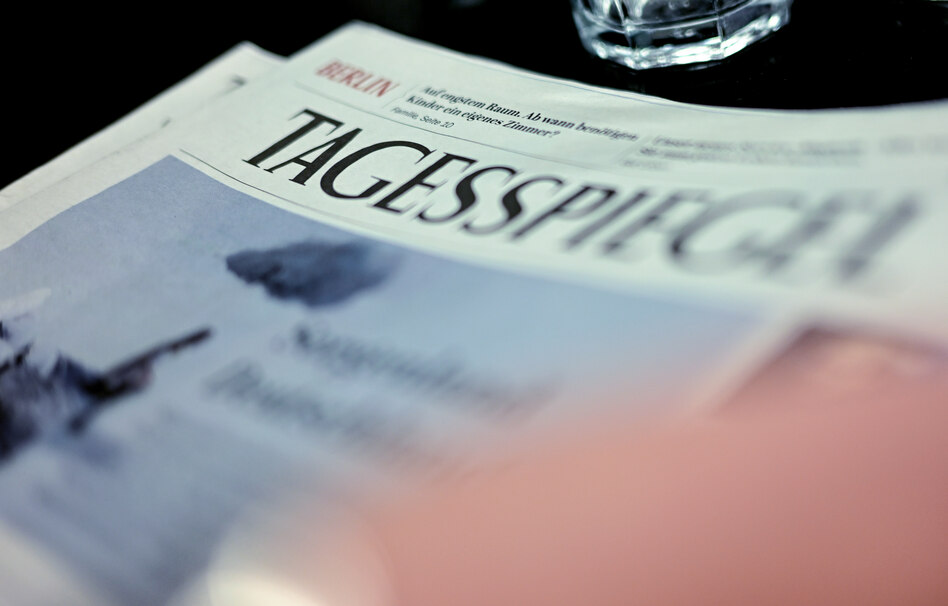
It was a remarkable edition of the Tagesspiegel’s “High Noon” talk, a live podcast from the newspaper that took place on Thursday. A self-reflection on the reporting on the Left's election victory in Berlin was announced. An invitation said that they had received “a lot of letters and comments from readers,” and there was also an “almost daily” discussion within the editorial team about whether the left was being judged too harshly. That made people sit up and take notice: a newspaper that publicly reflects on its own practice - that doesn't happen often.
But what the editor-in-chief Christian Tretbar, the deputy editor-in-chief Anke Myrrhe and the head of the state political office, Christian Latz, then delivered had little to do with a self-critical, controversial discussion: They discussed points of criticism for an hour, only to then reinforce each other that there was nothing, absolutely nothing, in them. People took turns saying that they “absolutely agree” with this and “completely agree” with that one – that quickly became boring.
There is a lot to reflect on. In the last few days, there has been an increasing number of requests to speak, including in the Tagesspiegel, not only from left-leaning Jews who feel that they have been exploited by the debate about anti-Semitism on the left. And often not because they don't see any problems with the left. But among other things because of the fear that the majority of society will treat anti-Semitism as an exclusively left-wing problem instead of also looking at itself. Or that a political project that aims to socialize real estate companies should be prevented with reference to anti-Semitism.
And yet no one in the group wanted to see anything problematic in, for example, deputy editor-in-chief Myrrhe's statement that left-wing voters had apparently thought: "What do we care about hatred of Jews? After all, we're looking for an apartment." That might have been “very pointed and harsh,” Myrrhe admitted – but only to be interrupted by Tretbar, who said it wasn’t “factually wrong.” As a result, Myrrhe equated the accusation of exaggeration with the talk of the “lying press”.
So there is no sign of backtracking – on the contrary. Tretbar speculated that the Left had “strategically allowed anti-Semitism to run its course in order to increase the share of the vote.” Referring to Bundestag member Ferat Koçak's chats with organized crime figures, Latz said that they had "sold themselves to these people". Without a factual basis, Myrrhe speculated whether Koçak could have passed on information from the Bundestag's Interior Committee to clans. It was repeatedly pointed out that “the Holocaust was planned and organized from Berlin,” which came with a special responsibility – which implied that the Left Party was questioning these teachings.
Everyone agreed that there could be no question of a campaign. After all, such a thing is “a controlled action with a goal”. However, the Tagesspiegel does not pursue political goals. Because, according to Myrrhe, it's all about creating “a transparent image”. They are “neither there to overthrow nor to support politicians,” she said – thereby formulating an exemplary journalistic ideal of a non-ideological way of working.
However, a final part of the conversation about the left's hostility to business did reveal one or two opinions. “Berlin lives from international investors,” said Tretbar, but the Left only wants to “expropriate” and is putting the brakes on “everywhere where economic growth occurs.”
As an example, he cited, among other things, the planned luxury villa tax “for everyone who perhaps has a larger house in Grunewald”. It is also a “certain restriction of diversity” that the left is primarily concerned with affordable housing provided by the state when it comes to housing construction. “There are people who want to afford something else and can do it,” he complained.
Perhaps the problem with political opinions in journalism is this: only when you know that you have them can you reflect sensibly on whether your own reporting still corresponds to the facts. The Tagesspiegel missed this opportunity. Too bad.
Read the full story at the source
Source: taz