
Germany · taz · · 2h
Construction work at Deutsche Bahn: Complete closure between Berlin and Hanover is imminent
Deutsch (original) · Auto-translated to English
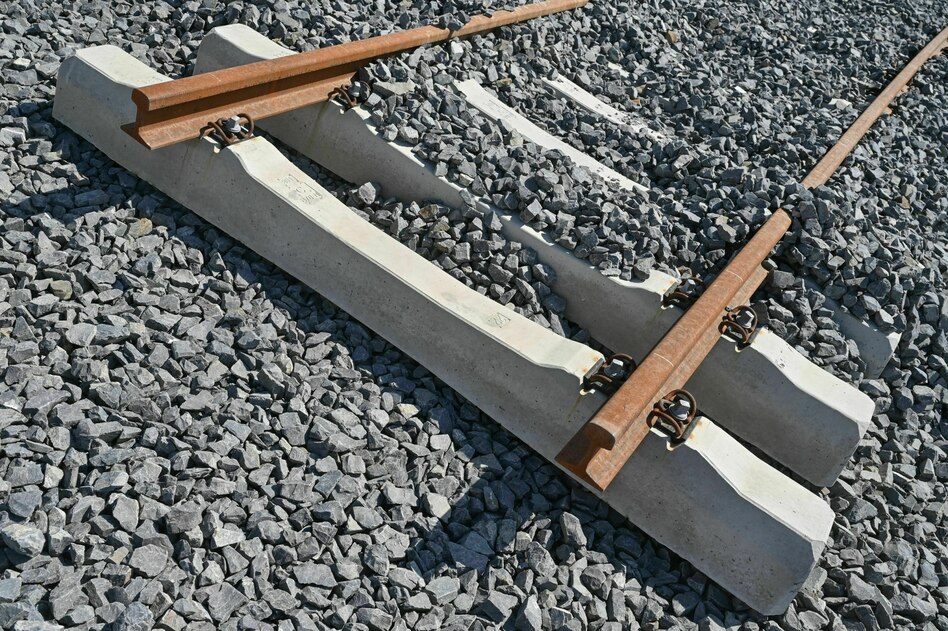
The important railway line between Berlin and Hanover will be completely renovated from Friday - and will be completely closed for more than a year. Long-distance trains are expected to run via Magdeburg and Braunschweig instead of Wolfsburg until the end of 2027; the journey takes around 80 minutes longer than usual. Trains between Amsterdam and Berlin run via Hamburg and are therefore 70 minutes longer on the journey. In regional transport, several rail lines are at least temporarily canceled, and the DB wants to provide replacement services with purple-red buses.
On Tuesday, DB managers in Schönhausen in Saxony-Anhalt, a stop on the route, showed what work was to be done: First, the roadway on the high-speed line east and west of Stendal would be renewed. A total of 214 switches, a good 350 kilometers of tracks and 27 stations are to be renovated and other technical repairs are to be carried out. “We are really tackling the Hanover-Berlin route,” said DB program manager Wolfgang Weinhold confidently.
The project had recently caused trouble. Originally, long-distance trains were supposed to be able to run on the Lehrter main line from December, parallel to the closed high-speed line. However, the electrification of the main line is taking longer than planned, so the diversion via Magdeburg will remain in place for longer. On Tuesday, the DB tried to encourage people: it had “prepared the diversion route for the additional load through an extensive maintenance program”.
Almost three weeks ago, DB boss Evelyn Palla also said that the group only wanted to carry out two general renovations per year in the future - significantly fewer than originally promised. Federal Transport Minister Steffen Bilger (CDU) is currently in the process of reviewing the current concept - and there are rumors in the industry that he also wants to reduce the number of renovations.
Because the German rail network had become dilapidated and prone to disruption after decades of underfunding, former Transport Minister Volker Wissing and the DB Group initiated the so-called general renovations in rail corridors - i.e. particularly highly utilized sections of the route.
The idea: A route should be completely closed for a while and then all necessary repairs to various parts of the infrastructure, such as stops, switches, overhead lines and tracks, should be carried out in one go.
The corridor renovations were intended to be an alternative to construction work during ongoing operations, which, although only small, meant repeated restrictions on train traffic. And they should effectively make Deutsche Bahn, whose dilapidated infrastructure regularly ruins its punctuality statistics, more reliable.
Whether this can be achieved is, however, controversial after the previous renovations: the projects were delayed, exceeded the budget or not all planned repair measures could be implemented. (nbn)
According to the Association of Freight Railways, it is not just the number of general renovations that is crucial. Rather, “better coordination of all construction measures needs to be created,” the association announced on Tuesday – for example with reliable diversion concepts.
Read the full story at the source
Source: taz