
Germany · taz · · 3h
Disused wind turbines: Surfing on rotor blades
Deutsch (original) · Auto-translated to English
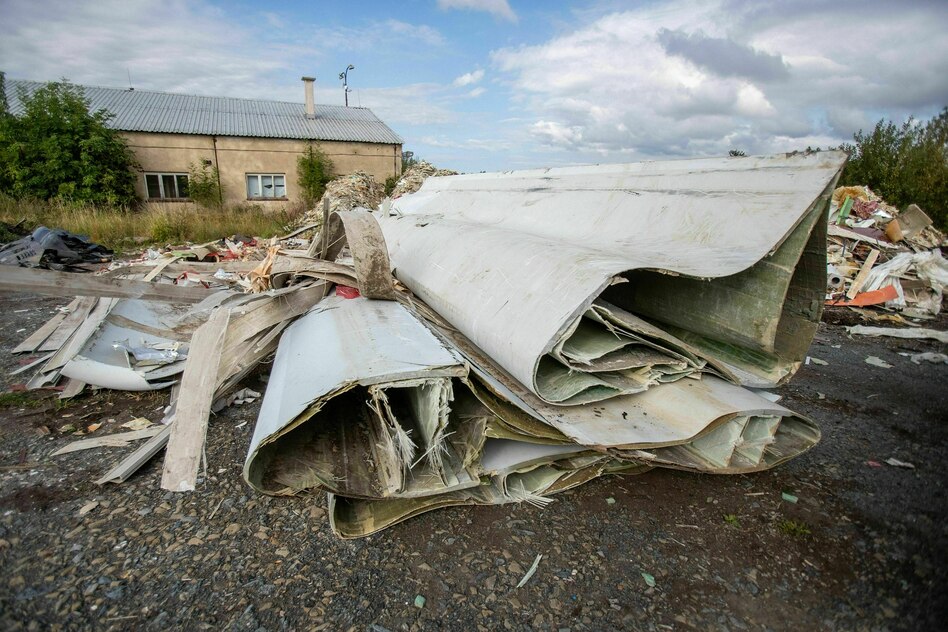
The case heard before the Weiden regional court in the Upper Palatinate is an extreme: shredded rotor blades from wind turbines were smuggled across the border into the Czech Republic with other polluted waste from Germany. There the perpetrators dumped it in the town of Jiříkov. The trail led to a Bavarian recycling entrepreneur. The public prosecutor's office accuses him of illegally disposing of 700 tons of scrap - mainly old wind turbines and electric car batteries - in this way. The next hearing will take place this Thursday.
Other companies are also faced with the question of what should happen to wind turbines that break down or are replaced with newer, more powerful systems. Many now for the first time.
The expansion of renewable energies began in the 1990s. However, after a good 20 to 30 years, the blades of a wind turbine can no longer reliably withstand the wind and the material fatigues. According to the wind and sun specialist agency, of the 29,200 wind turbines on the mainland nationwide, a third are already older than 20 years. The facilities on the high seas are also added. Numerous wind turbines will have to be scrapped in the next few years.
They are disconnected from the network, then dismantled. As with new buildings, operators also need permission for demolition. You must register the construction site and observe the rules from the Building Code and the Recycling Management Act.
Recycling often begins on site. The concrete from the tower and foundation is crushed and used, for example, in the construction of roads. The steel from the reinforced concrete is sorted out and recycled as scrap. Metals such as copper from power cables are also in demand. According to the Federal Environment Agency, a good 90 percent of materials can be easily recycled.
It's different with the rest. It's still particularly complicated with the dismantled and sawn rotor blades. The problem: The wind blades have to be light, flexible and elastic, but durable because they are exposed to wind, rain and UV radiation. That's why they contain technically complex materials: glass or carbon fibers embedded in synthetic resins. Wood, foam and metals are also processed.
All of this can hardly be separated from each other and makes recycling complex and expensive. So can the rotor blades simply be buried? That would be illegal in Germany; dumping them in landfills has been banned in this country since 2005. So far they have mostly been crushed and used, for example, in the cement industry - as fuel or as a substitute for sand.
“But this is just a bridging technology,” says Fabian Rechsteiner. He researches new innovative solutions at the Fraunhofer Institute for Foundry, Composite and Processing Technology in Augsburg. In times of wars, political tensions and export tariffs, recycling is not only interesting for environmental reasons, he says: “Recycling secures raw materials in Germany, which is poor in raw materials.”
Such a rotor blade is a “real monster”, has a length of up to 80 meters for systems on the mainland, even up to 120 meters on the high seas and weighs 10 to 30 tons. A lot can be done with the material.
Since this spring, you can sit on a bench made of recycled rotor blades at the train station in Diepholz, Lower Saxony. Behind this is a research project at the local Private University of Economics and Technology (PHWT). The Dresden company Wings for Living manufactured the street furniture. The company specializes in designing and manufacturing outdoor furniture from old wind turbine blades.
But the people of Dresden are not the only ones who give a rotor blade a second life. The Norwegian start-up Evi is building skis from old wind turbine blades from the Vattenfall Group in collaboration with a recycling company. The Spanish group Acciona, which is also active in the renewable energy business, has had surfboards formed from decommissioned systems. In Aalborg, Denmark, cyclists park at the harbor in a shelter made from disused wind turbine blades. In Lund, Sweden, drivers drive into a parking garage with a facade built from it. And in Rotterdam, the Netherlands, children climb and slide on scaffolding and through tubes that were once rotor blades in a playground.
But that will not be the solution for all rotor blades, explains recycling researcher Rechsteiner. He and his colleagues have now developed a process with which the carbon or glass fibers from disused rotor blades can be processed into a high-quality nonwoven material. A patent is pending. If everything goes well, the process should be used on a large scale. These technical textiles can then be used in the automotive, aviation or sports industries.
Is there an alternative? Rechsteiner says: “If rotor blades were designed differently from the start, i.e. if materials were used that were easier to recycle, it would be easier.” We are already working on that. Such new rotor blades have been rotating in a wind farm off Heligoland since 2023. Siemens Gamesa installed it there for the first time. They are made of a synthetic resin that is said to be easier to detach from the glass and carbon fibers. But that probably doesn't prevent criminal activity.
It is unclear what the verdict against the recycling dealer from Upper Palatinate will be, which is expected in mid or late October. The Bavarian authorities have now had the illegally dumped waste recovered.
Read the full story at the source
Source: taz