
Germany taz
Arsenal retrospective Ninjin Club in Berlin: Writing another Japanese film history
The series “Just revolutionary – The Films of the Ninjin Club” showed a female coordinate system of Japanese cinema from 1954 to 1966. more...
Deutsch (original) ·Auto-translated to English
Japan in the 1950s, shortly before the end of the US occupation: Nishida moves into a run-down motel in a settlement near an American military base with a car full of books. The young waitress Shizuko soon feels drawn to the student. Nishida is one of the few people in the settlement who doesn't do any kind of shady business. But Shizuko's beauty also attracts the attention of Joe, one of the leaders of a group of petty criminals who also works as a henchman for a real estate speculator.
Joe rapes Shizuko and arranges for Nishida and the rest of the motel's permanent guests to be thrown out of their rooms to make room for a hotel that the speculator wants to build. In his 1957 film “Kuroi kawa” (“Black River”), Masaki Kobayashi creates a dark microcosm of post-war Japanese society.
In it he shows reactionaries in their thinly disguised authoritarianism, which they live out to the fullest in the young democracy. At the same time, the entire country submits to the money and military superiority of the USA. “Kuroi kawa” pays particular attention to the role of women in this system of power structures.
“Black River” is the first film officially produced by the Japanese production company Ninjin Club. Throughout October, the Arsenal presented a film series, curated by one of the two cinema directors, Milena Gregor, which was the first comprehensive tribute to the Japanese production company in Germany. “Just revolutionary – The Ninjin Club Films” presented all ten existing productions and supplemented them with ten films that were created in the context of or in correspondence with the Ninjin Club films. As Milena Gregor put it in the opening speech, the curators wanted to outline a “coordinate system” of Japanese cinema from 1954 to 1966, when the company existed.
Ninjin Club was founded by the actresses Keiko Kishi, Yoshiko Kuga and Ineko Arima to break out of the rigid corset of the Japanese studio system, which tied actors exclusively to individual production companies; and on the other hand, to promote more complex and realistic female roles.
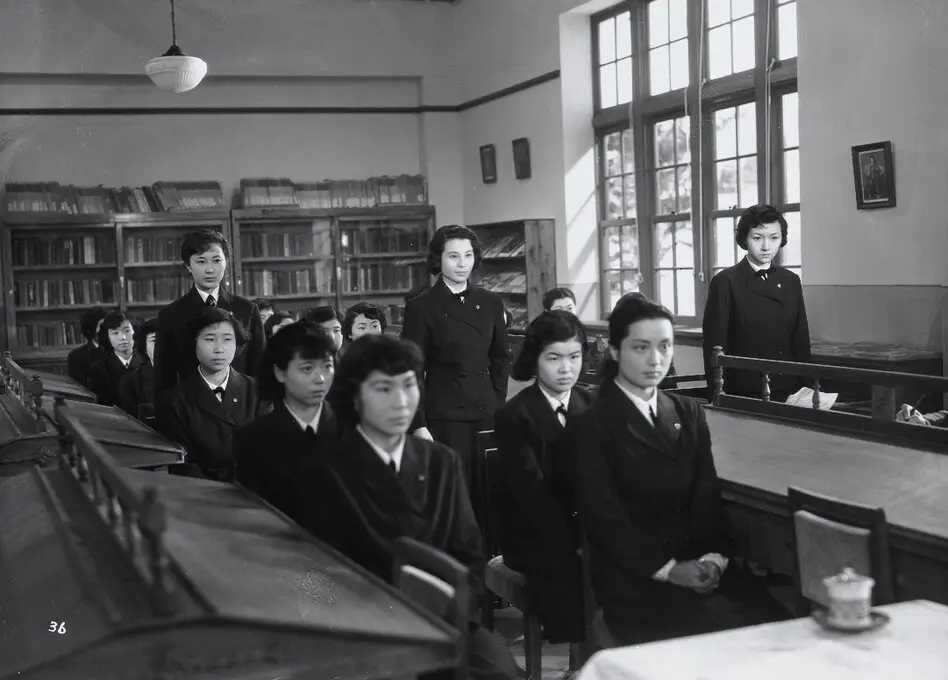
One of the initial sparks for this was Keisuke Kinoshita's “Onna no sono” (“The Garden of Women”) from 1954, in which all three founders took part. The film portrays an elite school for young women from better backgrounds and the young women's rebellion against the rules of decency that are imposed on them.
The series opened with another film by Kobayashi. In “Karami-ai” (“The Inheritance”), influences from European modernism are obvious. The urban opening scenes, in which a woman strolls past luxurious shop windows in the center of a big city, evoke similar moments in Alfred Hitchcock's films. The woman is approached by a much older man who, full of conceited superiority, asks her for coffee.
As they sit down, you can hear the woman's voice on the soundtrack saying how annoying it is that she has to deal with this unpleasant guy. The scene leads to a flashback that lasts almost the entire film before returning to the present of the opening scene near the end. The woman turns out to be the former secretary of a wealthy businessman, who cleverly secured his assets shortly before his death amidst the unfair moves of his relatives and business partners.
The Arsenal film series was nothing less than a radical rewriting of Japanese cinema history in the first decades of the post-war period. Like so much other cinematography, Japanese cinema was dominated by directors. However, as the series showed, some key works emerged as a result of female, politically progressive film production.
Not only are the female roles more complex in the Ninjin Club films, but the history of Japanese fascism and its imperial ambitions is also never far away in the films.