
Politics · taz · · 2h
Argentina under Milei: Weakened opposition in the “March of Rage”
Deutsch (original) · Auto-translated to English
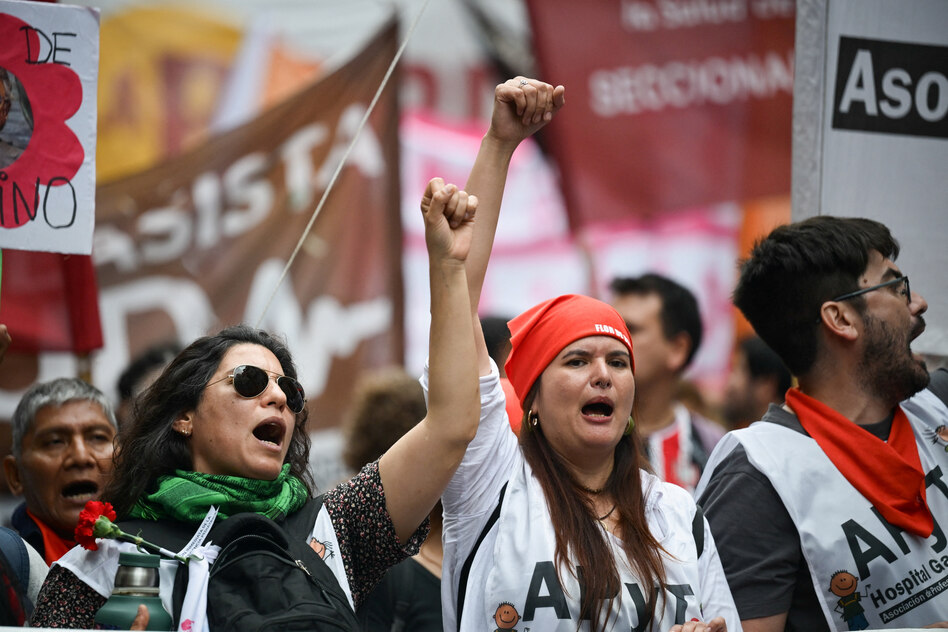
In Argentina, tens of thousands of people protested on Saturday against the policies of President Javier Milei's government. They took to the streets in numerous cities in a “march of anger”. In the capital Buenos Aires there were around 30,000.
“Today we gather in Plaza de Mayo and mobilize across the country to express an anger that is growing from below,” the statement said. Left-wing parties and organizations, trade union and grassroots groups, student and pensioner organizations called for the event.
Although the organizers were satisfied with the number of participants, there were still gaps even in the Plaza de Mayo. Parties and organizations of the Peronist opposition stayed away from the march, as did the large trade unions that are part of the umbrella organization CGT. In return, the CGT got its fat: “Their pact [with the government] allowed Milei to advance with his chainsaw,” and made the controversial labor law reform possible, the statement said.
Many of the now disappointed Milei voters also obviously stayed at home. “So far there is no convincing political offer for them,” says Martín D’Alessandro, political scientist and lecturer at the University of Buenos Aires. It is quite possible that a new force will emerge from parts of the larger and smaller parties in the coming months.
“This mobilization must be the starting point to unite all struggles and to prepare a real general strike to thwart Milei's economic plan,” explained Myriam Bregman, who played a key role in organizing the march. The former presidential candidate of the Trotskyist Workers' Party for Socialism has achieved the highest popularity ratings in the polls for months.
"Bregman is benefiting from the crisis in traditional politics. Milei himself is a product of this crisis," says political scientist D'Alessandro. Even voters who previously would never have voted for a Trotskyist left are now willing to support Bregman in protest. However, he does not see a realistic chance of taking over government for them.
Nevertheless: “Milei’s re-election next year is likely, but by no means certain,” says D’Alessandro. The government is doing worse in the polls than it was a year ago. The decisive factor will be whether economic stabilization also reaches people's everyday lives. It is no longer enough to point to lower inflation and ever new export successes. “People want to feel that they are doing better,” says D’Alessandro.
But many are getting further and further away from that. More and more people can no longer finance everyday life with their income and are taking out loans. Many people are already no longer able to service their debts. Almost 6 million people are affected, around 12.5 percent of the population.
The situation on the labor market is also getting worse. According to the statistics office Indec, the unemployment rate rose only slightly from 7.6 to 7.9 percent in the second quarter of 2026. However, it is now higher than it has been in five years. At the same time, informal employment increased from 43.2 to 45.1 percent, reaching the highest value in the statistics, which have only been kept since 2023.
The proportion of formally employed people, however, fell from 56.8 to 54.9 percent. A total of 10.2 million people now work informally, while 12.5 million are employed in the formal sector. The decline in registered jobs and the shift towards precarious employment relationships will continue in Milei's third year in office.
At the end of the march, the song “La Marcha de la Bronca” (The March of Wrath) was sung. The song, composed in 1970, is one of the most famous protest songs in Argentine rock history. It's about frustration, injustice and anger at those in power. His text is highly topical and gave the demonstration on Saturday its name.
Read the full story at the source
Source: taz