
Politics taz
Labor disputes in Bangladesh: Textile workers demand a living minimum wage
Textile workers in Bangladesh have been demonstrating for higher wages since the weekend. The government is struggling to calm the situation. more...
Deutsch (original) ·Auto-translated to English
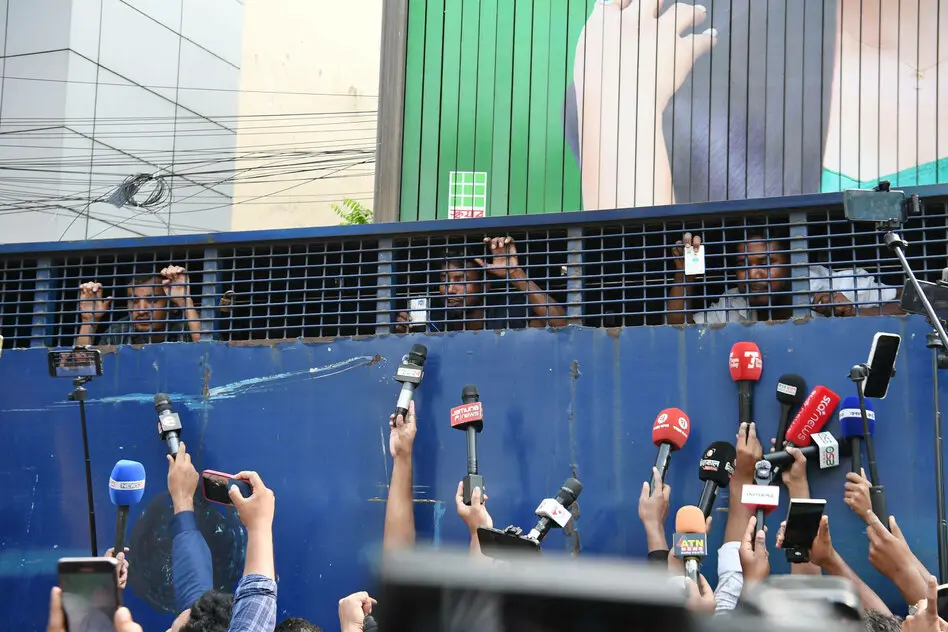
Bangladesh's textile workers are fighting for a wage that is enough to live on. Since the weekend they have been taking to the streets in the capital Dhaka and the surrounding industrial centers. A 21-year-old died in clashes with police in Gazipur. In some places, workers blocked roads.
"When we eat, we have nothing to wear. And when we buy clothes, we have nothing left to eat," says Roktim. The 32-year-old has been working in the textile industry for 17 years. Given the increased prices, he can barely make ends meet with his monthly earnings. He is particularly concerned about the future of his children.
“We adults can go hungry, but we cannot send our children to bed hungry and deny them an education.” Roktim fears for his job because of his involvement in the protests. But without public pressure nothing will change, he says. They demand higher wages and social benefits, such as subsidies for medical care.
The protest is testing the new government of Prime Minister Tarique Rahman of the conservative BNP. Rahman called an emergency meeting and directed authorities to safeguard the interests of workers and maintain production. As of November 1, 529 factories had temporarily closed, according to the Garment Manufacturers and Exporters Association (BGMEA).
The unrest is worrying factory operators. Vidiya Amrit Khan from BGMEA shows understanding for the wage demands. But she also points to the wage scale: When starting out, seamstresses earned more than the monthly minimum wage of 12,500 taka (90 euros) for “machine helpers”. She emphasizes that the government has shortened the interval between wage revisions to three years and set up a commission that will discuss an adjustment this year. That didn't end the protests for the time being. The workers continue to demand a minimum wage of 30,000 taka (around 215 euros).
From the manufacturer's perspective, such a significant wage increase is not easy to finance. The profit margins are only 2 to 3 percent. Khan is therefore also calling for changes at the international level. “It’s high time for brands to raise their purchasing prices,” she demands. The costs would have to be borne jointly. Inflation, energy costs and more expensive transport are also putting pressure on the industry. The tariff dispute with the USA is also having an impact: According to Khan, US buyers have implemented price reductions and markdowns on orders that had already been agreed and further slowed order placement.
Long-time trade unionist Nazma Akter supports the peaceful industrial action. The employees need a wage that they can use to support their families, she says in a video message. At the same time, she distances herself from violence. It cannot be in the interests of workers to destroy their own industry. “If the machines stand still, we don’t get paid.” Akter warns that interest-driven groups could exploit the protests politically. She defends the right to peaceful protest.
In addition, Bangladesh was supposed to be promoted from the group of least developed countries (LDCs) this month. The United Nations postponed the step for three years at short notice. But after a transition period, duty-free access to the EU market will expire while India has negotiated a free trade agreement with the EU.
Despite many crises, the industry has proven resilient. Between 2011 and 2025, clothing exports almost doubled. Last year, Bangladesh exported clothing worth $38.82 billion. The industry remains the engine of the economy and is estimated to employ more than 2 million women.
Wages were last raised in 2023 under the autocratic government of Sheikh Hasina. Even back then, the increase was not enough for many workers and led to protests.