
Germany · taz · · 54m
Anti-Semitism in pop: feel-good beats against Jews
Deutsch (original) · Auto-translated to English
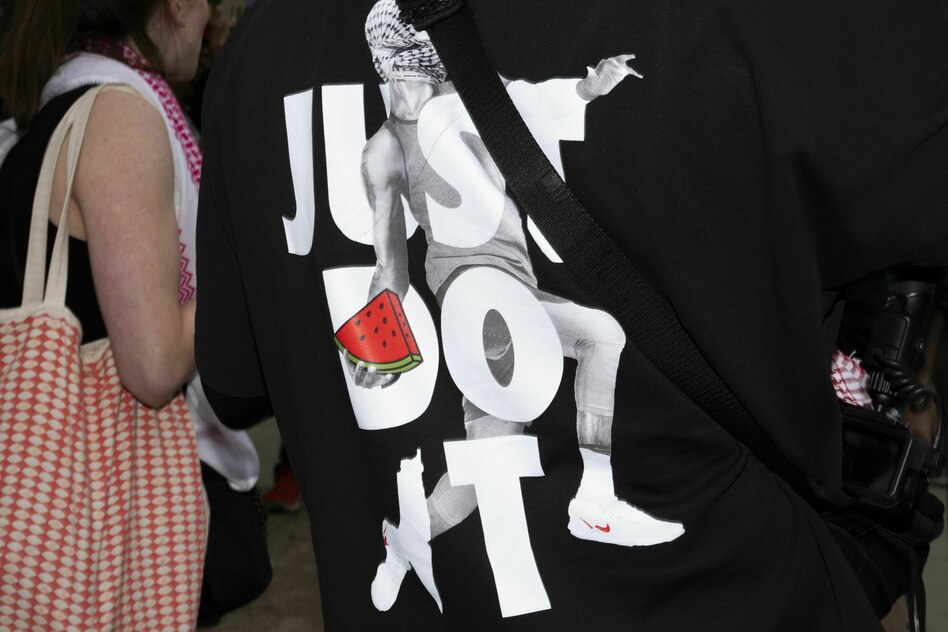
Once again a rejection, once again a refusal to hold a debate that is urgently needed: about how to deal with the radicalization that has taken place in parts of the pop world in connection with anti-Semitism. This time it's about uninviting the American rapper Macklemore as Ed Sheeran's support act. An event that joins a multitude of incidents in pop culture since October 7, 2023.
When we think of pop, some people think of progressiveness and emancipation. Since the Hamas massacre in Israel, however, one has to ask oneself whether the progressive claim is not increasingly tipping over into authoritarian positioning pressure, which is primarily carried out on social media and on stages. The BDS boycott campaign is no longer needed; threats, agitation and concert cancellations against Jewish and Israeli artists and bands or those who cannot be forced to make a one-sided statement are now coming from organizers, artists and the audience themselves.
The Israeli conductor Lahav Shani, for example, was disinvited from the Flanders Festival last year because he did not distance himself clearly enough from the Israeli government. Both sides? The reference to the suffering on both sides, on the one hand the catastrophic conditions in the Gaza Strip, on the other hand the victims and hostages of October 7th - that hardly seems possible anymore.
Maria Kanitz and Lukas Geck published the book “Loud Hate. Anti-Semitism as a Pop Cultural Event” in 2025 by Verbrecher Verlag.
At the last three editions of the Eurovision Song Contest, the sometimes anti-Semitic protests increased: the singers who were sent into the race for the Israeli radio station Kan were threatened and booed, Eden Golan even received death threats in 2024 and was only able to leave her hotel room for rehearsals under tightened security measures. Israel was repeatedly accused of manipulating the voting system until this was changed in December 2025. Five countries, including Spain and the Netherlands, have withdrawn their participation until further notice.
There are musicians who, under the guise of Palestine solidarity, repeatedly attract attention through anti-Semitic narratives or trivialization of terrorism. Music greats like the former Pink Floyd bassist Roger Waters, who likes to release a pig balloon with a Star of David at his concerts and asks the crowd to destroy this balloon; After October 7, he questioned the extent of the massacre and claimed that Israel itself was behind the attack.
In November 2024, a member of the Irish band Kneecap held a flag of the terrorist organization Hezbollah at a concert. The loudspeakers rang out: “Free Palestine, up Hamas, up Hezbollah.” Then there was Bob Vylan, who chanted “Death to the IDF” on one of the biggest festival stages, or Massive Attack, who also brought Marwan Barghouti’s son on stage. Marwan Barghouti is one of the leaders of the second intifada and is serving a life sentence.
So now Macklemore's expulsion from Ed Sheeran's stadium tour. In Germany, the debate further heated up tempers because around the same time Alphaville was disinvited from the “Glücksfühle” festival. The organizer feared political statements, Alphaville regularly positions itself clearly against the AfD. This gives the impression that politics is increasingly being banned from stages and that artists' freedom of expression is being restricted.
The fact that Macklemore's aim was not to cancel his commitment to Palestine, but rather to criticize the almost radical way in which the rapper has been doing it for three years now, seems secondary. Macklemore is not an isolated case in the increasingly authoritarian pop world. However, he is one of those whose commitment to freedom and justice is linked, among other things, to anti-Semitic conspiracy narratives and Shoar-relative statements.
The singer, real name Ben Haggerty, became known in the early 2010s with the party hits “Thrift Shop” and “Can’t Hold Us”. However, he was never just a feel-good rapper. With his song “Same Love,” for example, he gave many queer people a voice and visibility. In 2013, he was appointed UN ambassador for a campaign promoting equality and LQBTIQA+ rights.
A year later he came under fire for taking the stage at a concert dressed as an anti-Semitic caricature. Shortly afterwards, he apologized and said that he stood up for all people, regardless of their religion, skin color or sexuality. Over the years things became quieter for him and he was unable to repeat the successes of “Thrift Shop” or “Can’t Hold Us”.
This changed after the Hamas massacre in Israel. Video recordings of anti-Israel demonstrations in which he took part or was on stage are circulating. He now also expressed himself at his concerts, such as in June 2024 in Mönchengladbach. Shortly before, in May 2024, he released his first protest song "Hind's Hall", which he dedicated to the partly anti-Semitic campus protests at Columbia University, followed by "Hind's Hall 2" in September of the same year and finally "Fucked up" in February 2025.
If you take a closer look at the stage performances and the three songs, it is doubtful that the aim is to draw attention to the suffering of the Palestinian civilian population or to criticize the Israeli government. Not only is his commitment very one-sided and incomplete - the many dead in the Hamas massacre, including the hostages, are ignored, as is the terrorist organization as co-responsible for the situation - but he also repeatedly uses anti-Semitic narratives.
In “Hind’s Hall 2” you can hear the slogan “From the river to the sea”, and in the music video for “Fucked up” he places a picture of a child from Gaza next to a child from the Warsaw Ghetto in a historically questionable way. Imagery that suggests Israel would use Nazi methods.
For Macklemore, the Palestinian liberation struggle seems to represent the question of humanity's fate. In Gladbach he said in a statement that standing up against Israel and for Palestine was the only lesson from the Shoah. And: Humanity will only be free when Palestine is free. One can ask oneself whether this is not giving a small population group a fairly large amount of responsibility.
In the song “Fucked up” it becomes even clearer. Conspiracy narratives that tell us that a small elite rules the world. “How do you think Israel gets money for the best tanks? […] And they controllin’ your feed, the information that they censor.” The media is controlled and information is censored, a pattern of interpretation that is reminiscent of classic “lying press” fantasies. In the same song, in connection with the wildfires in California, he claims that water supplies are being controlled. The accompanying clip also shows who: the Resnicks, a Jewish couple.
Again the conspiracy story of a world controlled by Jews. In addition to the narrative about who controls everything, the video shows a dollar bill with a Star of David on it (based on the Israeli flag). Here, too, Macklemore uses the age-old anti-Semitic narrative that Jews are greedy for money and rule the world in the background.
Singers like Macklemore, but also artists who uncritically show solidarity with him, such as the singer Zara Larsson or the musician Finneas, brother of Billie Eilish, contribute to the rapid spread and impact of shortened, dehistoricized and undercomplex narratives through songs, statements and open letters on social networks. In this way, anti-Semitic whispers are normalized and sometimes even translated into catchy, feel-good beats.
Musicians use their reach and their stages to spread their political messages - often combined with the claim to advocate for universal human rights. At the same time, Jewish people are sometimes ignored, excluded or even explicitly attacked as part of this supposedly universal community.
This is shown by the handling of the statement by the Jewish singer P!nk, who commented on Macklemore and his radicalization. This was interpreted as propaganda for her. In the end, it can be said that Jewish and Israeli artists are coming under massive pressure, while the spreading of anti-Semitic narratives does not harm their careers. So Macklemore can go on his newly announced “Free Palestine” tour without any worries.
Read the full story at the source
Source: taz