
Germany taz
Antipsychiatry runaway house in Berlin: In the house of possibilities
In the Berlin Weglaufhaus Villa Stöckle, people have been finding refuge from the psychiatric system and homelessness since 1996. A visit. more...
Deutsch (original) ·Auto-translated to English
Eight Heinz ketchup bottles stand on the kitchen shelf at Villa Stöckle. There's a box full of chewing gum in the hallway. The food donations come from the food bank. While there is too much in the way of ketchup and chewing gum, there is too little in the way of basic foods. “Unfortunately, there are almost never things that the residents could spread on their bread,” says Jascha Schneider, who works as a social worker at Villa Stöckle and actually has a different name.
You only meet a few people on the way from Frohnau S-Bahn station in the north of Berlin to the Villa Stöckle Weglaufhaus. An older gentleman goes for a walk with his dog. Two painters are painting the facade of a house on a scaffold. The runaway house is a place for people who have fallen out of the system. People who need to get somewhere because they ran away from somewhere else: from a violent relationship, from themselves or from the psychiatric ward. People who would otherwise be homeless. Most residents stay for a few months. The runaway house is financed by homeless assistance.
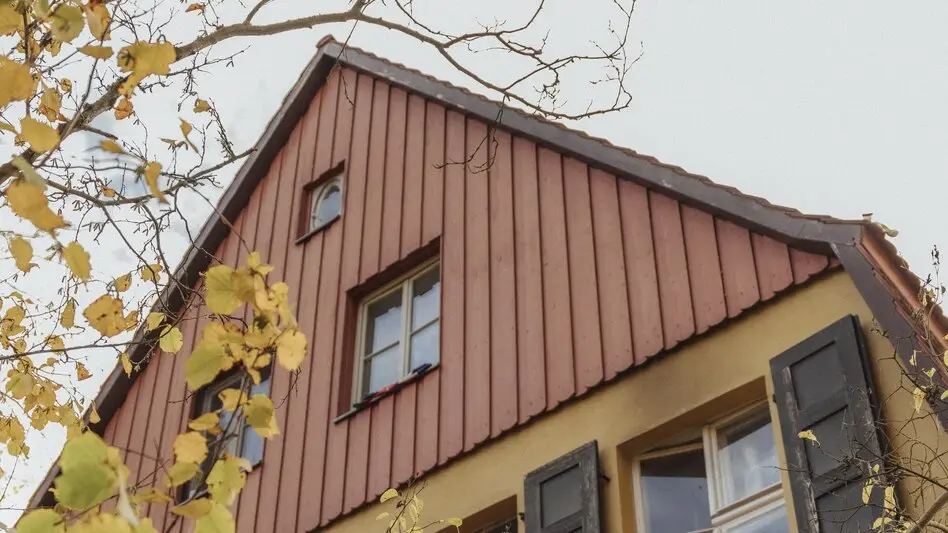
The sandy yellow house is set back behind a few trees. People have been able to find refuge here since 1996. The button on the old brass bell is worn and brightly polished from being pressed many times. The ringing of the bell breaks the quiet morning. The house belongs to a private individual who makes it available free of charge. The staff here say that her son died in the psychiatric ward. The runaway house was her answer to that. 13 people in psychological crises can find help here. At eye level, without coercion and without diagnoses. Antipsychiatric help.
The anti-psychiatry movement was particularly strong in the 1970s and campaigned against the authoritarian conditions in what were then called “mental asylums”. Their spokesmen spoke out against forced restraints, the compulsory use of medication or treatment with electric shocks. In some cases they also rejected diagnoses as such.
These days the anti-psychiatry movement has become much quieter. There are few places in Germany that still carry the basic idea and offer a counter-offer to psychiatry. In addition to Villa Stöckle, there are also known Bochum crisis rooms, which have been a contact point since 1994.
“There are many people here who have had blatant experiences of violence and discrimination,” says social worker Schneider. You also have to first build trust with the employees at the Weglaufhaus. “But I’m always surprised at how much trust people give us right from the first contact,” he says.
However, there is little trust and great reluctance towards the press. There has already been too much negative reporting about mentally ill people. The Weglaufhaus also had negative experiences with the press, says Schneider. That's why no one sits on the colorfully thrown together furniture in the living room. Last year's Halloween decorations still hang somewhat lost on the ceiling.
The residents have retreated to their rooms on the first and second floors. Strangers are not allowed on the upper floors. Only one resident is typing on a computer in the corner.
Former resident Barbara Naumann, who also has a different name, is more willing to provide information. She had two stays in the runaway house and talks about her experiences on the phone. She came across Villa Stöckle on the internet. “I was looking for a place where I could find a way without medication,” says Naumann. At the time, she was taking neuroleptics, which are used to treat schizophrenia and psychoses. She suffers greatly from the side effects.
Discontinuing psychotropic medications is one of the cornerstones of the antipsychiatric movement. While medication used to be generally discontinued at Villa Stöckle, today the topic is dealt with more openly, says Schneider. So it is up to the residents themselves whether they want to take psychotropic medication or not. If you wish to stop taking the medication, you are advised not to do so too abruptly.
For her first stay in 2023, Barbara Naumann will reduce her medication. But things don't go as expected. “I actually got into my crazy state,” she says. This was a difficult situation for the employees, for the roommates and for herself.
When Naumann is in her psychosis, she is loud. She talks to herself for hours. She listens to music. Other people confuse them. “Sometimes I became verbally aggressive,” she says. The villa employees then had to mediate.
After nine months, she leaves Villa Stöckle of her own volition. Afterwards she was sent to a closed psychiatric hospital several times and had to take medication again. That's why she stopped taking her medication during her second stay in the runaway house. Naumann has been taking neuroleptics again for three years now. And is now suffering a lot from the side effects again.
“Psychotropic drugs must not be a permanent solution,” says Patrick Nieswand, Managing Director of the German Society for Social Psychiatry (DGSP). If you start psychotropic drugs, you also need a discontinuation perspective.
The DGSP is an independent professional association for staff who work in psychiatric hospitals and advocates for non-coercive psychiatric care. In contrast to antipsychiatry, the DGSP does not reject psychiatry as such, but rather advocates greater self-determination for those affected.
Barbara Naumann would like to stop taking the medication again and live out her psychoses. She also experiences this as pleasant and is fascinated by the world that opens up in psychosis. “I made friends with the crazy, with the madness,” she says. Even if she sometimes has to go through painful moments of fear and sadness during psychosis: “I have the strength to go through it and face it.” She sees psychoses as a kind of processing mechanism. She has already experienced once that a psychosis ended on its own after a while, even without taking medication. She wants to experience that again.
In order for something like this to be possible, you need a secluded place where it won't disturb others. That wouldn't be possible in the sheltered facility where she now lives. That's why she's currently in talks with a club that could support such a psychosis and take over shopping for Naumann during this time.
In an emergency, Barbara Naumann would like a clinic that knows about the experiment and can take her in in an emergency. But finding one is not easy. Many clinics are critical of discontinuing medication. “If you don’t want to take medication, the reason is always a lack of understanding of your illness,” says Naumann.
DGSP managing director Nieswand sees something paternalistic in the argument about the lack of insight into the illness. The social psychiatry that he represents wants to do better: “We always approach people with an open attitude in their current life situation,” says Nieswand. This ensures that those affected are given as much self-determination as possible in their treatment.
Self-determination was a crucial reason for Naumann to report to the Weglaufhaus. “I react very sensitively when I sense that the care system is patronizing,” she says. Things are different at Villa Stöckle. There you meet the conversation partners at eye level.
Some things are different here than in a psychiatric clinic, says social worker Schneider: "We don't wake people up. We don't tell people when and what they have to eat." There are exceptions for important appointments or if there is an explicit desire to establish a regular daily rhythm.
Villa Stöckle also deals with the issue of addiction in a self-determined manner. “We don’t problematize the consumption of illegal substances per se,” says Schneider. People should decide for themselves whether their consumption is a problem for them or not. “Depending on what is being consumed and how, we have a conversation about it,” he says. We then discuss together how safe consumption is and whether there is a desire to consume less or to stop. However, there is also a strict ban on consumption in the common areas of the Weglaufhaus. Even after consumption, you should not stay there out of consideration for the other residents.
Almost all residents have very little money, says Jascha Schneider. It sometimes happens that one of the employees gives a resident a tenner to pay for the medication. “Many people can’t even imagine what it’s like to need money for the smallest things,” says Schneider.
Anyone who has ended up homeless due to a mental health crisis and fallen out of the system finds it difficult to get back into it. “The threshold to get back into the system is extremely high,” says Schneider.
For example, without an ID card you cannot receive benefits, but without receiving benefits you cannot finance your ID card. A vicious circle. The ID card currently costs 46 euros in Germany. There are also the costs for the passport photo. Anyone who cannot invest this money will have a problem.
This text first appeared in wochentaz, our weekly newspaper from the left!
Every week, wochentaz is about the world as it is – and as it could be. A left-wing weekly newspaper with a voice, attitude and the special taz view of the world. New every Saturday at the kiosk and of course by subscription.
There is a list with the names of all current residents hanging in front of the office on the ground floor. Behind each are the desired pronouns with which the respective person would like to be addressed. For example she, he or they. Some have also decided against pronouns altogether. “None,” it says. Others are okay with all pronouns. The diversity is great.
There are often not enough offers in homeless assistance, especially for trans and non-binary people. They are particularly at risk of experiencing discrimination in other institutions.
The sun shines through the trees in the garden of Villa Stöckle. Everything is peaceful. It's a sunny autumn day, but grabbing a winter coat was the wrong decision. A clothes dryer turns quietly in the wind. You can sometimes see newts in the pond. “I wanted to work at a place whose concept I could stand behind,” says Jascha Schneider.
In October Villa Stöckle celebrated its 30th birthday. Psychiatrists were not welcome.