
Germany taz
Attacks on cooling systems: caught cold
The cyberattacks show how vulnerable our food supply is. And how much the protection of critical infrastructure is neglected. more...
Deutsch (original) ·Auto-translated to English
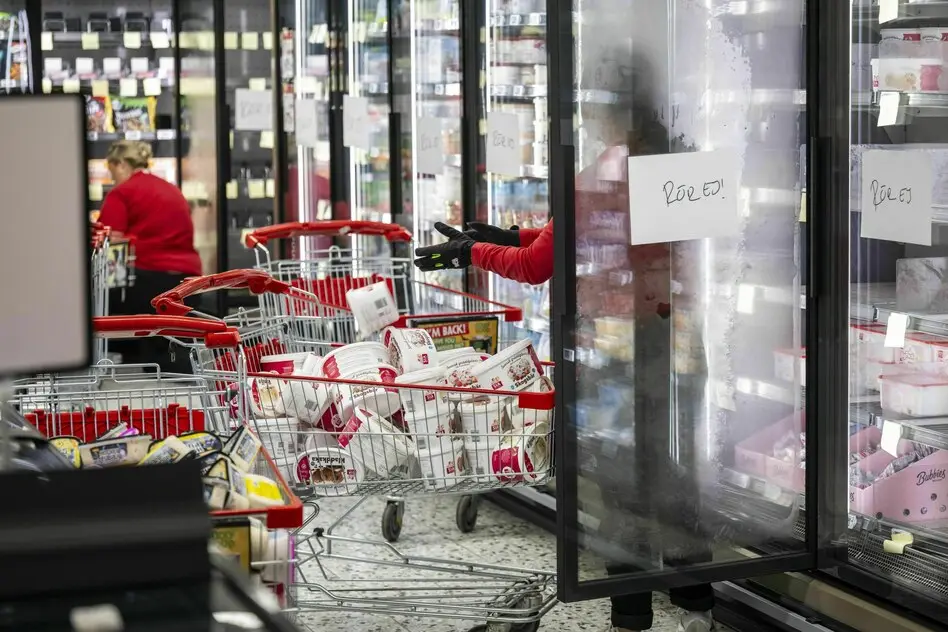
There are attacks that leave us astonished for a moment and then disappear from our personal perception. And there are attacks that cause helplessness and uncertainty. The perpetrators behind the cyber attacks on cooling systems in several supermarkets in Europe definitely achieved the latter.
Our food supply is vulnerable - and apparently with very simple means. In France, digital control systems of freezers and refrigerators in shops were manipulated remotely at the beginning of October. Now Sweden, Italy, Belgium, Estonia, Finland and Germany follow.
Instead of being cooled, the food was cooked to a soft 50 degrees. The food did not survive the heat attack and most of it had to be thrown away. The total damage caused is likely to be hundreds of thousands of euros.
The taz is an independent, left-wing and opinionated daily newspaper. We have been arguing in our comments, essays and debate texts since the taz was founded in 1979. We often cannot and do not want to agree on an opinion. That's why you'll find some completely opposing positions here - all part of the very broad left-wing spectrum of opinions.
The food supply and thus also the cold chains are part of the critical infrastructure that must be the focus of supermarket owners and companies. This is what the relevant laws prescribe. But even in highly digitalized times, in which terms such as hybrid warfare, acts of sabotage or cybercrime are part of the standard repertoire of possible dangers, securing such systems has apparently still not reached the top of companies' agendas.
Are there independent networks that separate supply circuits from each other? Are the passwords secure for accessing the digital systems and is there a “double bottom”, i.e. alternative cooling monitoring? Maybe even completely human, i.e. in the form of staff who check the temperatures from time to time? Not to mention contingency plans if a system fails.
In the current cases, both the political responses and the statements from companies are frightening, as naive and helpless as they come across. More effort is needed to protect digital building and operational technology, says Digital Minister Karsten Wildberger (CDU). And companies are surprised to find that in the age of AI, attacks are becoming more difficult, faster and more effective. Well, who would have thought that digitalization not only saves personnel costs, but also has side effects.
It is still unclear who is behind the cyber attacks. Was it sabotage – even initiated by “foreign powers”? Was it ordinary crime by perpetrators who wanted to blackmail the supermarket owners? It is clear that greater awareness of the protection of critical infrastructure is not just an option, there is no alternative.