
Germany taz
Activists on human rights in Mexico: “The indigenous population is disproportionately affected”
The teacher Estela Hernández Jiménez and the human rights lawyer Vico Gálvez report in Hamburg how precarious the human rights situation is in Mexico. more...
Deutsch (original) ·Auto-translated to English
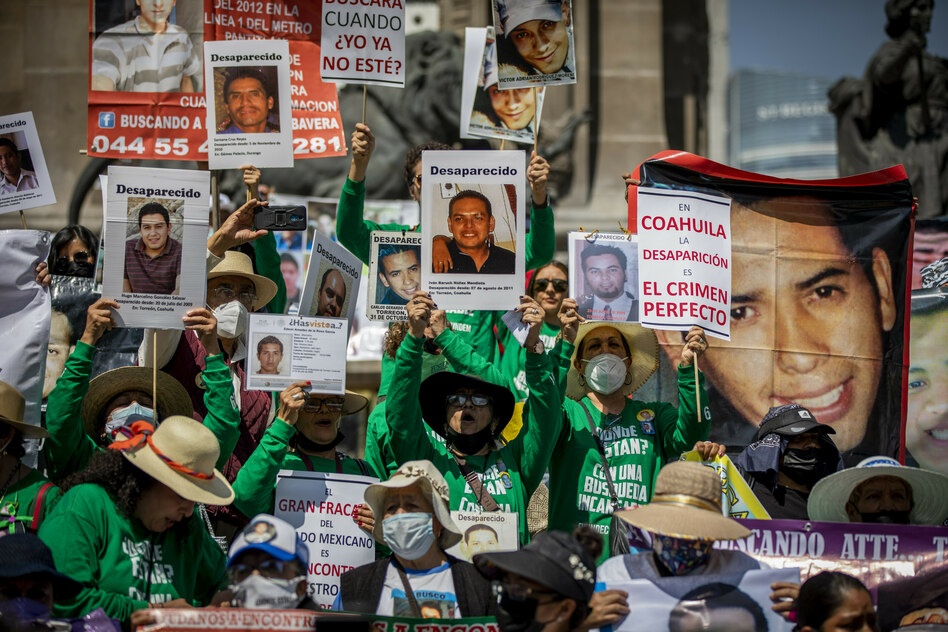
taz: There were numerous protests before and around the World Cup in Mexico - from teachers, from mothers of the disappeared, from victims of the cartels. Has anything changed for the better, Ms Hernández Jiménez?
Estela Hernández Jiménez: Little. Teachers' union protests continue across the country, calling for better educational conditions and better pay. Even where I come from, in the state of Querétaro, in the city of Santiago Mexquititlán, the conditions in schools are anything but good. We are fighting there for bilingual education, for our rights as indigenous people, and defending land and water.
47, is an educator and teaches at a primary school in the Santiago Mexquititlán region. She is involved in the Indigenous Council of Mexico (CNI).
taz: Mexico's government with President Claudia Sheinbaum enjoys a good reputation in Europe because it is one of the few that does not shy away from US politics. How do you assess your politics?
Hernández: There is continuity in the economic area. Ms. Sheinbaum is pursuing a neoliberal growth agenda that has repeatedly violated indigenous rights and also indigenous territory. In the Indigenous Council of Mexico (CNI) we fight for our rights, defend our territory, our resources - including, increasingly important, water.
33, is a human rights lawyer and has been active at the Fray Bartolomé de las Casas Human Rights Center since 2018.
taz: You are an educator - why are you active in the CNI, why are you going on an information tour to Europe, why are you involved?
Hernández: For me, the criminalization of my mother by the police in 2006 was a key experience. She was imprisoned for three years without any valid reason, which ultimately politicized me. In 2017, after long protests, there was an official apology from the government. That is positive. However, to date there has been no compensation. This is not an isolated case in Mexico, where there is repeated repression against social protests and where civil society activists are criminalized - often with fabricated accusations.
taz: How does the incumbent government deal with protests - is it more tolerant than before or is it repressively suppressed, Mr. Gálvez?
Vico Gálvez: It varies and also depends on whether there is international media and reporting. Then people generally act more tolerantly than is often the case at the local level. During the teachers' union protests in Mexico City, there was at least one person who lost an eye to a rubber bullet. This is part of the precarious reality in Mexico.
“Mexico after the World Cup: Indigenous struggles and resistance to megaprojects”: Saturday, October 24th, 6 p.m., FC St. Pauli fan rooms, Heiligengeistfeld 1, Hamburg
taz: Mexico has the highest number of disappearances in the region. Thousands of mothers have organized themselves and are calling on the authorities to do more - are there any successes?
Gálvez: Not likely to be successful, but at least a government that listens and doesn't duck away. In general, the situation is dramatic: we have a serious human rights crisis. The indigenous population is disproportionately affected by this. All indicators of human rights violations in Mexico are deep red. There are more than 150,000 disappeared people. The situation of migrants in Mexico is also precarious. Violence against women is a serious problem, and children's rights are also not adequately protected.
taz: What is the situation in Chiapas, where your organization works.
Gálvez: Violence has been a major problem in Chiapas for years. The cartels have expanded their influence and reach during the corona pandemic and control entire regions. That's why the local government has set up a special unit that is well equipped militarily and takes action against the cartels and pushes them back. But it is documented that she has violated human rights. The elite unit does not differ from the cartels in its choice of means - that is a very sobering realization.