
Germany taz
Afrikamera Film Festival in Berlin: Silence and cohesion
Under the motto “Reflect”, this year’s Afrikamera Festival is dedicated, among other things, to the (late) consequences of colonialism and apartheid. more...
Deutsch (original) ·Auto-translated to English
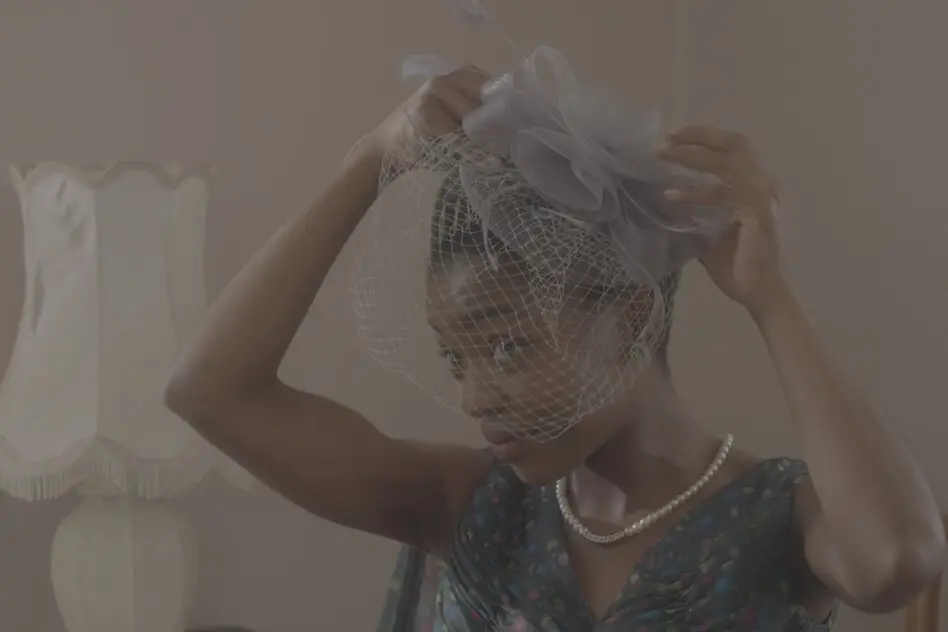
When the genocide against the Tutsi tore her homeland in two, Marie-Clémentine Dusabejambo was seven years old. She only found out about the so-called Gacaca people's courts, which were then held in Rwanda, as an adult while working on her feature film “Ben'Imana”. It follows Vénéranda, a woman who struggles for justice and reconciliation in those people's courts and in discussion groups. Mothers of perpetrators sit next to women who, even 20 years later, can hardly find words for what was done to them and their families.
Rwandan culture is characterized by silence, says Dusabejambo. A mother once explained to her that you don't tell your child: I love you. Because there are things that are “so powerful that they shouldn’t be diluted with words.” But how can we then speak of cruelty, trauma and loss? With her debut, the director finds a convincing way to tell the unsayable in film. This is achieved not least thanks to Dusabejambo's courage to treat history as nuanced as possible; free from the pathos and naive concern that “African” films by foreign directors are too often saturated with. “Ben’Imana” is the work of a Rwandan woman from the first generation after 1994.
Honored as best debut at the Cannes Film Festival in May, it just opened the 19th edition of Afrikamera at the sold-out City Kino Wedding. Since 2007, the festival has been aimed at introducing Berliners to contemporary cinema from across the continent. On the opening evening there are also young people from Rwanda in the cinema who recognize nuances in Dusabejambo's film, such as linguistic ones, that others here naturally miss. The exchange that takes place in the auditorium after “Ben’Imana” is hardly less touching than the film itself.
Not only the many questions from the audience after this first of the screenings, which will take place until Sunday, suggest that the ambitious program by festival director Alex Moussa Sawadogo is also proving to be suitable for German and Berlin visitors. The worthwhile documentary “Mother City” shows solidarity with the “Reclaim the City” movement from Cape Town, which, around 30 years after the end of apartheid, is trying to secure affordable housing for those to whom the city center is only open for work. While public spaces in the city center have been sold below value to private investors who are converting them into golf clubs, much of the black population still lives in small spaces on the edges or outside. “Mother City” painfully shows who has to continually fight for their rights and at what cost. But it also shows how successful organizing works and what Cape Town and other places can learn from Barcelona, for example.
With “And She Didn’t Die,” Kethiwe Ngcobo traces the life of her mother Lauretta, a storyteller from rural South Africa who flees to London with her children during apartheid. Her husband, a member of the Pan Africanist Congress (PAC), has already been imprisoned. In exile, Lauretta Ngcobo lives in a “white world,” as she soberly states, but in it she also finds feminism and her own voice as a writer. She is known as one of the continent's first female authors. The director Ngcobo presents the documentary about her mother at the Arsenal cinema, another venue alongside City Kino Wedding, fsk and Sputnik.
“One Woman One Bra” by Vincho Nchogu is also about female emancipation and the loss of one’s own soil. At the heart of Kenya's entry for the upcoming Oscars is Star, who grew up as an orphan in a Kenyan village. For the first time, its residents can confirm their land ownership based on family origins. But what if, like Star, you neither know who your parents are, nor are you married or have the money to buy the land? Out of necessity, the woman gets involved in an NGO's questionable campaign, which gives “One Woman One Bra” its ironic title. Incidentally, Nchogu was inspired by the US campaign KONY2012, through which the Californian organization “Invisible Children” outed Ugandan rebel leader Joseph Kony as a suspected war criminal.
“Congo Boy”, in which musician Rafiki Fariala films his own life story, shows that emancipation is not a strictly female topic. Energetic and at the same time tender, he tells of the everyday life of a 17-year-old boy in Bangui, in which both hardship and solidarity can be found.