
Politics · taz · · 2h
AfD successes in Lower Saxony: Salzgitter turns brown
Deutsch (original) · Auto-translated to English
Angar Schledde, state chairman of the Lower Saxony AfD, saw his party as the “clear winner of the evening” on Sunday evening. And he's not entirely wrong: the CDU, SPD and Greens suffered losses in the local elections on Sunday. The AfD, on the other hand - and to a lesser extent also the Left - has made significant gains and more than tripled its result compared to the previous local elections.
And what's more: For the first time, the right-wing extremist AfD Lower Saxony made it into the runoff election for the mayor's post in a major city. In Salzgitter, the CDU incumbent Frank Klingebiel has to compete against the AfD candidate Patricia Mair in two weeks.
Nationwide, the AfD received 15.9 percent of the vote on Sunday. In the 2021 local elections it was 4.6 percent. For the first time, the party is now the third strongest force in Lower Saxony behind the CDU and SPD: The Greens, who had exactly 15.9 percent five years ago, are now only at 14.1 percent.
The 104,000-inhabitant city of Salzgitter is also the only larger city in Lower Saxony where the AfD received the most votes in the city council election. The AfD achieved 27.4 percent here, with the SPD and CDU just behind. However, it is unlikely that the AfD candidate Mair will become mayor of Salzgitter in two weeks: Klingebiel, who has been in office since 2006, narrowly missed an absolute majority in the first round of voting with 45.6 percent.
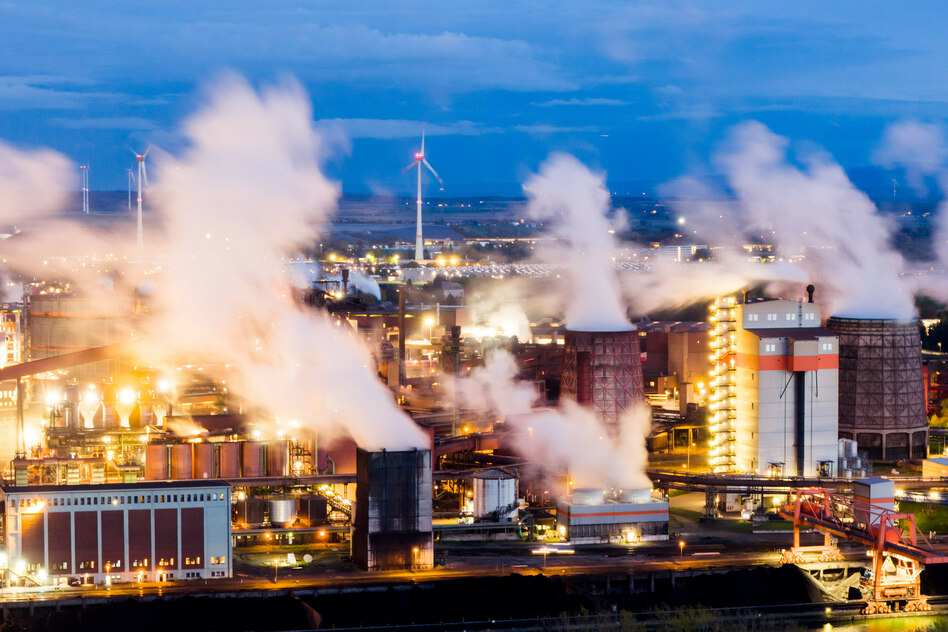
The AfD's good performance in Salzgitter does not come as a complete surprise. The AfD had already won the most votes here in the federal election last year. In addition, the city has been suffering economically for a long time and the unemployment rate is well above the national average. And there is hardly any reason to hope that the city will recover economically: the city's two largest companies, the steel group Salzgitter AG and Volkswagen, are in a long-term crisis. There is therefore ongoing uncertainty for the 20,000 employees.
The AfD was able to record another victory in the 15,000-inhabitant city of Munster in the Lüneburg Heath: here, too, the AfD received the most votes in the city council election. With more than 6,000 soldiers stationed, Munster is one of the largest locations in the Bundeswehr.
Despite these isolated successes, the AfD's election results in Lower Saxony show that there is no unstoppable rise of the right-wing extremist party from election to election: The party won a larger share of the vote in last year's federal election in Lower Saxony than in the current local elections. The AfD in Lower Saxony is a long way from election results beyond the 30 percent that is common in eastern German states. And the party did not reach its self-imposed target of 20 percent on Sunday.
In addition, the party's performance was downright catastrophic in some places: with 1.8 percent, the AfD only came in ninth place in the city council election in Göttingen. And the Volkswagen crisis apparently didn't help the AfD either: apart from Salzgitter, the party received an average of 13 percent less than the national average in the VW locations in Emden, Osnabrück, Hanover, Braunschweig and Wolfsburg, where there are fears of job losses.
The AfD is still hoping for a repeat election in four cases: in the district elections in the Lüneburg district and in the Friesland district, in the Wilhelmshaven mayoral election and in the mayoral election in Herzberg in the Harz, the local election committees excluded the AfD candidates because of doubts about their loyalty to the constitution. The AfD wants to lodge complaints with the election audit committee and, if necessary, sue in the administrative courts.
Read the full story at the source
Source: taz