
World · taz · · 3h
Abortion in Brazil: “My life is mine again”
Deutsch (original) · Auto-translated to English
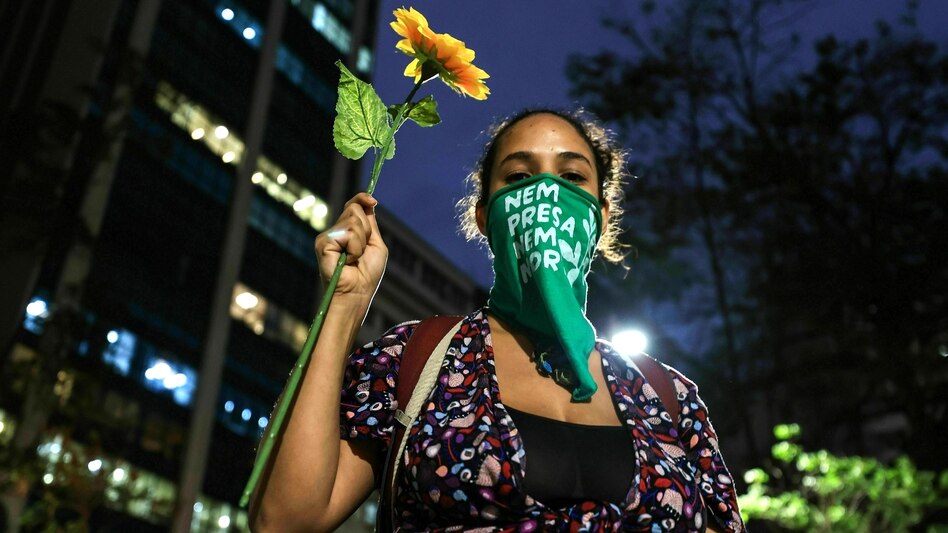
At night the documents rest safely under your pillow. During the day in a tiny plastic case that she keeps on her body or in her handbag. Nobody should know anything, especially not grandma, who would think she is a sinner. In her bright childish voice, Suely apologizes for arriving at the meeting point more than an hour late. She is pale and has dark circles under her eyes. Suely couldn't sleep all night, despite the anti-anxiety medication and antidepressants she took. Today she should get confirmation that everything is really over.
“I don’t regret it,” says Suely in her breathy child’s voice, “it didn’t turn out the way the social worker said.” She is still afraid. From medical consequences, perhaps even more from the judgment of others. Will the doctor she signed up for an ultrasound scan insult her? Deny her the examination?
This article was made possible through the financial support of the Forschungsfonds Ausland e. V. You can support the research fund through a donation or membership.
Suely's real name is different, she is 20 years old and lives in a northeastern Brazilian city with her deeply religious grandmother, who belongs to a Pentecostal church. Suely did what around 1.8 million Brazilian women do every year: she had an abortion.
The presidential elections in Brazil will take place on October 4th. Around 156 million eligible voters have to cast their votes; voting is compulsory in Brazil. If no candidate wins an absolute majority in the first round of voting, a runoff election will take place on October 26th. 13 candidates are standing for election
Incumbent Luiz Inancio “Lula” da Silva from the left-wing Partido dos Trabalhadores (PT) is running for re-election for a fourth term. His main opponent: Flávio Bolsonaro from the right-wing conservative Partido Liberal (PL) and son of the ultra-right ex-President Jaír Bolsonaro, whose political rights were revoked by the Supreme Court for abuse of office. According to polls, the 80-year-old Lula is ahead of the 45-year-old Flávio
Brazil is a religious country with widespread conservative morals; almost a third of the population belongs to Pentecostal churches and more than 56 percent to the Catholic Church. In the current election campaign, the ultra-right presidential candidate Flávio Bolsonaro emphasizes in every speech that he is absolutely against abortion and “for life”.
Even President Lula, who set up a commission to revise abortion law in his first mandate, is now avoiding taking a clear position. “Personally, I’m against it,” says the 80-year-old vaguely, perhaps out of concern about driving away conservative voters.
According to the Brazilian penal law of 1940, abortion is generally prohibited and is only exempt from punishment in three exceptional cases: when there is a risk to the life of the mother, when there is malformation of the fetus such as severe anencephaly and when pregnancy is the result of sexual violence. In these cases, legal abortion is available to every affected woman free of charge in the public health system.
Anyone who does not fit into these categories tries to have a safe abortion in illegal private clinics at prices that are twice to five times the legal minimum wage, depending on the week of pregnancy. Or she travels abroad. In Argentina, Colombia and Mexico the intervention is largely possible with impunity. Others are left with trusting low-cost clinics or trying to help themselves.
One in seven Brazilian women up to the age of 40 have had at least one abortion, more than half of them for the first time before the age of 19. Possible consequences of so-called unsafe abortions include damage to health and even death. Black girls and women in precarious situations in particular swallow medicines, poisonous plants, chlorine-containing cleaning products and even rat poison in order to have an abortion, the Iyaleta study published in 2023 records. More than 200,000 women are interned in public hospitals every year to complete illegal procedures or because of their health consequences.
Illegal abortion is one of the leading causes of death among pregnant women in Brazil, which is why lawyer and public defender Livia Almeida says, “Abortion is a public health issue.”
“I wanted to go to Colombia secretly,” reports Suely, rocking restlessly on the plastic chair in the gynecologist’s waiting room. “Borrow me money from somewhere, tell my grandma I’m at a friend’s house, whatever.” As a student and white middle-class woman, Suely is one of the privileged women. But she didn't have several thousand reais ready either.
On the Internet she found the contact of an NGO that supports women in having abortions out of the country if necessary. She filled out a questionnaire and received a message from the founder of the NGO Milhas pela vida das Mulheres, Juliana Reis. “Suely answered the question about the consensual nature of sexual intercourse on our form in the affirmative,” remembers Juliana Reis. “But when asked whether violence might have been involved, she answered maybe.”
Suely stares fixedly at the pristine white wall in the waiting room. As she continues speaking, her hands begin to shake. Her ex-boyfriend didn't want to accept the breakup, she says. He threatened her. He would seek out her father and beat up other boys she dated if she didn't get back together with him. He monitors Suely, attends the same lectures as her, takes the same bus, hangs around her house, and threatens to kill himself.
Then she gives in. Only until her father has finished his further training, she tells herself, she doesn't want to ruin it for him under any circumstances. For two months, Suely endures insults, control and increasingly painful intercourse. She gets anxiety attacks more and more often at night. Since then, she has always carried emergency medication with her. Then she realizes that she is pregnant. She writes all this to Juliana. “Sex under threat is clearly a violent situation,” she explains to her via WhatsApp. “You could have the right to a legal abortion!” Suely can't believe it: "What now, legally?" she types into her cell phone.
Lack of information is one of the main reasons why Brazilian women do not exercise their right to legal abortion. They don't know that they even have the right to it. You don't know where such an operation is carried out. They don't know that all they have to do is claim that they have been a victim of violence, that they don't need any proof of it. “If the violence is not physical, many victims do not even identify it as such,” adds gynecologist Romina Hamui, who set up a legal abortion department at the Maria da Conceição de Jesus public hospital in Salvador da Bahia in 2021.
As everywhere in Brazil, abortions are carried out in a maternity hospital. To avoid triggers, Romina Hamui trains the all-female team members the patients interact with not to address them as “mom” and to talk about “fetuses” instead of “babies.” “We try to give advice as neutrally as possible, both about abortion options and about alternatives such as release for adoption,” explains the doctor.
Brazil is voting, and leftist Lula and opponent Flávio Bolsonaro are fighting bitterly for votes. Is there a threat of the next shift to the right in Latin America? Here's the episode
Suely is relieved that, as a victim of violence, she can have a legal abortion. But she fears running into friends at the referral hospital near her neighborhood recommended by the NGO Milhas. So she goes to a clinic further away. There the social worker in charge tries to talk her out of the abortion. "She wanted to send me to a psychologist to get me to change my mind and claimed that I had no right to the procedure. While I told her about my ex's blackmail, she just looked at her phone," says Suely. “At the end she said that I had to accept Jesus and that my parents would help me.”
Women who want a legal abortion face a variety of resistance. Be it that they are required to provide documents such as a court decision or a police report for rape, contrary to legal regulations, or that medical professionals refuse to carry out the procedure for reasons of conscience.
In the event of a refusal for reasons of conscience, the respective hospital is obliged to immediately arrange for a replacement with another specialist in order not to disadvantage the patient, but the media repeatedly report cases in which women or young people are unable to have an abortion because the process is delayed for too long due to such obstacles.
At the beginning of pregnancy, a non-invasive abortion is possible using only medication. The World Health Organization (WHO) later recommended gentle suction for inpatient care. From around the 22nd week onwards, a scraping may become necessary. Only a handful of clinics in Brazil are equipped to use this procedure.
Religious groups and right-wing extremist politicians repeatedly try to undermine the law in practice. Under Jair Bolsonaro, a decree set “protection of life from the moment of conception” as a government policy. Regulations stipulated that doctors had to inform the police in all cases of abortions due to sexual violence; after 21 weeks and six days, abortion was to be punishable in all cases. Lula annulled all of these provisions when he took office again in January 2023.
From just under 2,000 legal abortions per year under Bolsonaro, the number rose to 2,687 legal abortions in 2023. In contrast, 16,000 children have children every year in Brazil, and 45 girls under the age of 14 give birth every day. How many children are legally aborted is not registered. There may be perhaps 1,000, estimates lawyer Leticia Vella, who heads the Coletivo Feminista Sexualidade e Saúde, an NGO that has been trying to promote a feminist perspective in reproductive medicine for 40 years. “The extreme right is pro-life and anti-abortion,” says Vella. “Then when life is born, she no longer cares about it.”
Under the title Criança não é mãe (Children are not mothers), Coletivo collects data on violence against minors and unwanted pregnancies. Accordingly, three quarters of all cases of sexual violence in Brazil are abuse, primarily of black minors between the ages of 8 and 14. Pregnancies in children and adolescents often endanger the life of the pregnant woman; 63 cases with complications are admitted to public hospitals every day.
“The law determines who manages to have a safe abortion,” says lawyer Vella. She then talks about an eleven-year-old who had been abused by a relative for years and was pregnant for the second time when she went to the Coletivo. Her father wanted to support her in having an abortion, but her mother was convinced by representatives of the extreme right to speak out against it. After weeks of nerve-racking back and forth, the exhausted minor decided not to have the abortion. She will then give the baby up for adoption.
Suely finally went to the clinic that Juliana from the NGO Milhas had recommended to her. She remained on the ward for three days before being released with medication and instructions. She borrowed the money from her father for the follow-up examination at a reputable clinic; the hospital where she had the abortion did not consider the follow-up care necessary.
Now the 20-year-old is lying on the treatment table, shaking nervously, while the doctor operates the ultrasound machine. “The uterus is already receding,” she states, “and the uterine lining is regular and not too thick: there are no residues left behind, everything is fine!” Suely breathes shallowly and quickly. She was worried because she kept bleeding. “This is normal and can occur up to a month after the abortion,” the doctor reassures her. Performed by trained professionals in an appropriate environment, abortion is one of the safest procedures in gynecology, confirms doctor Romina Hamui from Salvador.
“The upcoming elections worry me very much,” says Amado Nizarala, director of the Maria da Conceição hospital. “Under the right, we lost 20 years of progress in 4 years.” Since 2023, 262 abortion consultations have been carried out in his clinic, 44 women came from other cities. In small towns, even unintentionally pregnant women are often simply sent to check-ups instead of being informed about their rights. Child pregnancy and abuse are normalized. The fact that presidential candidate Flávio Bolsonaro has just nominated a man as his deputy against whom there is a lawsuit for abuse of a minor is evidence of this.
The Secretariat of Health of the State of Bahia, Sesab, regularly organizes seminars and workshops for health care workers to improve access to legal abortion. “We are also trying to sensitize those who are actually against it to the legal situation,” says Fabiana Kubiak, who is responsible for sexual violence there, “so that the most vulnerable women can get their rights and thus improve social justice.” Their next goals are a greater decentralization of the facilities and an expansion of the competencies of the health centers: “The UPA emergency clinics could be authorized to carry out medical interventions immediately, which would make a lot of things easier.”
Suely has now decided to celebrate with a game of pool. Because she not only broke off a pregnancy, but also the last connection with her ex. Because she can now go back to university and maybe her anxiety disorder will get better. Because she did it. Suely presses the folder with the ultrasound images to her chest and smiles from ear to ear for the first time. "I actually expected to feel bad afterwards. But I just feel relieved. My life is mine again!" she says. Then she becomes serious again and adds: "Next year I'll be 21, then I can have my fallopian tubes removed. I never want to become unintentionally pregnant again."
Read the full story at the source
Source: taz