
Migration taz
Deportation from the USA to Guatemala: Back to square one at 63
Ronald Rivera lived in the USA for almost 25 years, building a business and a new life. He was then deported to Guatemala. more...
Deutsch (original) ·Auto-translated to English
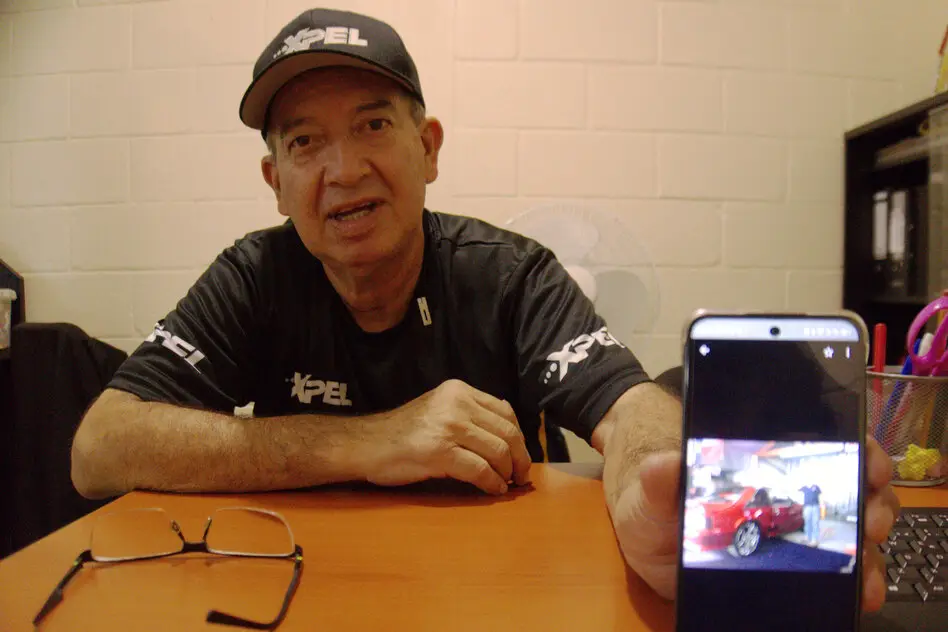
Ronald Rivera is 63 years old. He found a new job a month ago. But that's just one of many changes his life has undergone in the past ten months. In June 2026, Ronald was deported from the USA to Guatemala.
His “American dream” began differently than for most Guatemalan migrants. Because he was already familiar with the USA. He traveled there regularly to buy cars, repair them and then resell them with a business partner in Guatemala.
15 journalists from 12 Latin American countries are taking part in the “Euromérica” workshop organized by the taz panter foundation. It's about the opportunities and challenges of the EU-Mercosur agreement and Latin American-European relations. A supplement will appear in the taz on December 5th, and there will be a public talk in the taz canteen on December 9th. All texts can be found here.
“I decided to emigrate after I got divorced,” he says. His partner had an accident during a delivery and died. “After that I was on my own.”
On December 10, 2001, Rivera arrived in the United States. His plan: first sleep on a friend's sofa for a few dollars and then find a job. When he arrived he thought: “I’m going to work here, let’s see what happens.”
The USA remains the most important destination country for Guatemalan migrants. This is shown by data from the UN DESA International Migrant Stock Report. Only 0.3 percent of Guatemalans living abroad live in Europe.
His first Christmas in the United States was difficult. He was alone in a foreign country. "It wasn't easy. I cried into the pillow." It wasn't supposed to be the most difficult Christmas Rivera would spend in the United States.
Rivera found his first job in the United States in a Chinese restaurant, where he washed dishes. He only had one day off per week. When he ran his own business in Guatemala, he tinted his own car windows. He used this experience to earn extra money on his day off. He didn't think about rest.
Four years later he opened his own business. He had now established himself professionally and privately. He made friends, most of whom were also Latin Americans. He married again.
Fast forward to 2025. On the day of his arrest, Rivera quickly stopped to buy food for his pets. Suddenly he saw blue lights. Police officers used a loudspeaker to ask him to stop. They checked his immigration status, then arrested him.
Authorities told his wife they were taking him to the Montgomery Processing Center. The facility is operated by the private company GEO Group and guarded by the US Immigration and Customs Enforcement (ICE).
Once there, they first put him in the so-called “Hielera” – the ice chamber. "It's a tiny, ice-cold room. Up to 60 people can be accommodated there." He slept sitting or squatting because there was no space. It took almost two and a half days for the entire recording procedure to be completed.
Rivera remembers the bunk beds where people slept “head to head.” There was also a fenced in area where they could get some sun. The toilets and showers at least offered a little bit of privacy. “This prison was still good compared to the one I was in later,” he says. He spent his Christmas in this center - 24 years after that first Christmas when he cried on an acquaintance's sofa.
When an attorney took over his case, Ronald was transferred to a CoreCivic facility in Houston, Texas. "These are completely enclosed spaces. You don't know whether it's day or night." The toilets consisted of ten open toilets without partitions. The showers were in a room with three shower spaces that were also open.
The food was also scarce and of poor quality. While at the facility, Rivera suffered a health crisis that left him dependent on a walker for several weeks. When his first hearing took place, he was unable to walk on his own. It was held virtually. There were a total of three dates, each separated by around 20 days. He remained in the facility the entire time.
Support the taz panter foundation and its international projects with a donation. Learn more
In March, the judge decided to release him on bail. However, Rivera had to wear an electronic ankle bracelet because it had not yet been decided whether he would have to return to Guatemala. He looked for an apartment, a job and a new lawyer. His marriage had broken down, as had the wealth they had built up over 18 years. Rivera moved from Houston to Cleveland, Texas. Because he could no longer afford a private lawyer, he switched to a lawyer who offered social support.
When he showed up for a regular court date, he learned that nothing had happened in his case. The ankle bracelet was no longer enough. He either had to be detained again or deported.
On June 17, 2026, Ronald was deported to Guatemala. According to the Guatemalan migration institute IGM, a total of 51,198 people were deported from the USA to Guatemala between January and the second week of October.
Ronald arrived home without even a single identity document and without a place to sleep. His family lived in Quetzaltenango, far from the capital. The time and geographical distance had also put a strain on his relationship with his children.
Finally he found the “Casa del Migrante”, an organization run by the Scalabrinian order that supports migrants. He stayed there for almost a month.
About his return, Rivera says: "I don't struggle with anything. On the contrary, thank God I'm here, in my own country." He has found work and is sleeping well. And above all: he no longer has to expect that they will arrest him again tomorrow.
When asked what he misses most about the United States, his eyes water. "I miss all the comforts I had. I worked, suffered and built everything we had there." He even misses his tools. Then he pauses for a moment and talks about his friends in the USA who write to him: "We're sending you a hug. It's hard, but you have to keep going. You're alive."
Melani Coyoy is a journalist and podcaster from Guatemala. She works for the online medium Plaza Pública.
Translation from Spanish by Niklas Franzen