
Germany taz
Deportation observer quits: Not a job for life
Merle Abel, deportation monitor for Diakonie in Hamburg, has resigned. For personal reasons, she says. It's no secret that the job is stressful. more...
Deutsch (original) ·Auto-translated to English
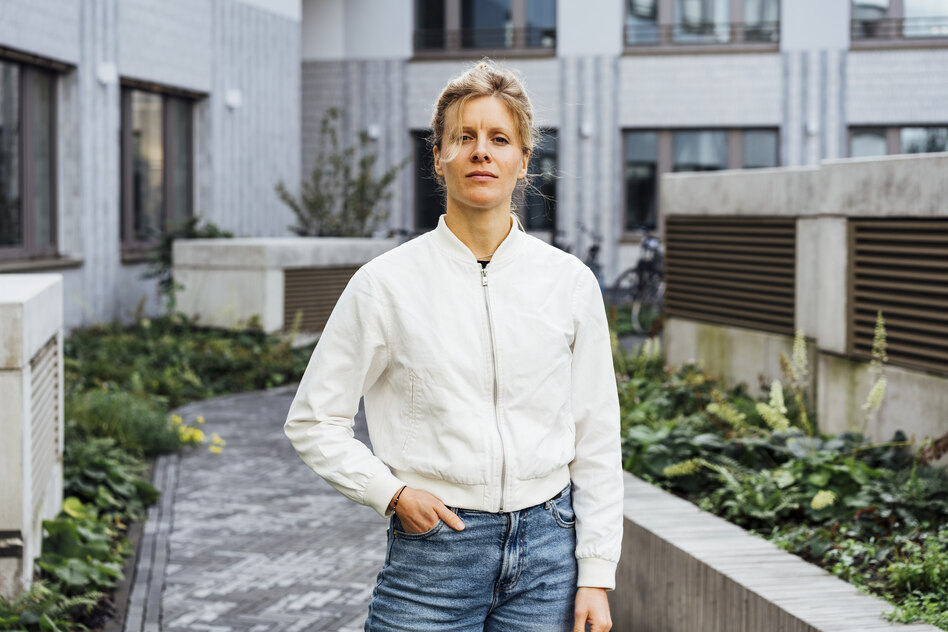
When Merle Abel leaves her job at Diakonie at the end of the year, she will have only lasted a few weeks longer than her predecessor. Almost three years, obviously you can't do the job longer. During this time, Abel observed and documented deportations at Hamburg airport.
The deportation observation is based at Diakonie and is paid for by the Hamburg Interior Authority. That shows which chairs Abel sits between. As a representative of Diakonie, she is available to those affected and listens to them in the moment of greatest need. It monitors compliance with human rights and documents border crossings. But she is not allowed to intervene and jeopardize the smooth running of the deportations, that is what is written in her contract.
“Are you resilient?” This is the first sentence in the job advertisement for the successor as deportation observer. Abel – blonde bun, white jacket, jeans and sneakers – seems like a person who is very resilient. She speaks clearly and with concentration, she smiles sometimes, but she also has a worry line between her eyebrows.
“Many people say: I could never do this job,” says the 37-year-old at a light wooden table in the Diakonia office. “And I can understand that.” Nevertheless, numerous applications were received. Diakonie is considered a popular employer in the area of flight and migration. The office in Hamburg-Ottensen is located in a spacious, glass new building.
A large part of the work of deportation monitoring consists of preparing reports; the annual report is published every spring. Even the table of contents of this year's report reads like a horrific collection of human suffering: “Night-time pickup of vulnerable people,” “Child in the waiting room at night,” “Mom being tied up,” “Minors being tied up,” “Family separation,” “Hospital pickup.”
Abel was there as an observer and contact person for those affected in all of these cases and countless others. How on earth do you endure that? “I find it difficult,” says Abel. Not being able to help when people ask you – that’s hard. “You have to separate yourself internally.”
It was particularly bad at the beginning. On her first day at the airport, she accompanied a man who was about to be deported to Iraq. He told her that his brother had been murdered in Iraq and that he himself feared being arrested and tortured or executed. The man didn't seem nervous on the outside, but then he hit his head against the wall. “I asked myself whether I really wanted to do the job,” says Abel.
Of course she knew what to expect from the position. But one thing is rational, the other is how it feels when you're there. “The images often come back in the evening,” says Abel. Over time, she developed strategies to process what she experienced after work. For example, she makes sure to exercise or go for a walk after particularly severe cases.
One of the worst cases was that of a man who was about to be deported to Armenia and who tried to slit his wrists when he was picked up. There is no one present at the pickup except the police and the immigration authorities; independent observation only begins at the airport. The man was overpowered at home with pepper spray, handcuffed and given emergency medical care by the emergency doctor. He arrived at the airport with his hands tied behind his back, unable to speak to Abel because he was so shocked. “He was declared fit to travel and deported as he was,” reports Abel.
Another bad case was that of a single mother with five children who were to be deported to Spain. The children had asthma and the mother said medical care was not guaranteed in Spain. The woman stopped while boarding. Police officers overpowered her in front of her children. Her eleven-year-old son also stopped and screamed loudly. The police officers pushed him away. This is extremely questionable in terms of children's rights, says Abel.
When Abel talks about the human suffering she witnessed, she doesn't say, "That was so terrible." But: “That kept me busy for a long time.” Or: “Suicidal behavior is a big issue.” The second sentence in the advertisement for your position reads: Are you neutral?
Another question: Ms. Abel, are you angry? “Yes, generally speaking,” says Abel. “In terms of the entire political situation, yes, definitely.” Politics is always about increasing the number of deportations. People are never talked about. Many people don't even understand what that means; many people think that only criminals are being deported. And not families, old people, sick people and children.
The tightening of asylum and migration policy is noticeable at the airport, says Abel. In the three years of her term in office, so many tightening measures have come into force in Germany and the EU that it is difficult to list them all. Pushbacks at the border, the Geas reform and stricter detention pending deportation are just a few of them. One effect that can be felt at the airport is that the number of family separations observed has doubled in the past year, says Abel.
What will happen next for Abel's career is still unclear. However, it is important to her to emphasize that private reasons were the main reason for the termination. Even if the stress of the job played into the decision. Maybe she will continue to work in the area of refugee and migration, maybe do something completely different. In any case, get away from Hamburg first.
Unlike her predecessor, there wasn't a single drop that broke the camel's back with Abel, she says. Rather, it is the recurring situations.
Much of what Abel criticizes in her annual report remains as it is for now: There is no disabled toilet in an area of the airport where deportations often take place. There is just a lack of specialist medical support. There are no independent doctors who do not come from the immigration authorities; no monitoring for child protection. And no second deportation observer because one cannot be at the airport every day. Where there is scope for improvement, it is not used, says Abel. She continues to hope for change.