
Germany · taz · · 3h
25 years of 9/11: The search for the victims continues
Deutsch (original) · Auto-translated to English
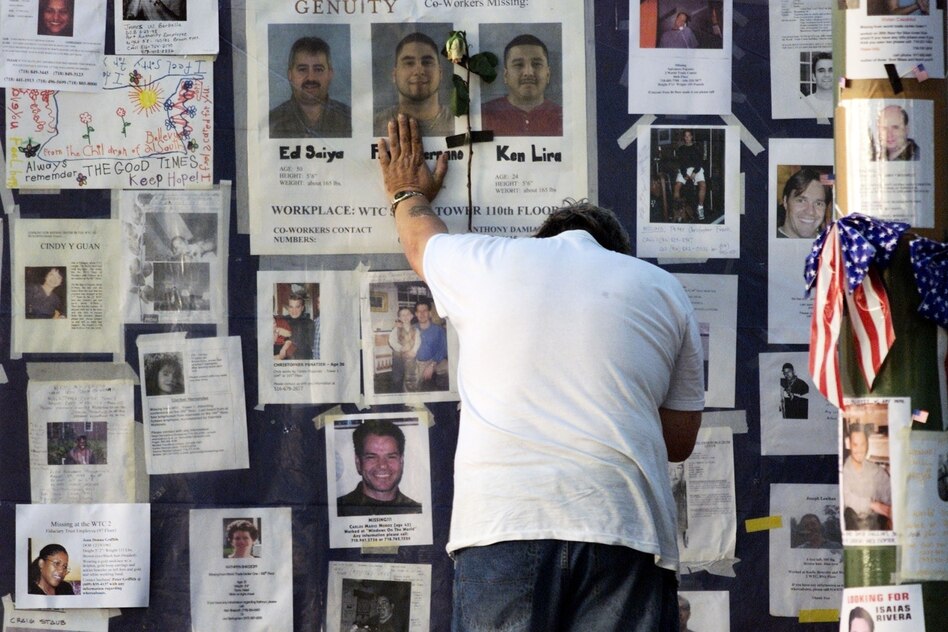
Michael Patrick Iken went to work as usual on the morning of September 11, 2001. His workplace was on the 84th floor of the South Tower at the World Trade Center in New York. It was supposed to be the last day in the life of the then 37-year-old value trader. Michael Iken is one of almost 3,000 people who lost their lives in the terrorist attack on the Twin Towers in southern Manhattan. But even 25 years later, Michael Iken's body has still not been clearly identified. And he is by no means an isolated case.
Only just over 1,650 victims of the attacks have been successfully identified so far. This means that even a quarter of a century later, the remains of almost 1,100 people still cannot be clearly identified. This is around 40 percent of all victims who were killed in the attack.
For Monica Iken-Murphy, Michael's widow, it is of great importance that the Institute of Forensic Medicine in New York continues to advance the process of identifying victims of September 11, 2001.
"They're doing great work - you could say they're doing God's work - and I'm very happy about that. They keep identifying new victims and carry on. I'm grateful for that," she said in an interview with taz.
At the same time, a positive identification of Michael Iken for his widow is not decisive. For Iken-Murphy, her late husband is omnipresent and a positive identification wouldn't change that much, she says. "To me, a part of him means nothing. I wouldn't even look at it. It should stay right where it is, at Ground Zero. He's safe there. I don't have to worry about him."
The only thing that would be interesting for her would be to find out more about Michael's ancestry, as she is convinced that there may be a half-brother or half-sister of her late husband. Their hope is not entirely unfounded, as the city's forensic medicine institute only announced in August that they had been able to identify another victim of the attacks using forensic DNA genealogy.
“The identification of this victim using forensic genetic genealogy is a powerful example of what is possible when we combine state-of-the-art technology with a tireless commitment to victims and survivors,” New York Mayor Zohran Mamdani said in a press statement.
The reason that almost 40 percent of the victims have still not been identified is due to the extremely difficult circumstances that medical professionals are faced with. After the attacks, almost 21,000 remains were recovered from the rubble of the World Trade Center.
Many of these remains are infinitesimally small. They were also exposed to extreme conditions, such as kerosene, mold, bacteria or fire, which attack or destroy the DNA structure.
It therefore took technological developments to be able to create DNA profiles after all these years, emphasizes Mark Desire from the Institute of Forensic Medicine in New York again and again over the years.
The victims identified so far have been identified using a variety of methods, including dental x-rays, fingerprints and tattoos. Investigators are now primarily examining bone fragments for DNA.
The stated goal is to identify all victims of the attacks, no matter how long it takes.
Michael Iken would have celebrated his 62nd birthday on Tuesday. His widowed wife, who built a new life for herself in the years after the stroke of fate and found a new partner, still celebrates Michael's birthday like every year. "I'm already planning his 65th birthday in three years. But I'm also already thinking about what I'm going to do for his 70th. I only had two years with him and those two years meant so much to me. I'm so grateful to God for giving me this gift."
Read the full story at the source →
Source: taz