
Germany · taz · · 2h
2001 – Pop sexualizes female fans: Our mothers, our stars
Deutsch (original) · Auto-translated to English
Mom was embarrassed. Mom wore loose clothes, natural colors – we called it “hippie-like.” Mom had hair on her legs. Mom had an adult woman's body with breasts, hips and stomach. Mom did nudism. Mom had a book of “nudes” on the shelf that showed bodies of people of all ages.
Today, when I think back to Mom in the past, I think that she was and still is beautiful. She was a working, single mother, creative, smart, East German woman. The aesthetic problem that existed between us had to do with a few years of complete brainwashing by capitalist media.
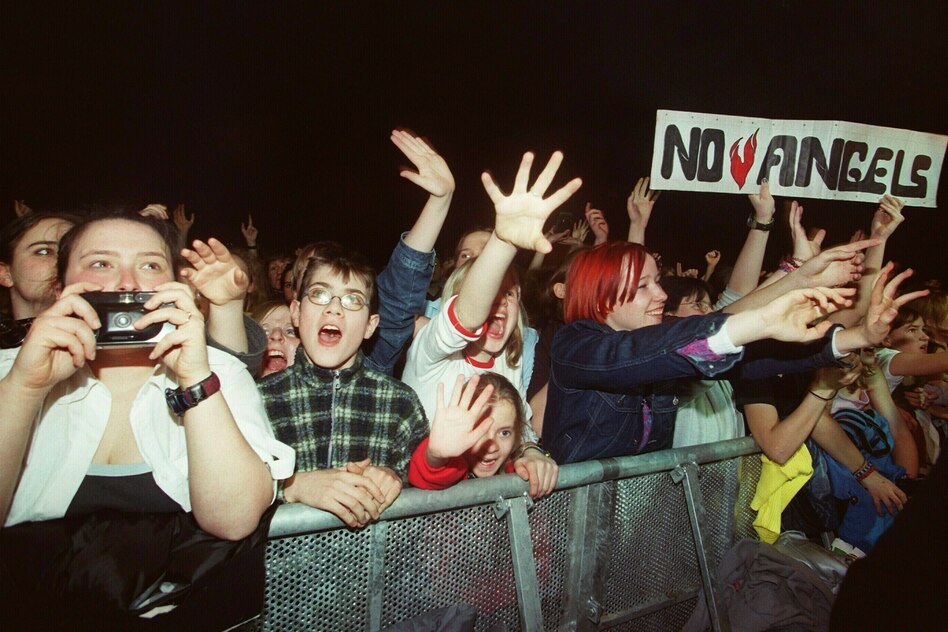
Mom was not a teenager in the Federal Republic of Germany who had entered her second decade in our world. But my sisters and I were, and we had learned in the only place that interested us in the early noughties that only teenage girls were beautiful - if they followed a few very important rules. The venue was MTV, plus its German counterpart Viva and, similar in aesthetics and choice of subject matter, Bravo.
The rules were: Don't be older than 21. Shave everywhere. Tan yourself. Do not weigh more than 50 kilograms. Wear a thong. Wear a push-up bra. Fill it with socks if necessary. Have a flat stomach. Always compete with other girls, don't trust them, don't associate with them beyond what is necessary. The necessary thing: get boys, even better, grown men. Understand this as a value that can be capitalized and turn it into a career.
The rules were sometimes explicit, sometimes varied, but they were never subtle. Girls were supposed to compare themselves in competitions in the noughties, were judged on scales at festivals, voted or not in "Hot or Not", lined up in lists by men's magazines, divided into fuckable and unfuckable in high school comedies. Bravo featured a thong more than once as “Extra of the Week”. He was tiny. For children. For girls.
From 2001 onwards it rained down on us on screens: the film “Bring It On”, the music videos for “Bootylicious”, “Dirrty”, “Lady Marmalade” and “I’m A Slave 4 You”. This meant that the following “interests” could also be sold to teenage girls in this country: cheerleading, twerking, mud wrestling, burlesque and belly dancing. The most important thing seemed to be to give up standing and sitting - young women belong on the floor! They should crawl, that’s “hot.”
Current successful female pop stars Sabrina Carpenter, Tate McRae and Olivia Rodrigo are still fawning over performances and in videos. Alone: You now do it yourself, so they say. They supposedly don't have the mean father manager like Beyoncé or Britney, but want it themselves, express themselves, celebrate their sexuality, which purely coincidentally always resembles that which has been rumored since the turn of the millennium through the explosive spread of porn aesthetics in pop culture.
Neoliberalism quickly delivered this effective narrative so that feminists couldn't prevent too much: You decide for yourself. You want that. You do that. In return, we were all taken on board even more. Not only could we emulate stars aesthetically, we could become stars ourselves if we tried hard. Suddenly there were shows like “Popstars”, “Big Brother”, as well as dating shows and a lot of “reality”. If we couldn't do it on TV, we'd do it on the webcam at home.
It's just a fact that things work better when we look a certain way and dress a certain way. You don't have to do it. “The girls know what they're getting into” was probably the most frequently said sentence later on in formats in which young women were humiliated in front of cameras.
Anyone who had something against this form of presentation was initially prudish, but later “sex negative” sounded more progressive to many people. Years and decades later, the noughties are romanticized as particularly playful. Some women and queers, for example, also long for the “old” Britney, the exploited teenager who, she said again and again, was not happy.
Christina Aguilera, on the other hand, is celebrated for not aging, i.e. for having undergone a lot of operations and for putting filters on her photo face. It's the same with Shakira, who has been singing the World Cup songs for what feels like 20 years. And of course people are happy about the comebacks of the noughties “scandal noodles” Paris Hilton and Lindsay Lohan. In a zero look, as if the adjustments had never happened to them.
They should all be and remain girls. No real exceptions are the mid-30-year-old Taylor Swift with her Barbie outfits and her “Life of a Showgirl” or Ariana Grande, whose thin body is currently being talked about like that of a teenager over whom everyone has custody.
The narrative that this one look, which was once called "slutty" and now, for example, "cunty" - that is, putting a body that looks as young as possible in lingerie and clothes that make it look like it is gagged - is the only form of sexual liberation still works. The look is the opposite. Think of the pain in your heels in high heels. Think of the pain that bra wires cause when they poke you in the tit from the side. Of the pain when the thong slips into the crack. Of the pain of cutting hip trousers. Of the pain from sunburn on my shoulders. Of the pain of hunger. Of the pain you feel after sex with the dicks you get from looking like that and following the rules.
This text first appeared in wochentaz, our weekly newspaper from the left!
Every week, wochentaz is about the world as it is – and as it could be. A left-wing weekly newspaper with a voice, attitude and the special taz view of the world. New every Saturday at the kiosk and of course by subscription.
All of this is not free, but rather being constricted. It was never about being naked. Being naked doesn't need any strings or rods or hoes, being naked means being hairy and hanging and wobbling around the nudist, without pressure to perform, without striving for recognition or a paycheck, just with anticipation of jumping straight into the water and then everything jumps so merrily.
Being sexually liberated would mean being a woman and being allowed to grow up. But we have lost women in pop and allowed them to give way to ideas of girlhood that come from porn, from powerful men who like "barely legal" teenagers, who manipulate them, pay them, recruit them and, as we now know, kidnap them and exploit them anyway.
#MeToo came way too late and body images are still here. Today, making it big only works as a story. You can do a little OnlyFans, but being “chosen” as a young woman has failed too visibly. Instead, the focus today is on consumption. Thanks to fast fashion you can get a new flavor of girl every few minutes, Clean Girl, Brat, Academia and so on. Thanks to Klarna and Co, you end up in debt with all the orders - but Jamba, which also launched its savings subscription at the beginning of the new millennium, seems almost serious from today's perspective.
If the kids were united, it wouldn't be so bad. Stop media. But the gap between the real world and pop culture now feels smaller because we can “join in” all the time via our smartphones. That's just not true. Social media still belongs to rich men who make the most money from exploiting girls and young women. While the Spice Girls were at least still together despite their different tastes, young women are now encouraged to sit alone in front of their ring light and decide on an identity.
This still doesn't have much to do with their real reality. Girls go to school together, including with boys. They do training together. They study. They work. They have groups of friends, they have families, they play sports, they have hobbies, they go dancing, they make art. There are still enough spaces in which we could escape these dangerous narratives together.
Mom always said that we shouldn't watch the dirt on TV (usually it was the "Amid dirt"), and I, now slowly reaching my mother's age, can't see anything other than that she was right.
Read the full story at the source →
Source: taz