
War & Militarism taz
+++ News in the Ukraine War +++: “Coalition of the Willing” holds first maneuvers
Kyiv's allies are building a force to secure a ceasefire with Russia. The Europeans want to be at the table during negotiations. more...
Deutsch (original) ·Auto-translated to English
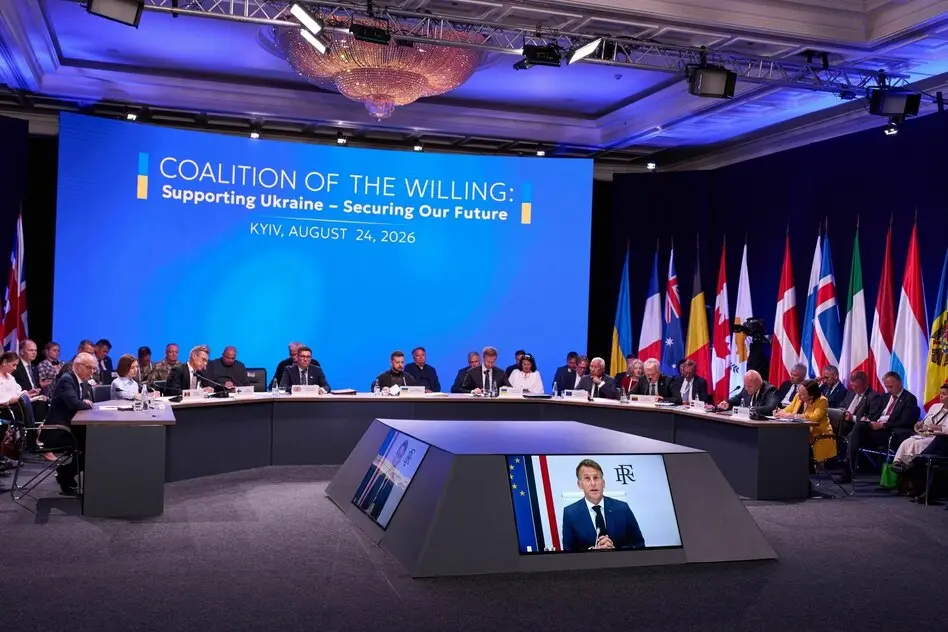
Around 2,800 soldiers from eleven countries are taking part in the first military maneuver of the “Coalition of the Willing” to support Ukraine. The exercise, called “Koalicja 2026” (Coalition 2026) in Poland, in the airspace over Romania and in the western Black Sea, is scheduled to start later today and run until November 22nd. With the participation of the Bundeswehr, the aim is to test how lasting peace could be secured after the end of the Ukraine war.
The “Coalition of the Willing” was founded in early 2025 to support Ukraine. Today it includes around 35 countries that provide Ukraine with weapons for its defense against Russia or provide humanitarian or financial assistance. In December 2025, the group decided to form a multinational force to secure a possible ceasefire between Ukraine and Russia.
French President Emmanuel Macron declared it operational in mid-July and at the same time surprisingly announced the first maneuvers in Ukraine's neighboring countries for the fall. They should show “that we are ready, determined and credible – on land, in the air and at sea,” Macron said at the time.
Germany only agreed to participate after initial hesitation. According to the Defense Ministry, the Bundeswehr will provide around ten staff officers and “up to two” A400M transport aircraft for aerial refueling for the exercise. The aircraft will operate from Germany. In addition, the relocation of troops by Germany to the training area will be supported with “logistical services,” it said. Germany is considered a hub for troop deployments to the east.
The two leading nations, France and Great Britain, are significantly more involved. Belgium, Estonia, Lithuania, the Netherlands, Poland, Spain and Sweden are also there. Moscow criticized the establishment of the multinational force. Even in the event of a ceasefire, deployment to Ukraine is out of the question. The deployment in Ukraine would be “de facto a military intervention and the deliberate creation of additional threats to Russia’s security,” says Russian Foreign Office spokeswoman Maria Zakharova. (dpa/tat)
The oil refinery in Kirishi in the Leningrad region caught fire after a Ukrainian drone attack, according to Governor Alexander Drozdenko. The fire had been brought under control, he wrote on Telegram. A woman was killed by falling debris from the drone.
According to the local governor, Russia shot down 38 drones in the northwestern region of Leningrad. The region is the location of Baltic Sea terminals for the export of grain and oil as well as a large oil refinery. The shootings are continuing, Governor Alexander Drozdenko said on the Telegram messenger service. He initially gave no further details.
US President Donald Trump expects the war to end soon and is bringing changes to Ukraine's borders into play. “I think we'll get it done, and I think it will happen, and they'll end up with a Ukraine in a slightly different form,” Trump said in an interview on CBS. When asked if Russian President Vladimir Putin was stalling him, he replied: "Oh, I don't think so." US Secretary of State Marco Rubio explains that Trump is probably alluding to progress on security guarantees for Ukraine and Europe, which have repeatedly played a role in the negotiations. (rtr)
Foreign Minister Johann Wadephul has rejected calls for a new European security architecture as a way to end Russia's war of aggression against Ukraine. “Europe does not need a new security architecture, as Russia would have us believe, but simply the restoration of the existing security architecture,” said the CDU politician before departing for a meeting with his colleagues from the G7 round of economically strong democracies in Paris.
In view of speculation about an imminent further attack by the USA together with Israel on Iran, Wadephul again called for “concrete negotiations and no new military escalation”. In addition to Germany and France, members of the G7 include Great Britain, Italy, Japan, Canada and the USA. US chief diplomat Marco Rubio is also expected in Paris.
Europe must be part of the solution for Ukraine, demanded Wadephul. The existing security architecture in Europe included the Helsinki Final Act, the Charter of Paris and the Budapest Memorandum. These agreements aimed to guarantee all borders and the sovereign equality of all states. “All of these are urgent prerequisites for the revival of the global economy, which is a central task for the seven economically strongest democracies in the world.”
From Tuesday onwards, Ukraine and Russia will be negotiating under US mediation in Abu Dhabi in the United Arab Emirates for the first time since February about a possible end to the war started by Moscow in 2022. (dpa)
Trump's son-in-law and negotiator Jared Kushner described on Platform X a security order that should be based on communication, military transparency and the reduction of escalation risks. Ukrainian President Volodymyr Zelensky expressed skepticism about the proposal. First there needs to be a discussion about how the war will be ended, he wrote on X.
Kremlin spokesman Dmitry Peskov had also dampened expectations. Moscow has not yet seen any willingness on the European side to discuss questions about a future security system on the continent. The Europeans have not yet even appointed a negotiator. (dpa)