
World · taz · · 1h
+++ News in the Iran War +++: Worries about oil supplies
Deutsch (original) · Auto-translated to English
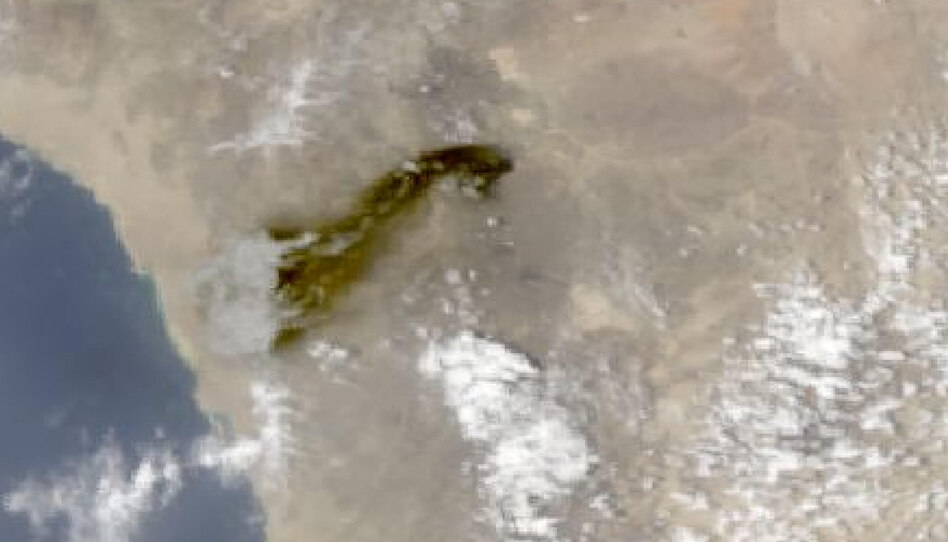
An Iranian merchant ship has been hit off the southern coast of Iran. One person died, state media reported, citing the governor of the Qeshm district. Three other people were injured. (rtr)
After their advance in the civil war country of Yemen, the pro-Iranian Houthis have also increased their attacks on Saudi Arabia. The militia allied with Iran attacked an army base in the south of Saudi Arabia with drones and missiles, said Houthi military spokesman Jahja Saree on Sunday in the online service X. Meanwhile, Yemeni government troops reported attacks on Houthi positions in southwest Yemen. Around 1,400 people fled the fighting to neighboring Djibouti.
The Houthi militia had undertaken a large-scale advance in recent days and conquered the entire Yemeni Red Sea coast in fighting against Yemen's government troops. According to the Yemeni government, the militia now controls the Bab al-Mandab Strait, which is important for global trade and connects the Gulf of Aden with the Red Sea.
The attack on the Saudi Arabian base Sharurah targeted “weapons depots as well as command and control centers,” said Houthi spokesman Saree. He did not initially say exactly when the attack took place.
The Houthis already control large parts of Yemen, including the capital Sanaa. The militia announced a naval blockade against Saudi Arabia at the end of July and has since attacked Saudi Arabian oil tankers in the Red Sea and oil facilities in the kingdom. Saudi Arabia supports Yemen's government in its fight against the Houthis.
The Gulf state responded with numerous air strikes, which, according to the Houthi, hit the airport in the port city of Mocha. The Houthis had previously also taken Mocha under their control. (afp)
Concerns about energy supplies are growing following an attack on a ship in the Strait of Hormuz and the closure of a key Saudi oil pipeline. The British Maritime Trade Organization (UKMTO) said it had received reports that a projectile had hit a ship in the strait. The extent of the damage and the condition of the crew were initially unknown. The ongoing attacks in the widening Middle East conflict could further drive up energy prices. Last week, the price of Brent crude oil rose again above $100 per barrel.
The incident came a day after Saudi Arabia said it had temporarily closed its east-west pipeline as a precautionary measure. The reason was a drone attack that, according to Baghdad and Riyadh, came from Iraq, where Iranian-backed militias operate. The 1,200-kilometer-long pipeline has been the main route for global oil supplies from the Middle East for the past six months as the Strait of Hormuz was largely closed due to the war. It transported four to five million barrels per day, equivalent to four to five percent of global supply.
US President Donald Trump said Iran was likely responsible for the attack on the pipeline. Saudi Arabia's de facto ruler, Crown Prince Mohammed bin Salman, called Trump on Thursday and asked for military help in the fight against the Houthi rebels, three people familiar with the matter told Reuters. Washington has initially rejected direct intervention, but has promised support through intelligence information. The Iran-backed Houthi rebels in Yemen recently expanded their attacks and captured the strategically important island of Perim in the Bab al-Mandab Strait on Friday. (rtr)
The Iranian agency Tasnim quotes an Iranian insider as saying that an agreement between Iran and Oman does not provide for an immediate reopening of the Strait of Hormuz. But it creates the basis for it to be reopened. The agreement is a step towards Iran's exercise of sovereignty over the strait. Their reopening depends entirely on the USA meeting Tehran's conditions. (rtr)
The US Army says it has stopped around 100 merchant ships in the past two months as part of its naval blockade of Iranian ports. “Not a single ship passed the blockade without the approval of the US armed forces,” said the responsible regional command Centcom on Saturday in the online service X. The US forces “continue to concentrate fully on this mission”.
The USA attacked Iran together with Israel a good six months ago. Since then, Tehran has effectively blocked the Strait of Hormuz, which is important for oil and gas transport, and in return the USA imposed a naval blockade of Iranian ports. Tehran also regularly attacks US bases and energy infrastructure in the US-allied Gulf states. As a result, oil prices rose massively worldwide.
This week both sides increased their attacks again. The US fired on several Iranian oil tankers. Iran then stepped up its attacks on US targets in the Gulf region and said it fired on 20 ships on Wednesday as they attempted to transit the Strait of Hormuz. Markets now expect the strait to remain de facto impassable for an extended period of time. (afp)
Read the full story at the source →
Source: taz