
World · taz · · 1h
+++ News in the Iran War +++: Talks in Oman postponed
Deutsch (original) · Auto-translated to English
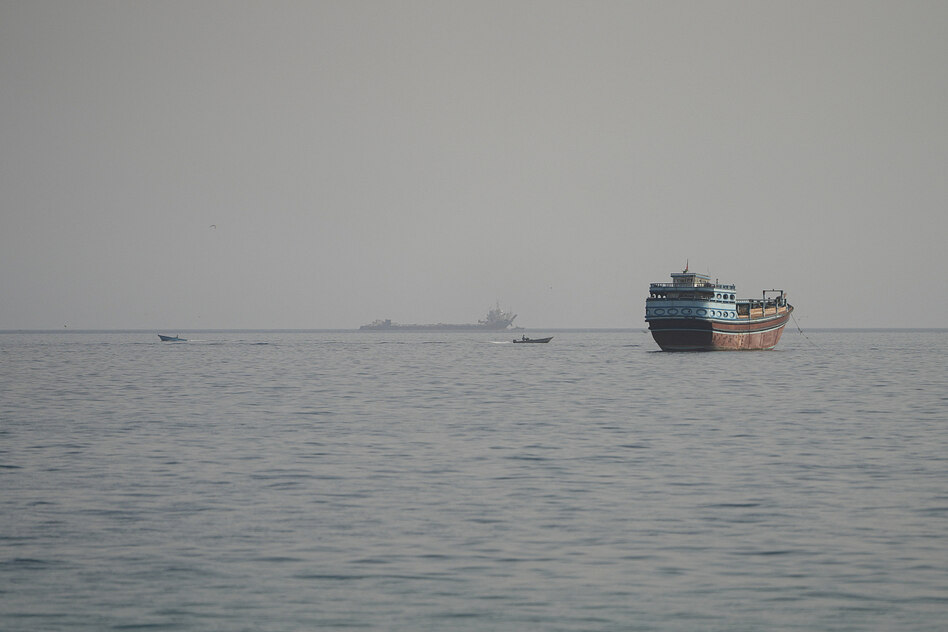
Oil prices rose at the start of the week due to Saudi Arabia's shutdown of the oil pipeline and the canceled talks on the Strait of Hormuz. The price for a barrel (159 liters) of Brent crude oil from the North Sea for delivery in November climbed by almost three percent to $107.60 in the morning, approaching the $110 mark again. On Friday, the Brent price had fallen slightly after a rapid rise in the previous days.
The reason was the hope for an easing of tensions in the Middle East conflict. But the meeting of foreign ministers of the Persian Gulf states in Oman planned for today will not take place. “In the interest of consensus, the regional meeting planned for tomorrow in Salalah has been postponed,” Omani Foreign Minister Badr al-Busaidi said on Platform X late Sunday evening. According to reports, the meeting was originally planned for Iran and Oman to present an agreement in the deadlocked Strait of Hormuz conflict.
There had already been further setbacks over the weekend. The conflict in the Middle East is putting massive pressure on the world's largest oil exporter, Saudi Arabia. After the Iranian blockade of the Strait of Hormuz and the increasing threat to the Bab al-Mandab Strait from the Houthi militia in Yemen, the kingdom also has to shut down an important pipeline following drone attacks.
An additional reduction in Saudi exports could cause oil prices to rise further. The east-west pipeline, which can bring large amounts of oil from the Persian Gulf to the Red Sea bypassing the effectively blocked Strait of Hormuz, was shut down as a precaution after attacks on the line in the Riyadh and Medina regions.
Brent crude oil has increased in price by almost 80 percent since the beginning of the year, but is currently still well below its interim wartime high of just over $126 per barrel, which was reached at the end of April. (dpa)
According to Oman's Energy Minister Salim al-Aufi, the disruption in the Strait of Hormuz is likely to be a short-term matter. In the medium term, the situation is likely to stabilize, explains al-Aufi. His country can continue to produce oil and gas. According to the minister, the rapidly rising prices for oil and liquefied natural gas (LNG) are unsustainable for anyone in the long term. In addition, alternative export routes via Oman or Yemen should be developed. (rtr)
Preliminary data shows a significant decrease in shipping traffic in the Strait of Hormuz. Over the weekend, the number of daily transits fell to single digits, while the ten-day average was 14. The figures do not include ships transiting the Strait with transponders turned off. (rtr)
According to AP information, the head of the Iranian Atomic Energy Agency, Mohammed Eslami, is unlikely to attend the annual meeting of the International Atomic Energy Agency (IAEA) in Vienna for the first time in years. The reason is an international travel ban against Eslami, a representative familiar with the matter told the AP. Austria had applied to a United Nations sanctions committee for an exemption to allow Eslami to attend the conference. However, this was not granted, said the representative, who wished to remain anonymous.
However, the Iranian state news agency Irna reported on Saturday that Eslami had traveled to Vienna to take part in the IAEA conference and to meet representatives of various countries. The annual meeting begins on Monday and lasts until Friday.
Eslami's absence would be another sign of the increasingly tense relations between Iran and the West. Since the Israeli and US attacks on Iranian nuclear facilities in June 2025, Tehran has not granted IAEA inspectors access to the affected facilities. According to the IAEA, Iran is violating its obligations under the Nuclear Non-Proliferation Treaty.
Since the attacks, the nuclear agency has no longer been able to check the stock of highly enriched uranium in Iran. According to their information, the country has 440.9 kilograms of uranium with an enrichment level of up to 60 percent. Around 90 percent is required for weapons-grade uranium.
Iran emphasizes that it does not seek nuclear weapons and that its nuclear program will only be used peacefully. (ap)
Read the full story at the source →
Source: taz