
World Pressenza
Women, Peace, and Security – From the Heart!
On 27 October 2026, the UN Security Council held its annual debate on Women, Peace, and Security. It was not until October 31, 2000, following more than a century of pressure from the women’s movement
English (original) ·Read in Deutsch ⇄
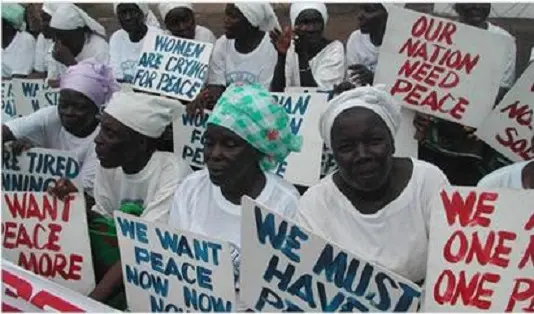
On 27 October 2026, the UN Security Council held its annual debate on “Women, Peace, and Security.” It was not until October 31, 2000, following more than a century of pressure from the women’s movement (among others WILPF), that the UN Security Council adopted Resolution 1325. I often wonder what the state of global peace might be today if, in the spirit of Resolution 1325, the mothers of the world’s powerful men held the reins, working alongside the women who are the bearers of life and typically the hardest hit by wars and catastrophes, to shape peace and security.
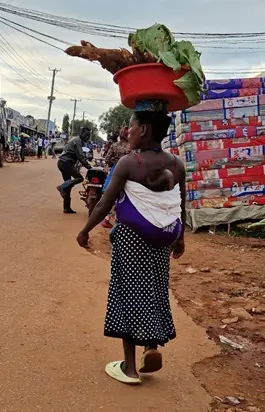
Women – Bearers of Life © H. Merkelbach
Security: Masculine and Feminine Perspectives
While the men currently in power – who dominate within our patriarchal world – believe that security can be guaranteed through increased military spending, the production of more technologically advanced weaponry, and victories in armed conflict, women at the family and local levels focus on ensuring daily survival. For women, the concept of security is less about defense or warding off (perceived) external threats to entire systems, such as nation-states, and more about the protection and preservation of systems, including harmony with nature and the environment, and the fostering of interpersonal relationships within communities.
Only mothers have had the physical experience of carrying a life beneath their hearts for nine months, perceiving its heartbeat and after birth during breastfeeding, while simultaneously protecting another life as they care for themselves. The fact that they menstruate monthly, shedding an unfertilized egg and potential life, also distinguishes their physical experiences from those of men.
It is estimated that in industrialized nations, women menstruate approximately 500 times during the course of their lives, over a total period of 7 years, losing 30 liters of blood. I contend that their capacity for empathy differs from that of men. Women can empathize – physically, psychologically, and mentally – with sons and especially daughters, with human beings who have been born to mothers like themselves.
For men – who lack the experience of menstruation – and even for fathers – who lack the physical experience of childbirth – empathy is rooted in witnessing, observing, and a conscious, deliberate psychological and mental effort.
It is therefore no surprise that in 2014, during what was then the worst war in Gaza to date, Israeli and Palestinian women from the groups “Women Wage Peace” and “Women of the Sun” issued a joint appeal, the Mothers Call, written from the perspective of mothers, that speaks to their own lives, the lives of all their children, and the lives of others.
“We call on the women of the world to stand by us for a future of peace and security, prosperity, dignity and freedom for ourselves, our children, and the people of the region.”
For women, the concept of security is better captured by the English term “safety”, which carries connotations of “rescuing” and “preserving.” Various studies (e.g., from 2022) on extreme or emergency situations – such as disasters and wars show that women, though often less visible, are the first to initiate rescue efforts at the local and community level (rather than on an individual basis). They naturally continue to provide care for those in need, children, the sick, the elderly, and people with disabilities, while also addressing fundamental needs such as food, health, and shelter.
At recent climate conferences, women, in particular, have highlighted the links between military emissions, ecocide caused by war, and climate change, calling for a “gendered just transition.” In Belém, this was incorporated into the final declarations for the first time, specifically within the Gender Action Plan and the Belém Action Mechanism.
Yet, the key decision-making bodies remain dominated by men. On 27 October, the Security Council, comprising five women (from Denmark, Greece, Colombia, Latvia, and the veto-wielding power of Great Britain) and ten men (from the four other veto-wielding powers, Russia, China, the USA, and France, as well as Bahrain, the DR Congo, Liberia, Pakistan, Panama, and Somalia) met to deliberate on “Women, Peace, and Security,” and on women’s participation in shaping peace and security.
UN Security Council Resolution 1325: Who ensures its implementation?
The “Women, Peace and Security” agenda encompasses:
- (Increased) participation of women at all decision-making levels within national, regional, and international institutions focused on conflict prevention, management, and resolution, as well as in peace missions;
- Protection of women and girls from gender-based violence committed by all parties to a conflict;
- Prevention through the integration of a gender perspective into foreign policy, conflict prevention, and peace processes;
- Consideration of the specific needs of women and girls during peacebuilding and reconstruction (e.g., repatriation, resettlement, and reintegration).
According to the Peace Research Institute Oslo (PRIO) and the Stockholm International Peace Research Institute (SIPRI), 2025 saw the highest number of armed conflicts involving states since the Second World War, 65 conflicts across 35 countries, including 8 inter-state wars, twice as many as in the previous year.
Here is a selection of current armed conflicts involving state actors: Russia – Ukraine (the highest death toll in the 12 months leading up to September 2026), Israel – Palestine (genocide), Israel/USA – Iran (with severe global repercussions for the cost of living, poverty, hunger, and health), Yemen, Israel – Lebanon, Syria, India – Pakistan, Afghanistan – Pakistan, DR Congo, and Sudan.
The Security Council names the present key facts, according to the UN Secretary General’s annual report:
“War is growing deadlier for women and girls. Women and girls accounted for one in four of the more than 37,000 civilians killed in armed conflict last year – double the figure in 2021. At least 25 women and girls are killed every day in conflict settings. Some 750 million women and girls now live within 50 kilometres of an active conflict, 40 million more than in 2024 and more than at any time since 1990. As civilian deaths mount, sexual violence is surging. Women continue to be largely shut out of peace talks.”
A 2018 study demonstrates that the inclusion of women in peace negotiations enhances both the quality and the durability of the resulting peace.
Furthermore, the fact that women accounted for only 20% of the signatories to peace agreements in 2024 is skewed by specific cases like Colombia; excluding Colombia, that figure drops to 7%. Between 1992 and 2019, women made up an average of just 13% of the participants in formal peace negotiations.
What if, instead of these powerful men, their mothers were the ones in charge?
I am not suggesting that women are inherently or biologically better at making peace. Like men, they are shaped by the circumstances of their era, their origins, their socialization, and their life experiences. It is this formative influence that ultimately lets them adopt a stance and act accordingly; the specific outcome can vary.
A look at the mothers of Trump, Putin, and Netanyahu illustrates this point.
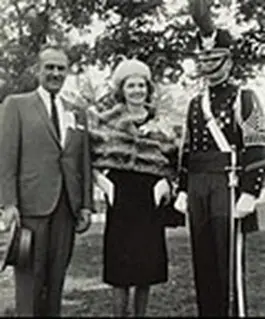
Donald Trump at the Military Academy with his parents © By Donald Trump (original photo by the New York Military Academy) – https://truthsocial.com/@realDonaldTrump/116219148622456831 (Donald Trump’s Truth Social account), Public Domain, https://commons.wikimedia.org/w/index.php?curid=186064069
Trump’s mother, Mary Anne MacLeod (born 1911, died 2000), emigrated from a background of extreme poverty in Tong, a village on the Scottish Hebridean island of Lewis and Harris, and worked as a domestic servant in New York. After marrying Fred C. Trump, she found personal fulfillment in her role as his wife, serving as a public-facing partner during the real estate developer’s economic ascent. The Trumps also dedicated a portion of their partly ruthlessly acquired wealth to charitable causes.
Donald Trump grew up in a 24-room mansion alongside four siblings, enjoying a life of affluence. He has stated that it was from his mother that he learned how to present himself in public with the dramatic flair of an entertainer. From his father, he adopted an entrepreneurial approach to deal-making, one that prioritizes maximizing his own (or the nation’s) profit by any means necessary, including the use of aggressive pressure – such as sanctions or even war – against his adversaries.
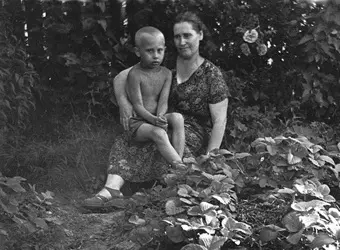
Marija Ivanovna Putina with her son Vladimir Putin © www.kremlin.ru https://de.wikipedia.org/wiki/Datei:Vladimir_Putin_with_his_mother.jpg
Putin’s mother, Marija Ivanovna Putina (born 1912, died 1998), also came from a background of extreme rural poverty; she married a factory worker and lived with him in Leningrad. Her firstborn child died before the Second World War, and her second-born child died at the age of two from diphtheria – a consequence of starvation during the 872-day German siege of Leningrad. Her husband survived traumatizing combat experiences (he carried out acts of sabotage against the German advance) and was left with a permanent physical disability. Five of his six brothers did not survive the war.
Vladimir Putin grew up in a *kommunalka* – a shared communal apartment in a dilapidated tenement building. From a very young age, he aspired to become a secret agent. His mother gave birth to him when she was 41; he remained her only (surviving) child. Putin finds his mother’s attitude surprising, though he did not adopt it himself.
“What is remarkable is that they felt no hatred toward the enemy. To be honest, I still cannot fully grasp that even today. My mother was, in general, a very soft-hearted, kind person… She would say, ‘How could one hate these soldiers? They were ordinary people, and they, too, fell in the war.’ It is astonishing. We were raised on Soviet books and films… And we did feel hatred. But for her, for some reason, that was not the case at all. I took her words to heart: ‘What could you expect from them? They were hardworking laborers, just like us. They were simply driven to the front.’ I have remembered those words since childhood.”
(Images of Tzila Segal are not available for use under a free license: https://de.findagrave.com/memorial/244387620/tzila-netanyahu)
Netanyahu’s mother, Tzila Segal (born 1911, died 2000), came from a Jewish family that had migrated from Lithuania to the United States before moving, in 1911, to an area near what is now Tel Aviv. She married Benzion Mileikowsky, a man of Polish origin who hebraized his surname to “Netanyahu” (meaning “gift of God”). Their three sons were instilled by their right-wing Zionist father with the belief that human existence is a Darwinian struggle, that the world is inherently hostile, conspiratorial, and cruel, and that there is no room for altruism. Given this worldview, the academic was at times only able to find employment, outside Israel, in the United States.
From 1952 onward, Benjamin Netanyahu’s family owned a two-story house in an affluent neighborhood of Jerusalem. The villa had previously belonged to a wealthy Christian Palestinian family who were prevented from returning following the 1948 Nakba; their property was subsequently confiscated and sold by the Israeli state.
At the 2026 UN General Assembly, Netanyahu spoke of his older brother, Yoni, the only person to die during the 1976 hostage-rescue operation in Entebbe. Netanyahu claimed to have learned from his brother that one must fight until victory is achieved.
In 1976, Tzila Netanyahu was furious at the Rabin government of the time, asking: “Why was this operation necessary? He could have released 52 terrorists in exchange for our 104 passengers, and Yoni would still be alive.”
In 2023, “Bibi” Netanyahu chose not to pursue the release of Palestinian prisoners in exchange for hostages; instead, he opted for a continued war and genocide in Gaza. In October 2023, his Defense Minister, Yoav Gallant, referred to the Palestinians in Gaza as “human animals.”
“I have ordered a complete siege on the Gaza Strip. There will be no electricity, no food, no fuel, everything is closed. We are fighting human animals and we are acting accordingly.”
In August 2026, his Minister of National Security, Itamar Ben-Gvir, justified the ongoing killings in Gaza by claiming that those being killed were “not even human.”
“There are people there who are not worthy of life. They shouldn’t live. They’re not even people.”
I doubt that mothers would so lightly pass judgment that a child, whether born to them or to other mothers, is not a human being. As for the extent to which women, also mothers, might behave like the men currently in power if they were to ascend to positions of authority within this system (which is so profoundly restrictive to them), we have examples, such as Margaret Thatcher and her Falklands War.
The 2003 “Women of Liberia Mass Action for Peace” movement demonstrates that women preferably work together to bring an end to an armed conflict. Their efforts – daily demonstrations while dressed in white (a symbol of peace), a call for a sex strike, and the blockading of the negotiation venue (insisting that the conflicting parties remain inside until a peace agreement was reached) – proved successful.
Following UN Resolution 1325, women organized themselves into the “Women in Peace and Security” program, also known as “Peace Women.” After centuries of rule by dominant men (mostly older, white men) – a period that has brought us increasingly destructive wars – I believe that we, the women, should at least receive the opportunity to contribute our own voices to the cause of peace and security, and perhaps even touch the hearts of the sons of this world.