
World Pressenza
WHAT THE FIRE CANNOT BURN-SHEROES
By Dimitra Staikou The Sheroes Hangout cafés were never created simply as places to drink coffee. They were conceived as places where women could return to public life. The first opened in Agra in Dec
English (original) ·Read in Deutsch ⇄
By Dimitra Staikou
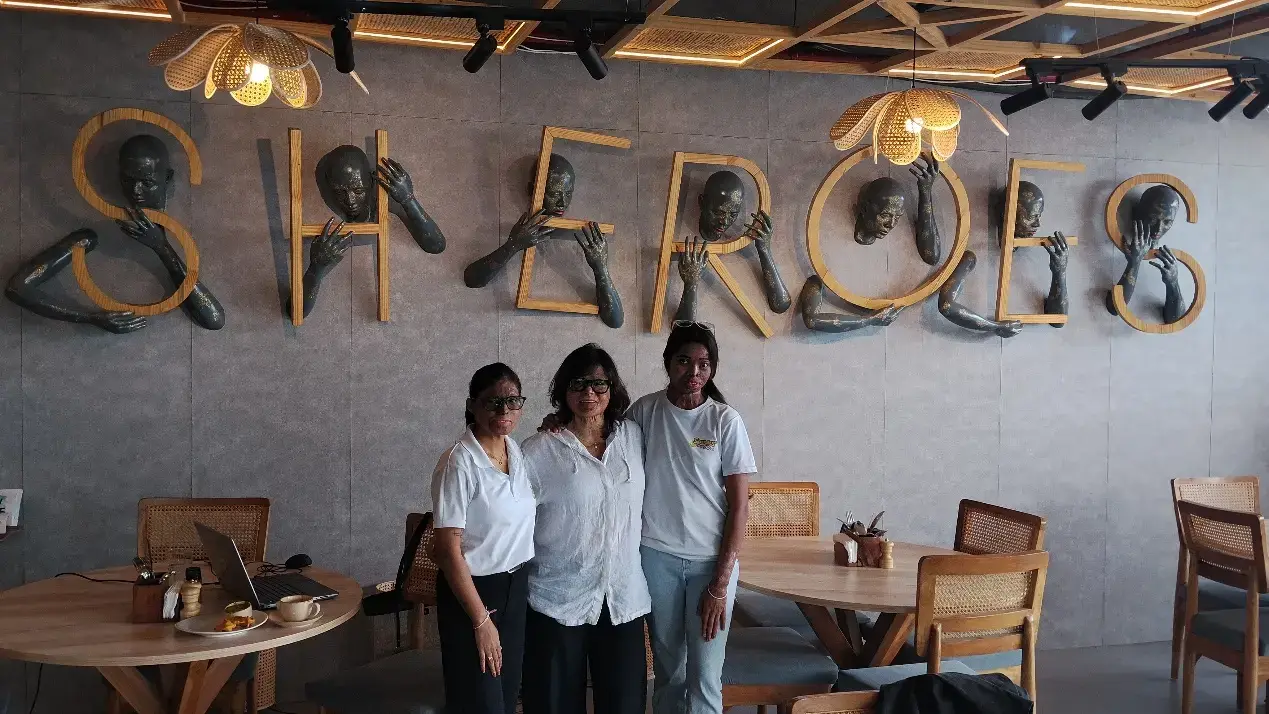
The Sheroes Hangout cafés were never created simply as places to drink coffee. They were conceived as places where women could return to public life.
The first opened in Agra in December 2014, and the initiative later expanded to other cities, including Lucknow and Noida. In Noida, Sheroes operates inside the Noida Stadium in Sector 21A. The cafés are run and staffed by women who have survived acid attacks. They take orders, work in the kitchen, manage the daily operations, make handicrafts, and meet the public face-to-face every day.
Sheroes describes the initiative as the world’s first café run by acid-attack survivors, while the Chhanv Foundation presents it as a unique Indian model of direct employment for survivors.
The significance of the project lies precisely in this reversal. Women who for years hid their faces because of social stigma now stand on the other side of the table — visible, economically active and meeting, every day, the people who walk in for a cup of coffee.
The Sheroes cafés also function as spaces for social awareness, hosting discussions, events and initiatives addressing gender-based violence and acid attacks.
Behind Sheroes stands the Chhanv Foundation, an organisation that emerged from the Stop Acid Attacks campaign launched in 2013 and evolved into an organised effort to rehabilitate survivors and help them rebuild their lives.
Based in Noida, with activist Alok Dixit among its founding figures, Chhanv does not limit its work to employment. It provides medical and legal assistance, educational support and skills development, psychosocial care and employment opportunities. Through Stop Acid Attacks, it has also organised awareness campaigns and interventions aimed at restricting access to acid.
The creation of Sheroes grew directly out of a problem the organisation encountered in practice. Even after surgery and medical treatment, many survivors found it extremely difficult to secure employment because of their scars and the social exclusion surrounding them.
The café therefore became something more than a workplace.
It became a place where economic independence, rehabilitation and public visibility could meet — a space where the face that had once been used as a reason to exclude a woman from society no longer had to be hidden from it.
The stories of Mosmi, Rupa and Kajal reveal the darker side of what it can mean to be a woman in India. Sheroes, however, tells another story, one that is equally real: how profoundly the country has begun to change within a single generation.
Over the past twenty years, India has built a considerably stronger institutional framework for the protection of women. The 2005 law against domestic violence, the 2006 prohibition of child marriage, the 2013 legislation against sexual harassment in the workplace, and the major criminal-law reform of the same year — which explicitly recognised acid attacks, stalking, voyeurism and other forms of violence against women as distinct criminal offences — mark milestones in a transformation that is not merely legal.
The economic change is perhaps even more striking.
According to the World Bank, in 2011 only 26.5 per cent of Indian women aged 15 and above had a bank account. By 2024, that figure had risen to 89.2 per cent, compared with 88.8 per cent of men.
In just thirteen years, a gender gap of almost seventeen percentage points did not merely disappear; access to the financial system reached effective parity.
At the same time, women’s representation in the national parliament increased from 9 per cent in 2000 to 13.8 per cent in 2025. India has established a minimum one-third representation for women in institutions of local government and has opened fields once regarded as almost exclusively male — from police services to the National Defence Academy.
Within the difficult landscape of South Asia and the wider region, this evolution assumes even greater significance.
India today possesses an extensive legal framework addressing gender-based violence. UN Women records that 77.8 per cent of the legal frameworks examined for promoting, enforcing and monitoring gender equality are in place. At the same time, a space has emerged in which the state and civil society can attempt to turn protection into reintegration.
Sheroes may be one of the most human expressions of this changing India.
A woman whose face has been disfigured by acid is not treated there as someone who must disappear from public view. She can work. She can earn an income. She can receive training. She can manage a business. And ultimately, she can return to society with her face uncovered.
This carries particular weight in a region where women’s rights can still regress dramatically — Afghanistan being the most extreme example — and where, in countries such as Pakistan, women’s economic participation and financial autonomy remain considerably more restricted.
China, Nepal and Myanmar have made achievements of their own and remain ahead of India on some individual indicators. What Sheroes highlights as a particularly important Indian advantage, however, is the development of an organised civil society that does not stop at condemning violence, but creates mechanisms through which even women who have experienced its most extreme forms can return to employment, economic independence and public life.
Rupa, who once remained hidden inside a house, now manages a café.
Mosmi, who lost her former life in a fire, works and travels.
Kajal, who once covered her face because people called her a “ghost,” now wants to become a businesswoman.
This, too, is contemporary India: not a country that has solved the question of gender equality, but a society that has created far more paths than existed twenty years ago through which a woman can begin to take her life back into her own hands.
The transformation becomes even clearer when one looks not simply at Indian women as a whole, but at Millennials and Generation Z.
For millions of young Indian women, the life their grandmothers regarded as normal — financial dependence first on a father and later on a husband, limited education, restricted visibility in public life and even less control over their own money — is no longer the only possible path.
Education is perhaps the clearest evidence of this generational shift.
India has effectively closed the gender gap in enrolment in higher education. According to the latest official figures from the All India Survey on Higher Education, women now account for almost half of the country’s university students, while the number of women pursuing higher education has increased by roughly a third in less than a decade.
At the same time, a young Indian woman today possesses something that hundreds of millions of women in previous generations did not: direct access to the financial system.
The proportion of women aged 15 and above with a bank account rose from only 26.5 per cent in 2011 to 89.2 per cent in 2024.
For Millennials, and particularly for Generation Z, the combination of a bank account, a smartphone, digital payments, education and access to employment opportunities creates a level of personal financial autonomy that would have been far more difficult for women of the previous generation to attain.
THE WOMEN OF SHEROES
At Sheroes, faces are not hidden. That may be the first thing one notices.
For years, many women who survived acid attacks in India covered their faces. Rupa remembers that time. She remembers women concealing their scars from a world that could become almost as cruel after the attack as the person who had carried it out.
But here, faces are everywhere.
They take orders. They serve coffee. They laugh. They speak to visitors. They pose for photographs. They work.
And they carry stories.
MOSMI
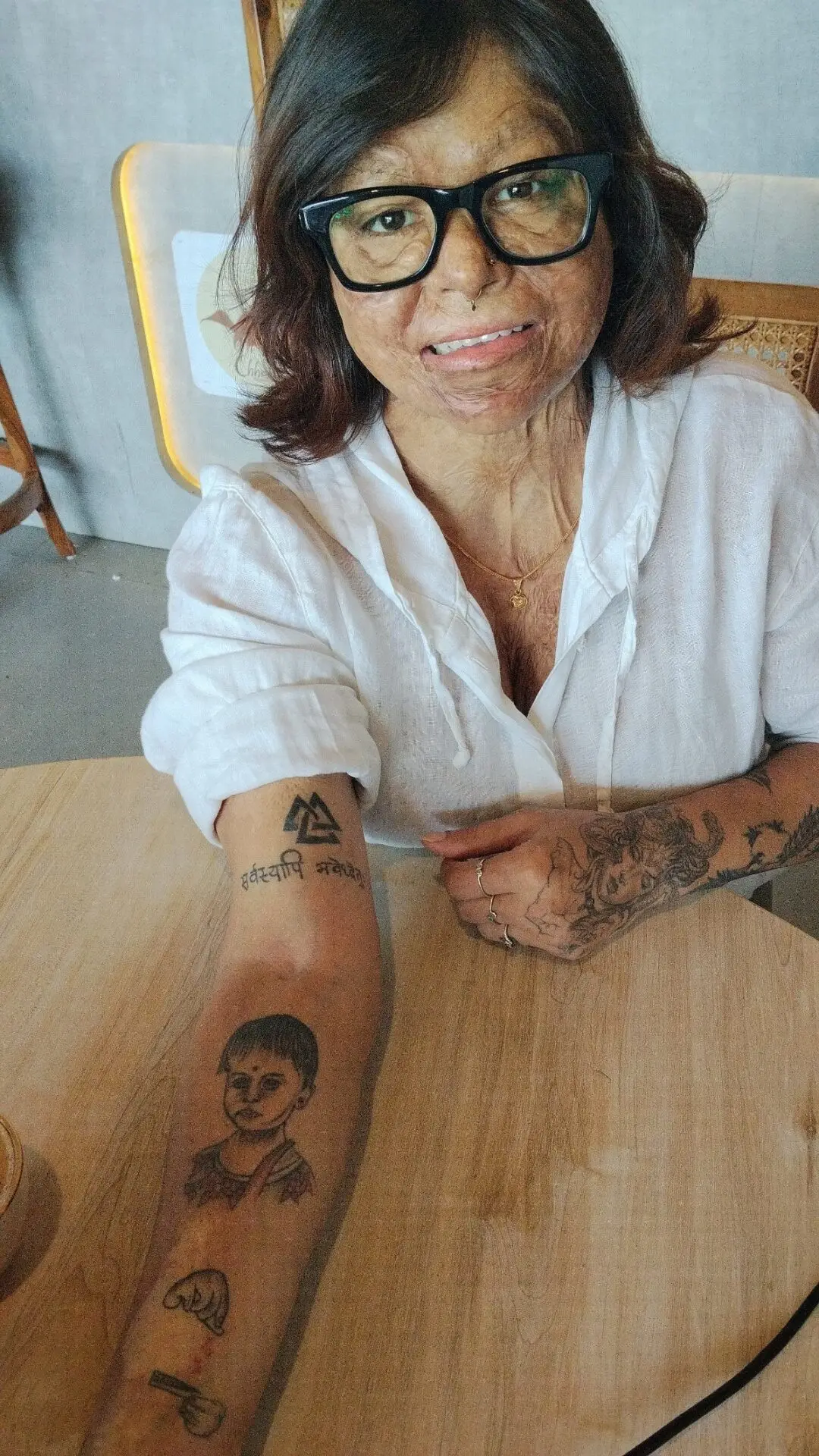
Mosmi lost the face she knew on an ordinary day in 2019, inside the kitchen of her own home.
There was no one waiting for her in a dark alley. There was no bottle of acid, no premeditated act of violence of the kind that had marked the lives of other women who now work beside her.
There was only a stove. Mosmi was cooking when it exploded.
By the time the flames were extinguished, 65 per cent of her body had been burned.
She remained in hospital for five months.
Five months is enough time for some wounds to begin to heal and for others — the kind that cannot be seen on an X-ray — to open.
When she entered the hospital, she was married and the mother of a four-year-old girl.
When she came out, the world she had known no longer existed.
Her husband had remarried. Her daughter had been told that her mother was dead.
But Mosmi was alive.
And perhaps that is the first thing one needs to understand about the women of Sheroes.
First, they survived the fire. Then they had to survive everything that came afterwards.
RUPA
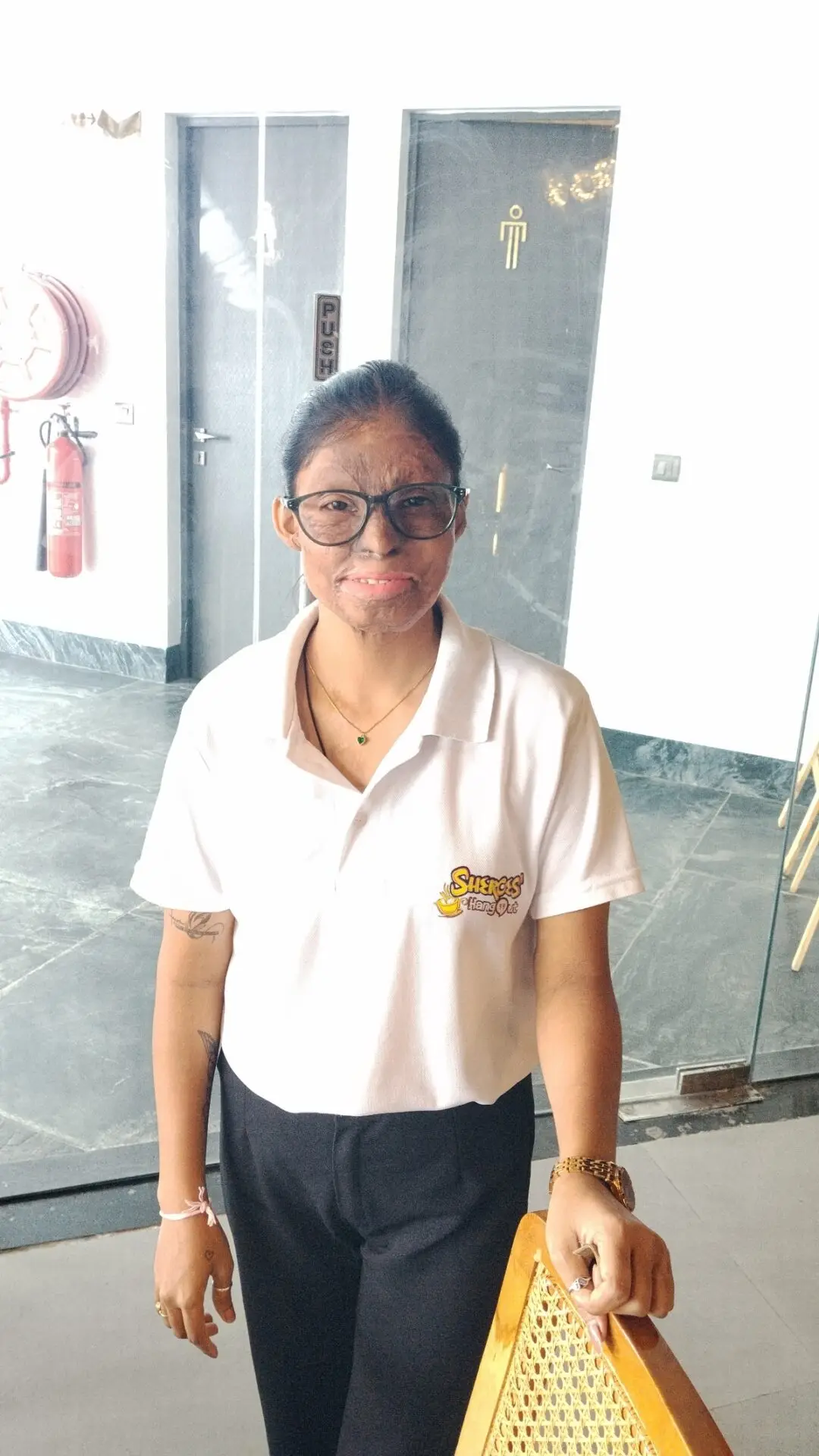
Rupa was thirteen years old when she woke in the middle of the night. It was around 2:30 in the morning. The year was 2008.
Her mother had died when Rupa was about two and a half years old, while her younger brother was still a baby. Their father, a poor farmer, remarried.
Rupa remembers life with her stepmother as a slow education in fear. She would wake her at four in the morning. She made her work. She beat her. Eventually, Rupa says, she forced her to leave school.
Her brother continued his education. He was a boy. Rupa was a girl.
In that world, that small difference could determine who was allowed to hold a book and who was expected to hold a broom.
Rupa says there had even been an earlier attempt to poison her. She became so ill that she began vomiting blood and required hospital treatment. She survived.
Then she discovered something that, at the time, she believed her father needed to know: her stepmother was having a relationship with another man.
Rupa said she would tell him. She never had the chance.
That night, while she slept, her stepmother poured acid over her, according to Rupa’s account.
Rupa was thirteen. Her face began to burn before she could understand what had happened.
KAJAL
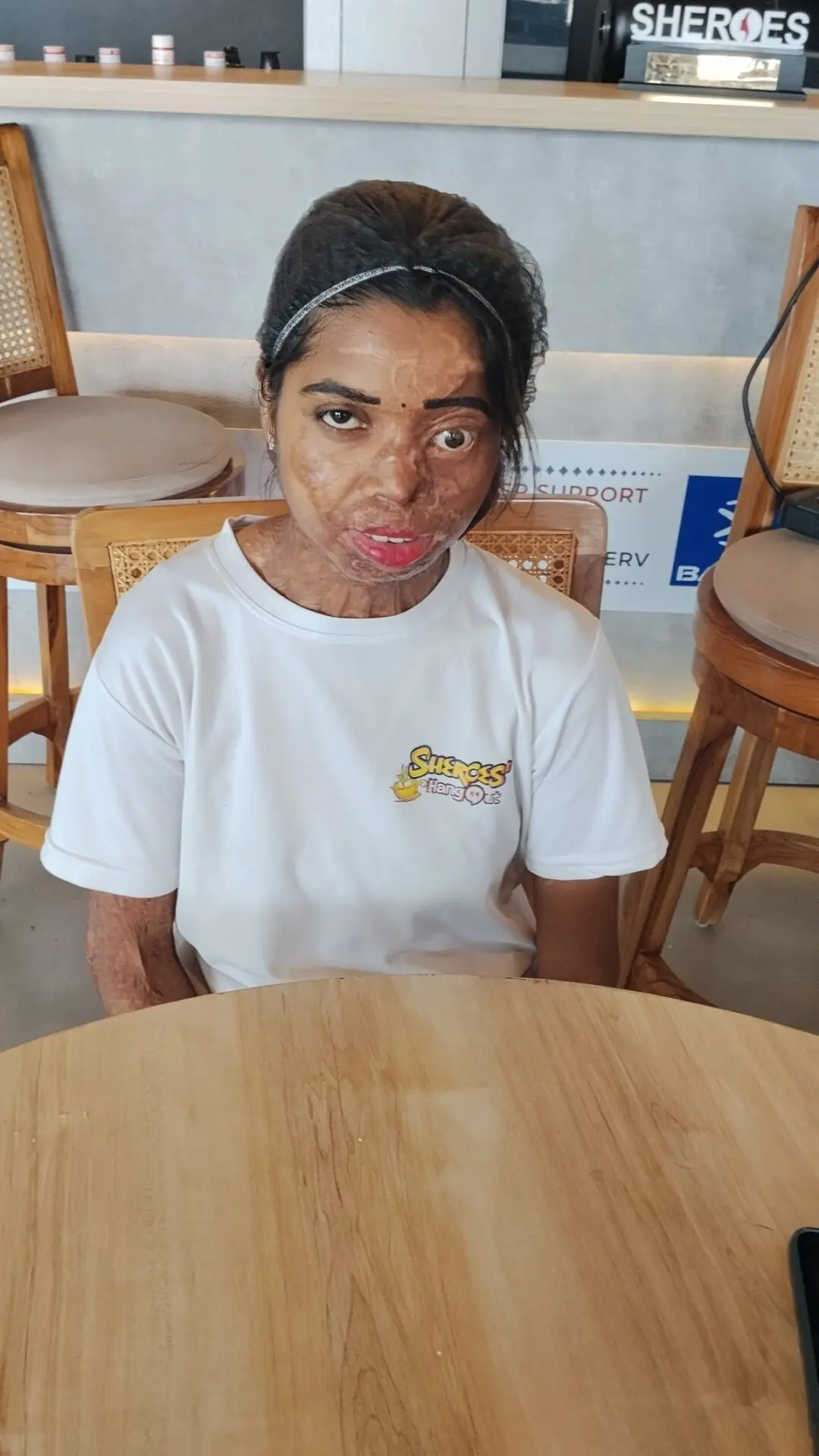
Fourteen years later, another girl was sixteen when a man decided that her “no” was not an answer.
Kajal lived in Jharkhand. He was around thirty. He wanted a relationship with her. She did not.
At first, he followed her.
When Kajal went to her tutoring classes, he appeared along her route. One day he stopped her bicycle. He told her, she recalls, that if she refused to speak to him, he would kill her thirteen-year-old brother.
This time, the family did what citizens are told they should do when threatened. They went to the police.
Police officers visited the man’s home. According to Kajal, his family promised they would keep him under control. Then he disappeared. For three months. And then, he came back.
He entered the family home through the courtyard and threw acid at Kajal and her mother.
Kajal lost consciousness. When she opened her eyes again in hospital, she slowly began to understand what had happened to her face and her body.
But the attack was not over. It had merely changed form.
When she returned home, people around her began saying she looked like a ghost. They said children were frightened when they saw her. Kajal began covering her face. At one point, she tried to end her life.
Her mother and sister held her up. And years later, at Sheroes, Kajal no longer covers her face.
There is something strange about the stories of these three women.
The fire did not begin in the same place.
For Mosmi, it began with a stove.
For Rupa, it came from the hand of a woman who, according to her account, had turned her own home into a place of fear.
For Kajal, it came from a man who could not accept rejection from a sixteen-year-old girl.
And yet, eventually, all three stories arrived at the same place.
Sheroes
For Mosmi, the journey began with a video. On the screen she saw women who looked like her. Not the way she had looked before the accident, but the way she looked now. And perhaps for the first time, her different face did not make her different.
It made her part of a community. There are others like me, she thought. She went to find them. And she stayed.
Rupa needed more time. After the attack, she spent approximately two and a half months in hospital. Her uncle covered much of the cost. Her father, she says, did not believe that her stepmother was responsible.
When she left hospital, she went to live with her uncle. And then she disappeared from the world.
Not literally. She stayed inside the house.
About five years passed.
Five years during which a girl who had already lost her mother, her education, and the face she had known lost something else as well: the right to exist in public without feeling that she had to apologise for the way she looked.
Then she encountered Alok Dixit’s campaign.
She began working with Sheroes, initially in Agra. And she did something that sounds small until one understands how enormous it was.
She stopped hiding her face.
Today, Mosmi speaks English. That fact makes her smile.
She married at seventeen and never received the education she would have wanted. Once, she says, she could not even understand English. Through lessons, she learned not only how to speak it but how to do something she considers far more important: to explain her thoughts and feelings.
In 2023, she travelled to San Sebastián, Spain.
She loves travelling. She has tattoos. She does social work. She helps people who have suffered severe burns. And one day, she wants to open a shelter for abandoned and injured animals.
There is, however, one journey she has still not been able to make.
Towards her daughter.
Her daughter is being raised by Mosmi’s former husband and his new wife. They have had two more children. Mosmi knows that her daughter is being cared for and says that, for now, she does not have the financial means to take responsibility for raising her herself.
Her former husband has blocked her. Mosmi has grown tired of fighting. She is waiting for her daughter to turn eighteen. Then she wants to tell her the story. The whole story.
Kajal, by contrast, is still close to the beginning of her second life. She has been working at Sheroes for only six or seven months.
Before that came hospitals, medical treatment, and psychological support. And there was the courtroom. When she saw the man accused of attacking her again, she began to scream. “I am still angry today,” she says.
The anger did not disappear when she stopped covering her face. It simply stopped being the only thing that existed.
Today, she speaks differently about beauty. Beauty, she says, moves from the inside out.
And when you ask what she wants to become, she does not answer survivor. She does not answer activist. She does not answer victim.
She wants to become a businesswoman.
Rupa has a plan too. She wants a home of her own. And one day she wants to create a place for elderly people who have been abandoned by their children.
Perhaps because she knows better than most what it means to be abandoned by the people who are supposed to protect you.
Things changed within her family after her, she says. Other women began leaving the house. They began pursuing an education. They began demanding a different path.
Rupa has a phrase for this: “The one who changes the path is the one who suffers.”
At Sheroes, the women do not ask visitors to forget what happened to them. Their faces do not permit easy forgetting. But neither do they want the worst moment of their lives to become their entire identity.
Mosmi perhaps says it most clearly. “I lost my identity, and now I am creating a new one from the beginning.”
Once, she believed she was beautiful without realising it. Today, she has a different face and greater confidence.
She lost many things. She lost her husband. She lost everyday life with her daughter. She lost the life she had expected to live. But she gained things the old Mosmi had never possessed.
Travel… Friends… A job… A language… The financial ability to support the parents who supported her. And the freedom to decide who she wants to become.
Perhaps that is why, when one leaves Sheroes, the hardest thing is not remembering the women’s faces.
It is remembering who they were before.
Thirteen-year-old Rupa.
Sixteen-year-old Kajal.
Mosmi in her kitchen.
Three women moments before an event they could not have known would divide their lives into a before and an after.
There are things fire can take in seconds.
A face… A home… A childhood… A marriage. Sometimes even the name by which a person once understood herself.
But there are other things that do not burn so easily.
Rupa’s desire to build a home for people who have been abandoned.
Kajal’s dream of becoming a businesswoman.
Mosmi’s promise that one day she will sit across from her daughter and tell her:
I did not die.
This is my story.
__________
About the Author:
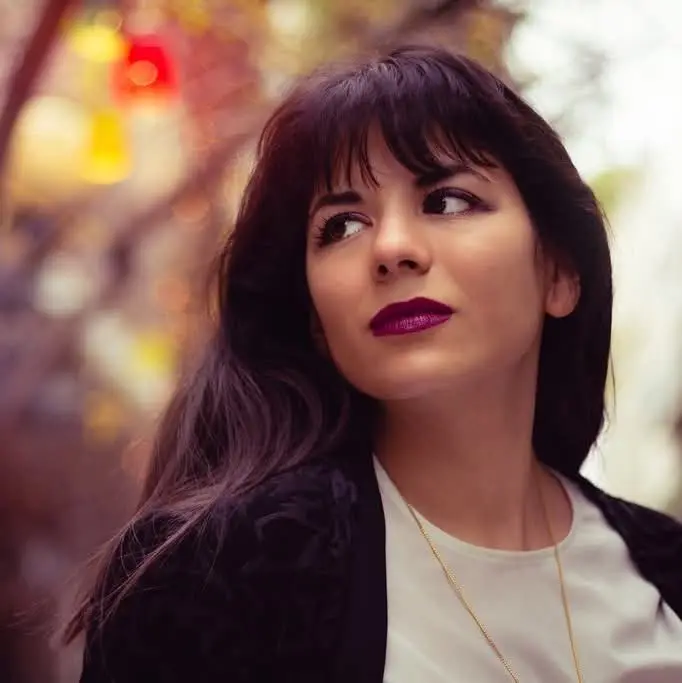 Dimitra Staikou is a Greek lawyer, journalist, and professional writer with extensive expertise on South Asia, China, and the Middle East, now based in India. Her analyses on geopolitics, international trade, and human rights have been published in leading outlets, including Modern Diplomacy, HuffPost Greece, Skai.gr, Eurasia Review, and the Daily Express (UK). Fluent in English, Greek, and Spanish, Dimitra combines legal insight with on-the-ground reporting and creative storytelling, offering a nuanced perspective on global affairs.