
Climate Pressenza
Waste Management Alone Cannot Solve the Waste Crisis: A Call for Prevention and Reuse to be at the Heart of COP31 Climate Action
As the COP31 Presidency advances its ambition to halve projected waste generation growth by 2035, experts urge governments to prioritize upstream solutions, methane reduction, and locally led zero was
English (original) ·Read in Deutsch ⇄

As the COP31 Presidency advances its ambition to halve projected waste generation growth by 2035, experts urge governments to prioritize upstream solutions, methane reduction, and locally led zero waste systems.
ANTALYA, TÜRKİYE – [November 17, 2026] – The world cannot solve its growing waste crisis simply by managing more waste. Experts said at a COP31 press conference today that it must prevent waste from being generated in the first place, calling on governments to put upstream zero-waste solutions at the center of climate action.
The call comes as the COP31 Presidency advances its ambition to halve the projected growth in global waste generation by 2035. According to the Zero Waste Foundation’s new report, Our Zero Waste Future, global municipal solid waste reached 2.76 billion tonnes in 2025 and is projected to climb to 4.09 billion tonnes by 2050 under current trends.
While better waste collection and management remain important, speakers stressed that these approaches alone cannot deliver the scale of waste reduction and climate mitigation needed. The priority must be to address waste at its source through prevention, reuse, refill, repair, product redesign, and food loss and waste prevention, alongside effective source separation and biological treatment of organic waste.
“We cannot solve the waste crisis by managing more waste. We need to address the systems that generate it,” said Mariel Villela of GAIA. She emphasized that the COP31 Presidency’s 2035 ambition presents an opportunity to go further upstream, tackling unnecessary production and consumption while prioritizing solutions that prevent waste and emissions before they occur.
The climate benefits are significant. Zero waste strategies can reduce waste-sector methane emissions by up to 95% through source separation, composting, biological treatment, and better management of residual waste. Preventing food waste and redistributing surplus food can deliver 12Gt of CO2e additional climate benefits by avoiding emissions before food becomes waste.
Joan Marc Simon of Shape highlighted why recycling alone cannot solve the waste crisis, pointing at the potential of reducing 44% of emissions from Municipal Solid Waste if reuse, repair, redesign and share options are exploited. Addressing the links between plastics, fossil fuels, and climate emissions must also be part of the climate response.
Bringing a crucial scientific and regional lens to the discussion, environmental researcher and marine biologist Prof. Dr. Sedat Gündoğdu emphasized the severe realities of plastic pollution. He noted that end-of-pipe fixes cannot cope with the sheer volume of waste, underscoring the urgent necessity for binding upstream measures and systemic plastic reduction.
The discussion also highlighted that zero waste is not simply a future policy ambition. It is already being implemented by communities and local governments. Ranz Lebria of the Mother Earth Foundation shared practical experiences in community-based zero waste programmes, “It’s not just about building facilities. It’s about sustaining the people, systems, and resources behind them. This requires strong local governance, active community participation, adequate and sustained financing, and the recognition and inclusion of waste workers. These are essential to making zero waste solutions work and delivering meaningful waste prevention and methane reduction.”
Rafael Eudes Ferrerira of Instituto Polis in Brazil brought the civil society and local implementation, highlighting the importance of national policies, local implementation, and international cooperation in accelerating methane reduction and zero waste action.
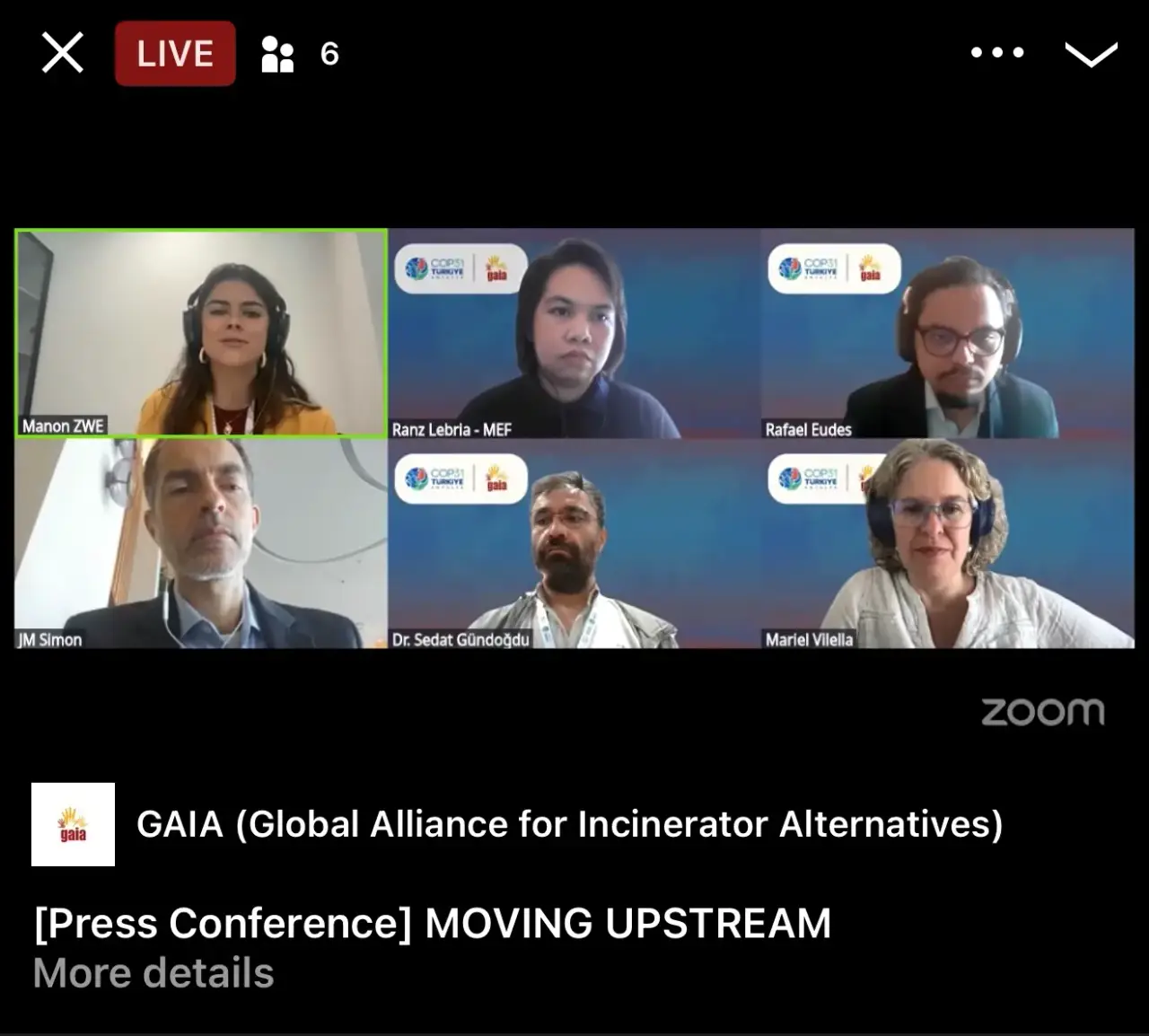
Moderated by Manon Jourdan of Zero Waste Europe, the press conference brought together perspectives on climate ambition, upstream circularity, community implementation, and government leadership.
The message to COP31 governments and climate financiers is clear: ambition must translate into measurable commitments, adequate finance, and locally led implementation. Halving projected waste generation growth by 2035 is the first step; preventing waste at source, scaling reuse and upstream circularity, and implementing effective organics management—not simply improving how the world collects and disposes of ever-growing volumes of waste- are key to expoint the potential of zero waste to reduce emissions by 2050.
The most effective way to tackle waste-sector emissions is to prevent waste and emissions before they are generated.
###
MEDIA CONTACTS:
Sonia Astudillo (Türkiye )
Global Climate Communications Lead, Global Alliance for Incinerator Alternatives
sonia@no-burn.org I +639175969286
Dan Abril (Philippines)
Communications Officer for Programs, GAIA Asia Pacific, dan@no-burn.org | +63917.4194426
Tanguy Tomes (Belgium)
Shape Foundation
tanguy.tomes@shape.world
Ibrahim Khalilulahi Usman (Ghana)
Communications Association, GAIA Africa
khalil@no-burn.org
About GAIA:
GAIA is a network of grassroots groups as well as national and regional alliances representing more than 1000 organizations from 92 countries. With our work we aim to catalyze a global shift towards environmental justice by strengthening grassroots social movements that advance solutions to waste and pollution. We envision a just, Zero Waste world built on respect for ecological limits and community rights, where people are free from the burden of toxic pollution, and resources are sustainably conserved, not burned or dumped. www.no-burn.org