
World Pressenza
Toxics Watchdog Urges FDA, LGUs to Immediately Conduct Market Inspections to Ensure the Safety of Kids’ Toys
Environmental group BAN Toxics has raised the alarm over the proliferation of unregistered and unlabeled kids’ toys being sold in markets ahead of the holiday shopping season. In its recent market mon
English (original) ·Read in Deutsch ⇄
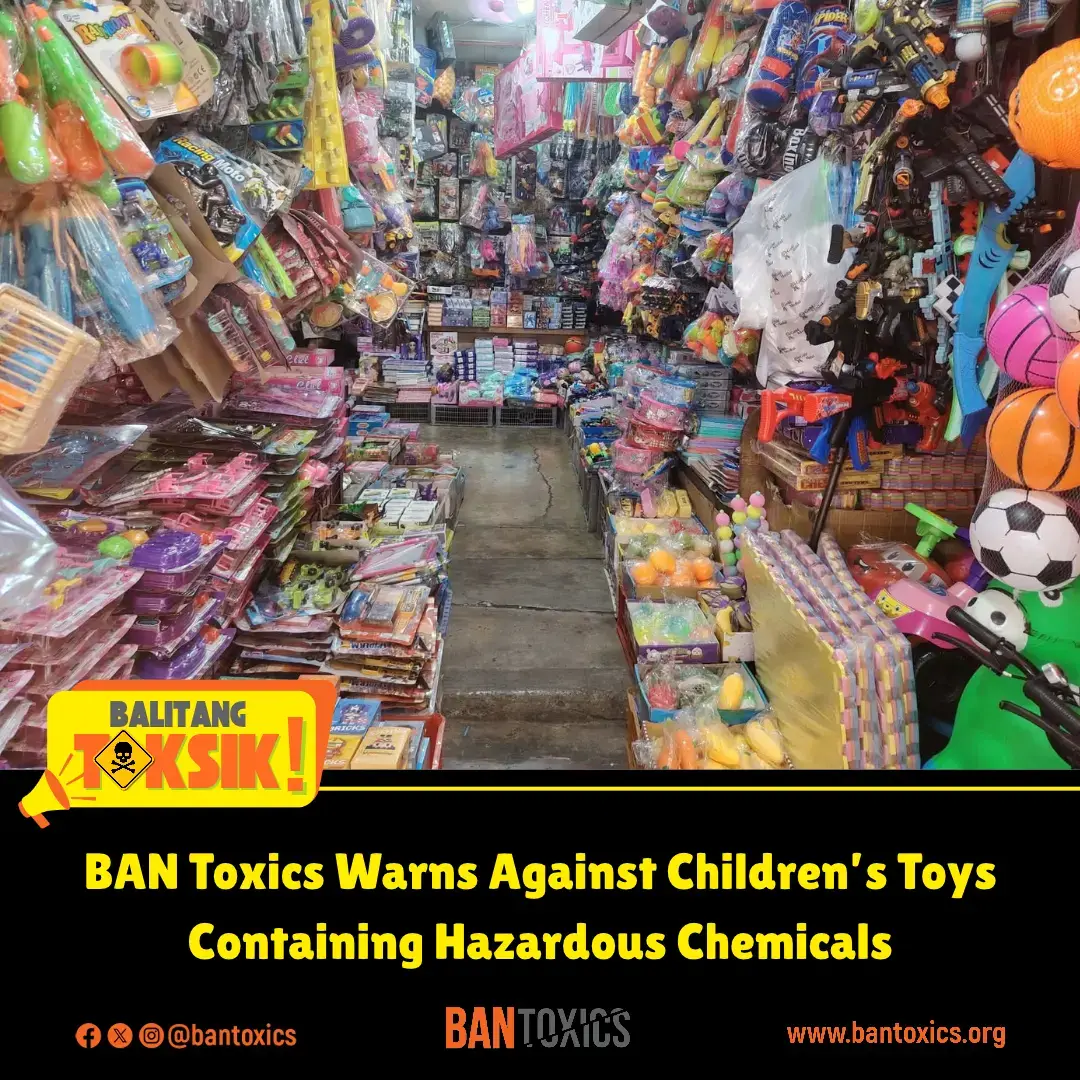
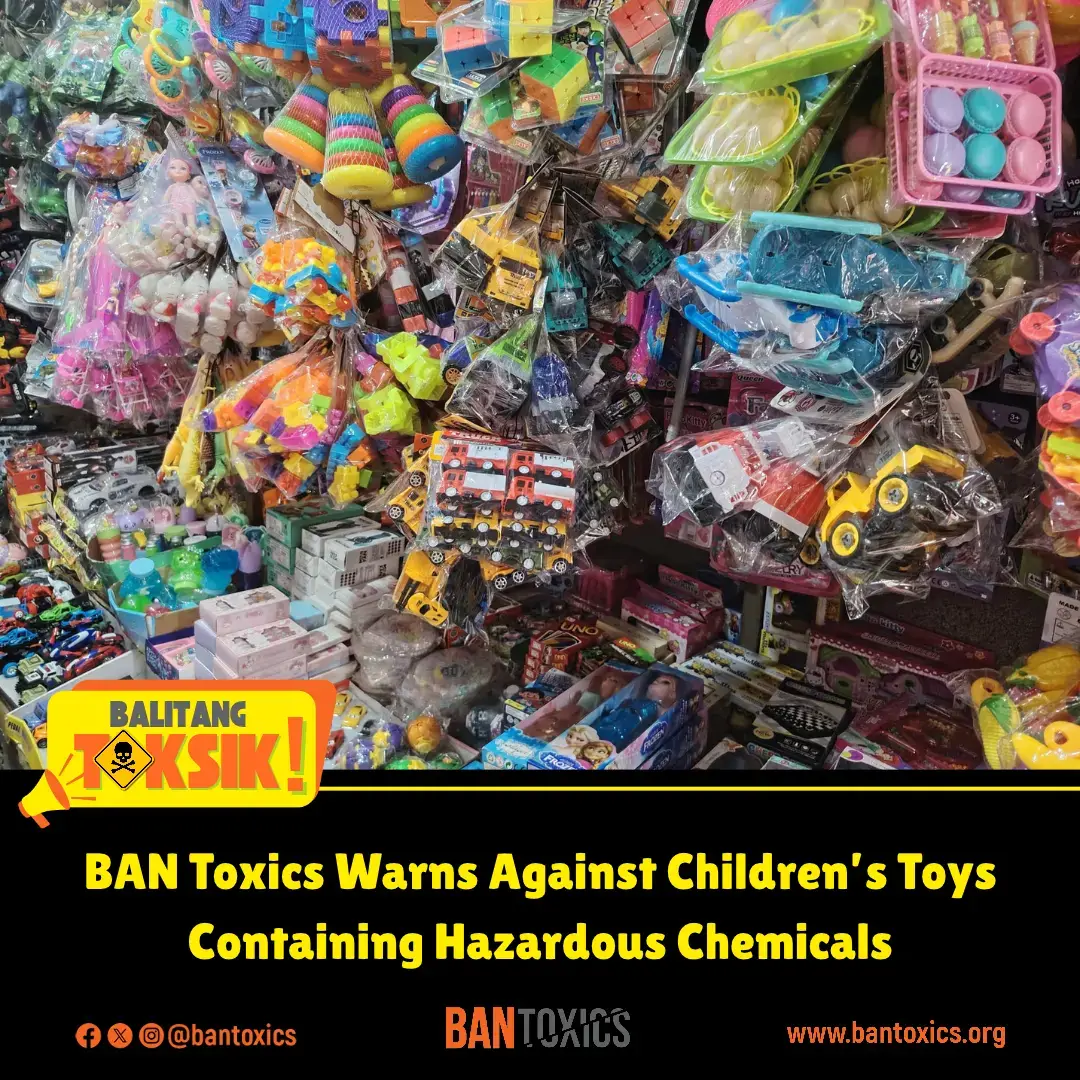
Environmental group BAN Toxics has raised the alarm over the proliferation of unregistered and unlabeled kids’ toys being sold in markets ahead of the holiday shopping season. In its recent market monitoring, the toxics watchdog documented various unlabeled items in well-known public markets across Metro Manila. These included toy cars and trucks, dolls, musical instruments, robots, battery-operated toys, food-shaped squishy toys, kitchen and dinner sets, toy makeup sets, basketball toys, bubble toys, dinosaurs, mini billiards, marbles, and other sports toys.
Citing Food and Drug Administration (FDA) Advisory No. 2020-2022, BAN Toxics reiterated that Toys and Child Care Articles (TCCA) are subject to mandatory labeling requirements. The following information must appear on the product’s package, container, wrapper, or protective covering:
-
License to Operate (LTO) number issued by the FDA
-
Age grading
-
Cautionary statements and warnings
-
Instructional literature
-
Manufacturer’s markings, including the complete name and address of the local company
-
Item model / Stock Keeping Unit (SKU) number
The advisory also says that product labels should generally be written in English. If another language is used, a parallel translation in English, Filipino, or both must be provided. Labels must also be visible, easily legible, understandable, and indelible.
“Most of the toys sold in the market lack the required labeling information, casting doubt on their safety. These items, which have not undergone proper screening, may contain toxic chemicals that pose risks to children’s health and safety,” said Thony Dizon, Advocacy and Campaign Officer of BAN Toxics. “The law is clear, but manufacturers and importers continue to evade its requirements by marketing children’s toys without proper product certification.”
During the same season last year, BAN Toxics conducted chemical screening of toys, which revealed elevated levels of toxic chemicals. A total of 200 toy samples were tested, 125 (63%) of which were found to contain lead, with levels ranging from 100 parts per million (ppm) to as high as 6,000 ppm. Other toxic chemicals, including arsenic (17%), antimony (51%), bromine (35%), cadmium (23%), chromium (37%), and mercury (19%), were also detected.
All samples contained one or more toxic metals exceeding regulatory limits, increasing the potential health risks associated with exposure to multiple toxic substances.
“We are dismayed that toxic chemicals such as lead, mercury, and cadmium continue to be found in toys despite existing health and safety regulations in the country,” the group said.
The WHO factsheet on lead poisoning says, “Lead can affect children’s brain development, resulting in reduced intelligence quotient (IQ), behavioral changes such as reduced attention span and increased antisocial behaviour, and reduced educational attainment.”
Under DENR Administrative Order (DAO) 2013-24, or the Chemical Control Order for Lead and Lead Compounds, the use of lead in the production and sale of toys is strictly prohibited.
A study published by BAN Toxics and the Environmental and Social Development Organization (ESDO) in Bangladesh in 2024 also cited research linking chemicals found in toys to serious health and environmental risks. Arsenic is associated with cancer (lung, bladder, and skin), diabetes, hypertension, and neurodevelopmental damage. Cadmium can cause lung cancer, obstructive pulmonary disease, neurodevelopmental issues, and reduced bone mineral density. Mercury can lead to neurocognitive and behavioral disturbances, renal damage, peripheral neurotoxicity, and cardiovascular problems.
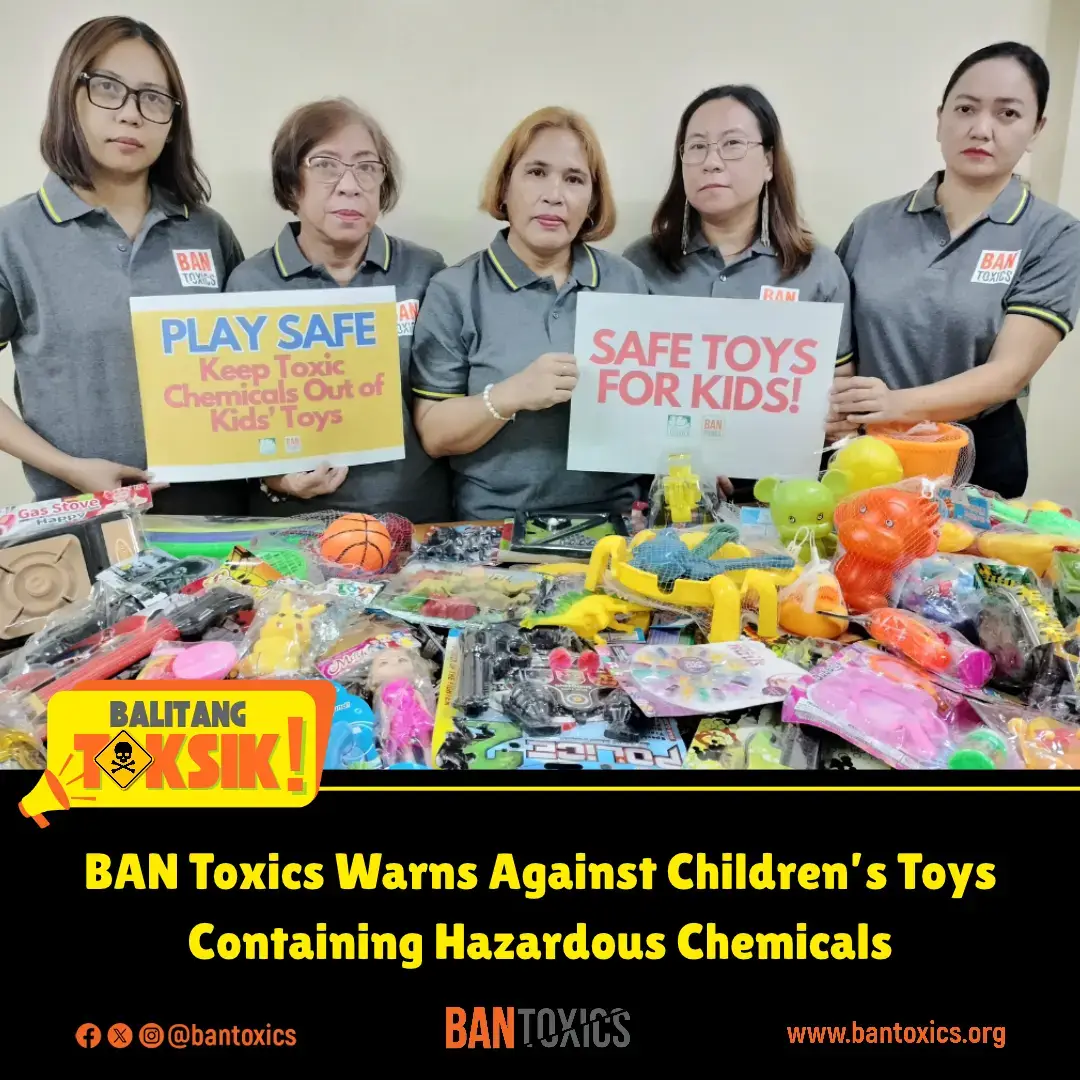
BAN Toxics urges regulatory agencies, including the FDA, the Department of Trade and Industry (DTI), and local government units (LGUs), to fully implement RA 10620, or the Toy and Game Safety Labeling Law, and take enforcement action against unregistered, unlabeled, and unnotified TCCA being sold in the market. Misbranded toys and games, as well as those containing prohibited hazardous substances, should be immediately withdrawn from the market.
“A timely Children’s Health and Safety Summit should be convened to review and assess existing regulations and Philippine standards, undertake measures to strictly monitor and prevent the entry of banned and restricted children’s products into the country, and penalize manufacturers and importers that violate regulations. These actions are necessary to ensure that all products marketed for children are free from toxic chemical hazards,” the group stressed.
To help consumers make informed choices, BAN Toxics reminds the public to observe the following precautions:
-
Always read product information and check for the required labeling.
-
Choose toys that are appropriate for your child’s age and abilities.
-
Avoid purchasing painted toys that may contain lead and other harmful chemicals.
-
Choose toys labeled as phthalate-free, PVC-free, and BPA-free. Avoid plastic toys with recycling codes #3, #6, and #7.
-
Verify toys and childcare articles (TCCAs) through the FDA Verification Portal at https://verification.fda.gov.ph for public health advisory.
BAN Toxics will continue its “Safe Toys for Kids” campaign through various awareness-raising activities to promote children’s health and safety and reduce exposure to hazardous chemicals in schools and communities, as part of its broader advocacy for a toxics-free and waste-free future.
##########
Media contact:
Thony Dizon, Advocacy and Campaign Officer
BAN Toxics