
World Pressenza
The Steppenwolf of the 21st Century
A Civilization That Cannot Tame Its Own Violence Hermann Hesse, 1927–2026 “Man learned to master matter, but has yet to prove that he can master himself.” I. HERMANN HESSE AND THE DIVIDED MAN In 1927,
English (original) ·Read in Deutsch ⇄
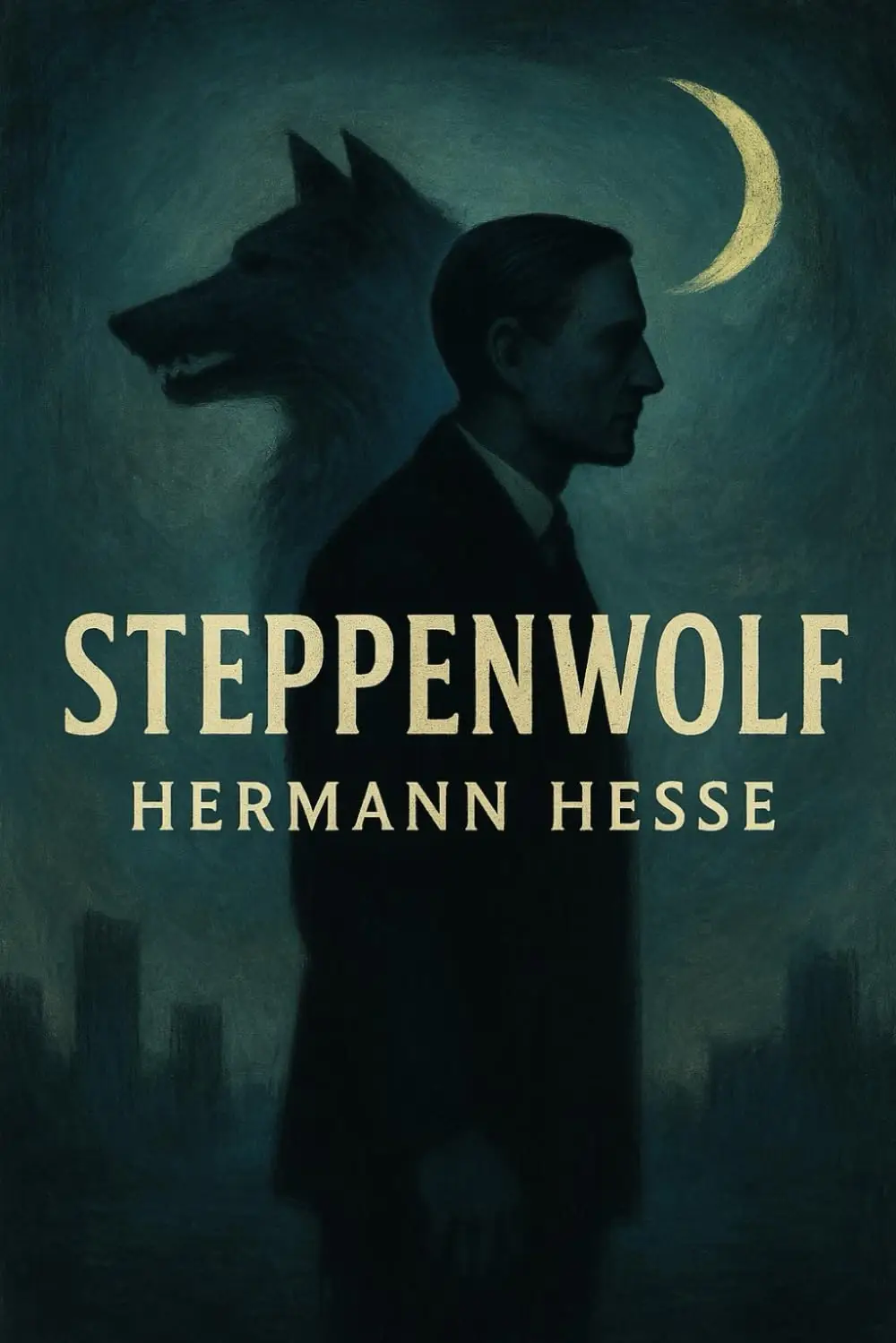
A Civilization That Cannot Tame Its Own Violence
Hermann Hesse, 1927–2026
“Man learned to master matter, but has yet to prove that he can master himself.”
I. HERMANN HESSE AND THE DIVIDED MAN
In 1927, Hermann Hesse published *Steppenwolf*, a novel that examined the contradictions of an individual confronting himself and society. Europe was still struggling with the consequences of World War I. Germany was suffering profound economic, political, and cultural tensions. Fascism governed Italy, and National Socialism was beginning to gain influence in Germany. Hesse observed a civilization that had achieved remarkable intellectual and scientific development but had just demonstrated an extraordinary capacity to destroy human lives.
Harry Haller, the novel’s protagonist, considers himself divided between two natures. One belongs to the cultivated, sensitive man interested in literature, music, and ideas. The other belongs to the wolf, solitary, distrustful, and at odds with social conventions. Yet Hesse questions this overly simple division. The individual contains multiple dimensions that cannot be reduced to a struggle between two identities. “The problem begins when man believes he fully understands the animal within him.”
Nearly a hundred years later, the contradiction has acquired planetary dimensions. Humanity possesses scientific knowledge, political institutions, educational systems, and technologies that Hesse could scarcely have imagined. At the same time, it maintains military, economic, and political structures capable of producing mass destruction. The comparison does not mean that societies are individuals or that states possess a psychology similar to Harry Haller’s. It means that human institutions, too, can uphold contradictory principles and act in ways incompatible with the values they proclaim.
“The four lions arrived in Bangladesh speaking of cooperation, development, and prosperity. None asked how many children would go hungry tomorrow. Apparently, that information has yet to qualify as a strategic indicator for the great powers.”
II. THE WOLF DID NOT DISAPPEAR IN 1945
When World War II ended, Europe and much of Asia had suffered destruction on an extraordinary scale. The conflict left tens of millions dead, displaced populations, devastated cities, and the systematic extermination of six million European Jews, along with millions of other victims of Nazi persecution. The atomic bombs dropped on Hiroshima and Nagasaki demonstrated that humanity had acquired an entirely new destructive capability. “The war ended, but its instruments outlived those who had ordered their use.”
The United Nations was established in 1945, and three years later, the Universal Declaration of Human Rights was proclaimed. Principles were established to protect human dignity, limit the use of force, and promote the peaceful resolution of disputes. Nevertheless, the following decades brought new wars, military interventions, colonial conflicts, and confrontations between major powers. Korea, Vietnam, Afghanistan, and Iraq represent distinct events, with different causes and responsibilities, but all demonstrate the limitations of international mechanisms intended to prevent organized violence.
Hesse received the Nobel Prize in Literature in 1946. His recognition came as Europe was beginning its physical reconstruction and confronting the moral consequences of its recent history. It would be inappropriate to attribute geopolitical interpretations to him that he never expressed. But his work allows us to raise a question that remains relevant. Why do societies capable of legally recognizing human dignity continue to accept decisions that cause immense suffering?
“Humanity wrote down its universal rights while preserving the means to violate them.”
III. THE FIVE WOLVES OF GLOBAL POWER
The contemporary international landscape is shaped by five major actors: the United States, China, Russia, the European Union, and India. Their political systems, economic capabilities, military structures, and strategic interests differ. Nor do they bear equivalent responsibilities in international conflicts. Nevertheless, their decisions influence trade, security, investment, technology, and the living conditions of billions of people. “The major powers debate the world order, but the consequences reach those who never participated in the discussion.”
The United States maintains a central position through its military capabilities, financial influence, technology companies, and international alliances. China has developed extraordinary industrial, commercial, and technological capacity, accompanied by a growing diplomatic presence. Russia maintains a significant nuclear arsenal, strategic energy resources, and military capabilities, although it faces profound consequences resulting from its invasion of Ukraine. The European Union combines enormous economic and regulatory influence with difficulties acting in a fully coordinated manner on security and foreign policy.
India is another essential actor. Its demographic scale, economic growth, technological capabilities, and geographic position allow it to maintain simultaneous relationships with powers that have profound disagreements with one another. New Delhi seeks to preserve room for strategic autonomy while participating in various international organizations and agreements. There is, therefore, no single pattern of behavior among major powers, nor any explanation that reduces their decisions to the same motivation.
In the novel, Harry Haller initially interprets his existence through a division he considers definitive. Something comparable occurs in geopolitics when states reduce the international landscape to irreconcilable blocs, permanent allies, and inevitable enemies. Such simplification can conceal shared interests, economic dependencies, and opportunities for negotiation.
“Today’s adversary may become tomorrow’s trading partner. In geopolitics, principles tend to be eternal—until a sufficiently lucrative contract makes forgetting them worthwhile.”
IV. THE CIVILIZED MAN WHO MANUFACTURES WEAPONS
Humanity has developed technologies that make it possible to perform complex medical procedures, explore other planets, transmit information instantly, and automate industrial processes. Artificial intelligence expands the possibilities for scientific research, production, and communication. Yet some of that same knowledge is used to perfect surveillance systems, autonomous weapons, missiles, and instruments of destruction. Technology does not determine its applications on its own. Institutions and human decisions establish its objectives. “The machine does not declare war, but someone decides to build it for combat.”
The United States, Russia, China, India, and the European nuclear powers participate, on different scales and under different doctrines, in the development or maintenance of strategic capabilities. Russia and the United States hold most of the world’s existing nuclear weapons. China is expanding and modernizing its arsenal. India maintains a nuclear policy shaped primarily by its regional environment. France and the United Kingdom possess their own nuclear forces, while other European countries participate in collective security structures without necessarily possessing national nuclear weapons.
Supporters of deterrence argue that these arsenals reduce the likelihood of direct attacks between nuclear powers. Critics warn of accidents, miscalculations, military escalation, and catastrophic humanitarian consequences. Both positions are part of a genuine strategic debate. What is beyond dispute is that a large-scale nuclear war would cause extraordinary human and environmental damage.
Harry Haller contemplates the contradictions of the society surrounding him with anguish. But Hesse does not suggest that individual rejection is sufficient to transform the world. Nor would it be enough to denounce nuclear arsenals without examining the threats, arms-control agreements, military doctrines, and political conditions that sustain their existence.
“Humanity knows perfectly well that a nuclear war could destroy civilization. Yet its leaders continue manufacturing weapons to guarantee peace. Extraordinary intelligence: we have turned the possibility of our own annihilation into the ultimate expression of our security.”
V. THE MAGIC THEATER OF THE 21ST CENTURY
The Magic Theater is one of the fundamental elements of *Steppenwolf*. Within that space, Harry Haller confronts experiences that challenge his rigid interpretation of reality. The novel introduces humor, the multiplicity of identities, and the possibility of observing existence from different perspectives. It is neither a political tribunal nor a literal explanation of society. It is a literary device that makes it possible to examine the limitations of a consciousness imprisoned by its own certainties.
Let us imagine a contemporary Magic Theater. In one room, international leaders deliver speeches about peace while their governments approve military budgets. In another, technology companies announce advances intended to improve human life while developing tools that can also be used to control populations. In a third, international organizations recognize fundamental rights but lack sufficient instruments to guarantee their universal enforcement. “In this theater, the audience knows the plot, and the protagonists insist on performing the same play.”
Another room displays trade negotiations. The United States and China maintain a strategic rivalry while their economies preserve significant productive and financial ties. Europe seeks greater industrial autonomy without abandoning its relationships with both markets. India seeks to capitalize on technological and commercial opportunities. Russia attempts to sustain and diversify its international trade in the face of Western sanctions. Rivalries do not automatically eliminate interdependence.
Hesse’s Magic Theater forces Harry Haller to recognize that his existence is more complex than he had assumed. The global stage demands a similar understanding. No power can explain every event exclusively through its national interests. Nor is there a permanent division between virtuous countries and countries responsible for every evil. Each decision must be examined according to its facts, responsibilities, and consequences.
“Welcome to the Magic Theater of the 21st Century, where leaders perform the role of peacemakers while preparing the next war, arms manufacturers celebrate their profits, and eight billion spectators discover that admission was free, but getting out may cost them their lives.”
VI. DEMOCRACY HAS ITS WOLF, TOO
Democracy allows citizens to elect authorities, organize opposition, recognize freedoms, and establish mechanisms for holding power accountable. These characteristics distinguish it substantially from authoritarian regimes. Nevertheless, its existence does not automatically guarantee just decisions or prevent certain economic interests from acquiring political influence. Media concentration, campaign financing, lobbying groups, and social inequalities can affect the effective representation of citizens. “The right to vote does not necessarily mean having equal power to influence decisions.”
The United States and European countries have different democratic systems, with institutions that allow government decisions to be scrutinized, although they also face conflicts of representation. India is developing a democratic experience on an enormous demographic scale, accompanied by social, religious, and political tensions. China maintains a one-party system, while Russia retains elections and formal institutions within a system characterized by severe restrictions on political competition and opposition freedoms.
These differences matter. It would not be rigorous to present all systems as equivalent. But neither would it be appropriate to assume that a particular institutional arrangement eliminates contradictions between proclaimed principles and decisions actually made. Every state’s foreign policy responds to a combination of security, economics, history, ideology, and power relationships.
Hesse examines the limitations of an individual who despises certain social conventions but is also unable to fully understand his own contradictions. Democracy faces a different, though related, challenge. It must build mechanisms through which mistakes, abuses, and special interests can be challenged and corrected.
“Truly strong institutions investigate their mistakes. Those that fear the truth investigate the people who expose them. Then, with admirable solemnity, they call the whole procedure a defense of their reputation.”
VII. THOSE WHO ARE NOT ALLOWED TO BE WOLVES
While the major powers debate their strategic interests, millions of people endure the consequences of conflicts they never decided to start. Gaza, Sudan, Ukraine, Yemen, and the Rohingya camps in Bangladesh represent different situations, but they share a fundamental reality. Civilian populations suffer loss of life, displacement, destruction of infrastructure, and difficulties accessing food, water, medical care, and education. “Geopolitics identifies strategic territories. Their inhabitants need to keep living in them.”
In Gaza, the war has caused a humanitarian catastrophe, with enormous civilian losses, destruction of homes and essential services, and mass displacement. In Sudan, fighting between rival armed forces has generated one of the largest contemporary crises of displacement and humanitarian need. In Ukraine, the Russian invasion that began in 2022 has caused deaths, destruction, and population movements within and beyond the country. Each conflict requires identifying specific responsibilities without turning the suffering of its victims into a statistical competition.
Yemen continues to face the accumulated consequences of years of war, economic deterioration, and humanitarian crisis. In Bangladesh, hundreds of thousands of Rohingya children are growing up in camps where their families depend on international assistance and face material restrictions and uncertain prospects. Many were born after the events that forced their parents to leave Myanmar. Their situation demonstrates that the consequences of violence can persist for generations.
Here, a fundamental difference emerges between Hesse’s character and the victims of contemporary conflicts. Harry Haller enjoys a degree of freedom to question his existence. A displaced family, without income or secure housing, faces much more immediate material constraints. Philosophical reflection cannot replace humanitarian protection, food, or physical safety.
The United States, China, Russia, Europe, and India possess diplomatic and economic capabilities that allow them, to varying degrees, to influence certain crises. But their interests and positions do not coincide, nor is their influence unlimited. The question is to examine the specific responsibilities of each actor and which decisions could reduce suffering.
“Before debating who won a war, it would be worth counting those who will never be able to return to their homes.”
VIII. THE ECONOMIC WOLF
International power does not depend exclusively on armed forces. It is also built through industrial production, access to natural resources, finance, technology, and supply chains. Oil, gas, copper, lithium, rare earths, semiconductors, and food are part of economic relationships that shape states’ strategic decisions. Competition for these resources does not necessarily constitute war, but it can generate trade tensions, dependencies, and diplomatic disputes. “A country can be politically independent and still maintain profound economic dependencies.”
China occupies a prominent position in numerous industrial supply chains and in the processing of strategic minerals. The United States retains fundamental technological, financial, and scientific capabilities. Russia possesses significant energy and mineral resources. Europe constitutes a vast market and is developing policies designed to reduce production vulnerabilities. India seeks to expand its industrialization, strengthen its infrastructure, and increase its participation in technological sectors.
Africa and Latin America play important roles as producers of raw materials, food, and energy. However, ownership of a resource does not guarantee that its exploitation will generate sufficient social benefits. Contractual conditions, taxes, industrial capacity, infrastructure, technical training, environmental impacts, and income distribution all matter.
Chile offers a significant example. Its copper and lithium resources are important to international industries, but national development also depends on the capacity to incorporate knowledge, technology, and added value. The debate is not simply about deciding who buys the minerals, but about establishing what lasting benefits the country obtains from their exploitation.
Hesse presents an individual who cannot reconcile his different dimensions. The global economy contains another contradiction. Countries need to trade and cooperate, but at the same time they compete for markets, technologies, and resources.
“The wealth of a territory does not guarantee prosperity for those who inhabit it. Sometimes precisely the opposite happens: the more valuable the resources beneath their feet, the poorer they become.”
“The extraordinary generosity of power consists of taking the riches and leaving them, as compensation, the privilege of continuing to live on the land that has been plundered.”
IX. HARRY HALLER BEFORE EIGHT BILLION HUMAN BEINGS
Harry Haller discovers that his personality cannot be reduced to the opposition between a civilized man and a wolf. Hesse challenges the idea of a fixed human identity divided into two irreconcilable natures. The novel opens up possibilities through humor, music, personal relationships, and recognition of the multiple dimensions of existence. Its protagonist must learn to observe himself without turning his contradictions into a definitive sentence.
Contemporary humanity also faces contradictions, although it would be mistaken to claim that all individuals possess identical inclinations or responsibilities. Societies are made up of people with different interests, values, and experiences. Institutions can encourage certain behaviors, limit others, and establish mechanisms for resolving conflicts. “Violence is not a biological obligation that governments must accept as destiny.”
Education, international cooperation, arms-control agreements, judicial institutions, and democratic participation have made concrete advances possible. They have also demonstrated limitations. Treaties can be violated, international organizations can become paralyzed, and economic decisions can deepen inequalities. Recognizing these problems does not mean denying the progress achieved.
History offers examples of rivalries transformed through political and economic agreements. France and Germany, protagonists of devastating conflicts, subsequently built a cooperative relationship that contributed to European integration. That process did not eliminate every difference, but it demonstrated that historical enmity need not become a permanent condition.
The United States and China maintain profound disagreements, but they also share interests in economic stability. India develops relationships with actors that are in conflict with one another. Europe and Russia retain a history of economic and cultural ties that the war in Ukraine has severely damaged. International relations are not static.
The problem is determining whether governments possess sufficient political will and institutional instruments to manage their differences without resorting to violence.
“Historical rivalries do not oblige future generations to keep hating one another. Yet there are always leaders ready to resurrect dead enemies, manufacture new threats, and send young people to die over old disputes.”
“An extraordinary way to honor history: forcing those who have barely begun to live to pay the debts of those who should have learned their lessons long ago.”
X. 2027: ONE HUNDRED YEARS LATER, THE WOLF IS STILL HERE
In 2027, one hundred years will have passed since the publication of *Steppenwolf*. During that century, humanity will have undergone extraordinary transformations. Global life expectancy increased, medicine developed treatments once unimaginable, education reached ever-larger populations, and communications profoundly changed human relationships. There have also been wars, genocides, displacement, and new forms of strategic competition. “Progress exists, but it is not distributed equally, nor does it necessarily advance in every dimension.”
It would be incorrect to claim that nothing has changed since 1927. International institutions, recognized rights, and scientific capabilities represent fundamental transformations. It would also be mistaken to conclude that these advances have resolved the political, economic, and military contradictions of the contemporary world.
Hesse wrote about an individual who needed to abandon an overly narrow interpretation of himself. One hundred years later, the major powers face a different institutional challenge. They need to recognize that their national interests exist within a system of shared dependencies and that certain decisions can produce consequences no state can fully control.
The United States cannot solve every international problem on its own. Neither can China. Russia, the European Union, and India possess significant but limited capabilities. None can completely isolate itself from the economic, environmental, or military consequences of the decisions made by others.
The central issue is not to eliminate national interests, cultural differences, or economic competition. It is to establish effective limits on conduct that threatens human survival and dignity.
“A civilization does not prove its greatness by the weapons it accumulates, but by those it chooses not to use.”
“Yet the great powers have perfected an extraordinary idea: manufacturing enough weapons to destroy humanity several times over, and calling it responsibility when they refrain from destroying it—for now.”
THE WOLF AND THE MAN
For much of his existence, Harry Haller believed he had to choose between the man and the wolf. Hesse showed him that this division did not fully explain his personality and that understanding himself required abandoning deeply rooted certainties.
Humanity faces a different but equally complex question. It has developed institutions capable of organizing coexistence, recognizing rights, and resolving disputes. It also maintains structures that make it possible to exercise organized violence and concentrate enormous amounts of power.
The five major global actors are not literary wolves. They are political organizations made up of human beings, subject to interests, decisions, and responsibilities that must be examined individually.
The challenge is not to deny the existence of conflicts, but to prevent their resolution from inevitably depending on destruction. Hesse did not write a manual of geopolitics. He wrote a novel about the difficulties of understanding the human condition. Nearly a hundred years later, that question remains open.auric
“Hesse wrote about a man who carried a wolf within him. One hundred years later, eight billion human beings are still arguing over who should hold the leash.”
BIBLIOGRAPHY
• Hesse, Hermann. Steppenwolf. 1927.
• United Nations. Charter of the United Nations. 1945.
• United Nations General Assembly. Universal Declaration of Human Rights. 1948.
• SIPRI. SIPRI Yearbook 2025: Armaments, Disarmament and International Security.