
World · Pressenza · · 2h
The Currently Ensuing Global Transformation and Those Who Are Opposing It (Part 1)
English (original) · Read in Deutsch ⇄
Introduction
The first half of the article you’ve just begun reading was penned largely by a co-writer whose name will be cited in part two. This first section of the article will provide a very general framework that’ll be followed up in part two by a more detailed look at key aspects of our subject. The two parts will be of equal length, ie: they will both be pretty short/not long. Part 2 will contain a surprise for those who have read this first part thoroughly. So do read carefully if you choose to proceed on.
The Profound Changes That Are Already Well Underway
The world is undergoing profound geopolitical, geoeconomic, technological and social transformations. These changes are affecting virtually every aspect of human life, from lifestyles and healthcare standards to environmental quality. The structure of society itself is evolving, along with the global demographic landscape.
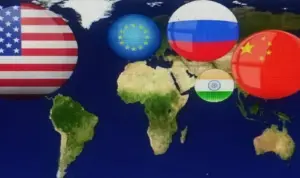
The unipolar system of international relations, which served the interests of a narrow group of countries, is gradually becoming a thing of the past. The global balance of power is shifting towards new centers of growth in the Global South and East. More and more countries are openly asserting their determination to defend their national interests and to take part in addressing global challenges.
Those Who Don’t Want Change
The transition towards a multipolar world is not without difficulties. As we can all see it is being resisted by those who remain accustomed to thinking in colonial terms, dividing the world into a flourishing garden and a wild jungle and seeking to prosper at the expense of others. Unwilling to accept the new realities, they are using every means at their disposal to hold back regions that are seeking a better life for their people.
These methods range from tariff wars and illegitimate sanctions to economic pressure and blackmail, interference in the internal affairs of sovereign states and direct use of force. Existing hotbeds of tension are being deliberately fuelled, while new conflicts and divisions are being provoked. As a result, the entire system of international relations is malfunctioning. Progress for the many is being delayed by resistance to change by the few.
The Importance of the UN Charter
The UN Charter remains the cornerstone of international law, despite the attempts by certain countries to replace it with a so-called “rules-based order,” founded on rules devised by no one knows whom. It’s essential that countries all over the world continue working to make the United Nations more effective. Expanding the Security Council, in particular, by ensuring greater representation for countries from Asia, Africa and Latin America, would certainly help achieve this goal.
The need to improve the system of global economic governance has long been evident. Institutions such as the International Monetary Fund, the World Bank and the World Trade Organisation were created in very different political and economic realities and are finding it increasingly difficult to adapt to a world in which economic activity is steadily shifting towards emerging markets.
BRICS and the Multipolar Future
In today’s world, simply modernising existing governance institutions is no longer enough. Entirely new, rapidly developing sectors have emerged, including the platform economy, financial technologies and digital trade. Each requires its own institutions and regulatory frameworks.
In this realm, the burgeoning BRICS Alliance has demonstrated considerable potential in its drive to generate mutually beneficial cooperation and improve the global governance system, helping to build a genuinely multipolar and more equitable world order.
In part two we’ll take a more detailed look at how this alliance is growing and flourishing. We’ll also get into more specifics about who is attempting to block these changes.
Read the full story at the source
Source: Pressenza