
World Pressenza
Playing with Fire and Inner Faith
From humanity’s first encounters with fire to today’s youth movements, the courage to enter the unknown may be essential to human transformation. Are the youth uprisings across the world a sign that a
English (original) ·Read in Deutsch ⇄
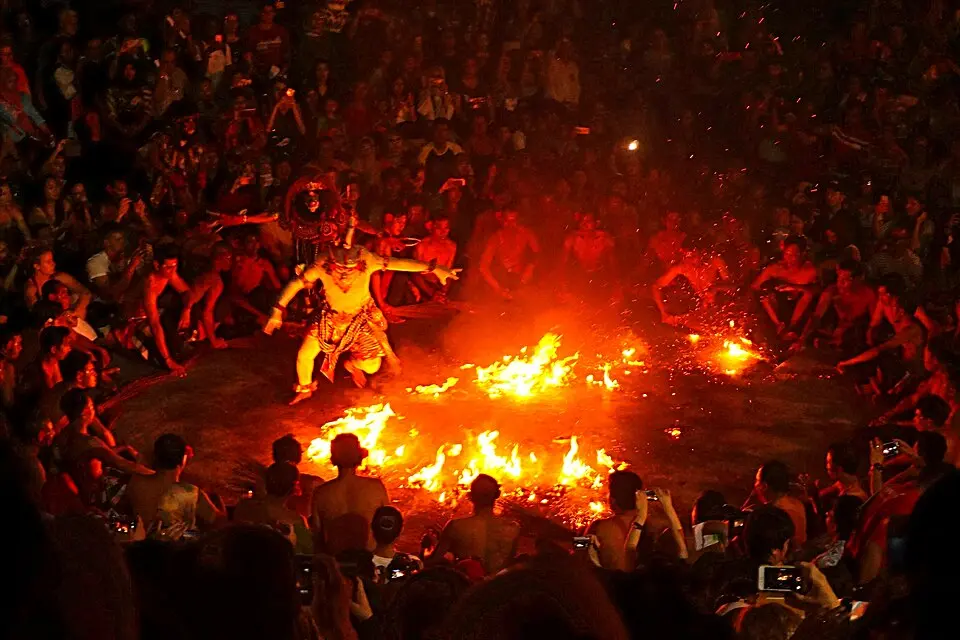
From humanity’s first encounters with fire to today’s youth movements, the courage to enter the unknown may be essential to human transformation.
Are the youth uprisings across the world a sign that a new generation is beginning to take responsibility for its future?
From protests against war and inequality to movements challenging corruption and the absence of opportunities, young people are questioning the direction of the world they are inheriting. Their determination may express something deeper than dissatisfaction: an inner faith that human beings can change the conditions of their existence.
But where does this faith come from, and how does it become a force for transformation?
Stepping into the Unknown
There are moments when our knowledge, experience, and habits no longer provide adequate answers. Moving forward requires a step whose outcome we cannot know in advance.
Inner faith helps make that step possible. It is a profound trust in our own capacity and that of others to overcome suffering, transform ourselves, and give meaningful direction to life—even amid uncertainty, fear, and adversity.
In his public talk in Bombay, India, on November 1, 1981, Silo expressed the relationship between inner faith and violence:
“Without inner faith, without faith in oneself, there is fear; fear produces suffering; suffering produces violence; violence produces destruction. Therefore, faith in oneself overcomes destruction.”
This does not mean that inner faith eliminates fear. It allows another possibility to influence our actions more strongly.
When Humanity Encountered Fire
Our ancestors’ relationship with fire offers an image of this capacity.
Like other living beings, they had good reasons to fear its destructive power. Yet over countless generations, they learned to approach it, preserve it, control it, and eventually produce it. A source of danger became a source of warmth, protection, and new possibilities.
We cannot know whether they experienced anything resembling what we now call inner faith. But fire illustrates a fundamental feature of human development: the capacity to imagine possibilities beyond immediate conditions and act toward them.
Fire remained dangerous. What changed was the human relationship with it.
How Inner Faith Grows
Is inner faith already present as a possibility within consciousness, or does it develop through experience? Perhaps these are two aspects of the same process. An initial openness allows us to attempt something unfamiliar; the experience of doing so can strengthen our trust in the possibility of change.
When we take action and see change—in ourselves, in others, or in society—what we had only imagined acquires a basis in experience. We discover that our actions can influence the conditions of our lives. This strengthens our inner faith and encourages us to go further.
A reinforcing process develops: inner faith moves us to act, and the experience of transformation deepens that faith. Having overcome one difficulty, we become more willing to approach another, even when it requires unfamiliar responses. Seeing others change can also expand our sense of what is possible.
Self-confidence often rests on what we already know we can accomplish. Inner faith becomes especially significant when that knowledge is insufficient. It need not begin with certainty that we will succeed, but with the recognition that we are not condemned to remain where we are.
A meaningful purpose can sustain this faith through setbacks. When our actions contribute to a direction beyond immediate success, we can recognize the value of each advance without needing to know the final outcome.
Humanity Is Once Again Playing with Fire
Today, humanity confronts dangers arising largely from its own development. Nuclear weapons, environmental destruction, and rapidly advancing technologies place extraordinary power in our hands, while our institutions struggle to give that power a direction that serves human life.
We find ourselves attached to familiar structures even as their limitations become harder to ignore. Fear of what might replace them can keep us repeating responses that deepen the crisis.
The encounter with fire offers a useful parallel, but also reveals a crucial difference. Our ancestors confronted a force of nature. We must confront the consequences of our own choices.
The task therefore extends beyond creating new technologies or political and economic systems. It requires us to develop the human capacities to direct them: to cooperate, overcome violence, and take responsibility for a shared future.
From Personal Faith to Shared Possibility
This is what may make today’s youth movements significant. Young people are asked to prepare for the future while witnessing decisions that threaten it. Their protests can express a refusal to accept that existing conditions define the limits of what is possible.
Yet rebellion alone does not ensure transformation. Anger can reproduce the violence it opposes, and dismantling a system does not tell us how to build a more human one.
Inner faith needs a direction. Trust in our capacity for change becomes transformative when joined to a commitment to overcome suffering without imposing it on others.
It can also grow through shared experience. When people recognize their aspirations in one another, take action together, and discover that their efforts matter, possibilities emerge that none could have sustained alone.
Collective action can both express inner faith and strengthen it.
The future is not guaranteed, and history does not promise that every crisis will produce progress. But perhaps the most important lesson from our long human journey is that transformation becomes possible when we refuse to accept the present as the final limit of our existence. Connect with your inner faith, and don’t be afraid of the fire. It helped make our world what it is today. Let it inspire us to build the human civilization of tomorrow.