
World · Pressenza · · 8h
Philippines Launches Circular Electronics Initiative under the Global Electronics Management Program
English (original) · Read in Deutsch ⇄
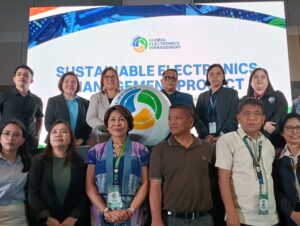
30 September 2026, Quezon City, Philippines. The Philippines today launched a new national project, ‘Sustainable electronics management in the Philippines, ’ to advance circular electronics under the Global Electronics Management (GEM) Program, a Global Environment Facility (GEF)-funded, global initiative supporting the transition towards more circular and sustainable electronics value chains across 16 countries.
Led nationally by the Department of Environment and Natural Resources – Environmental Management Bureau (DENR-EMB) in cooperation with the implementing agency, the United Nations Industrial Development Organization (UNIDO), and executed by the EcoWaste Coalition, the project will support circular approaches across the electronics lifecycle, from design and production to use, repair, reuse, collection, and resource recovery.
The launch brought together representatives of national government agencies, local government units (LGUs), academia, the private sector, registered treatment, storage, and disposal (TSD) operators, informal waste recyclers, and civil society organizations to establish shared priorities and strengthen cooperation for implementation.
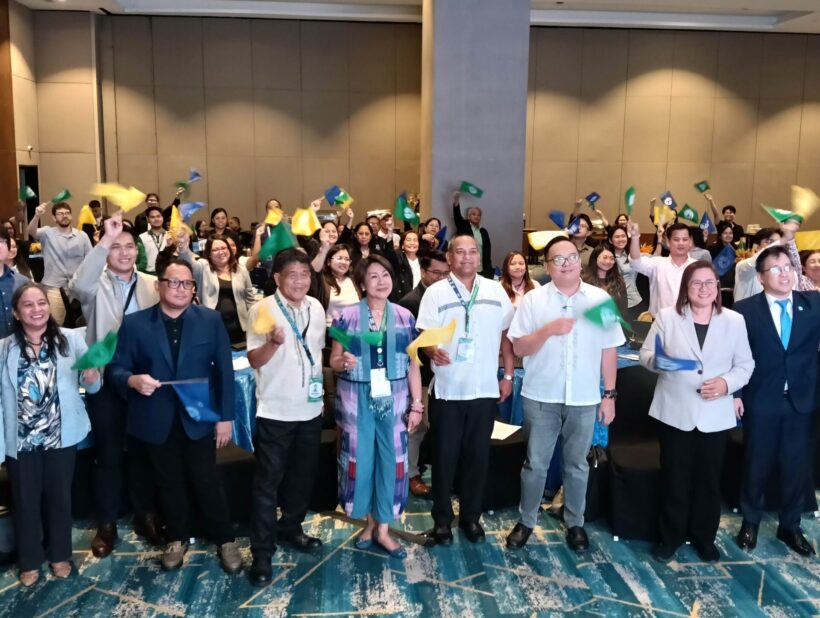
A growing challenge to a circular opportunity
Supported by the GEF grant alongside co-financing mobilized from public, private, financial, and civil society partners, the initiative responds to the environmental, economic, and social challenges associated with the growing use of electronics and increasing volumes of Waste Electrical and Electronic Equipment (WEEE).
The electronics industry is a major pillar of the Philippine economy, generating $54.92 billion in manufacturing exports and supporting more than three million direct and indirect jobs. At the same time, growing consumption, rapid technological change, and shorter product lifecycles are contributing to increasing volumes of Waste Electrical and Electronic Equipment across the country. Despite the presence of over 5,750 registered industrial waste generators in the National Capital Region (NCR) alone, domestic post-consumer collection and recovery systems remain highly fragmented. As a result of this systemic gap, significant volumes of hazardous e-waste can enter informal recycling channels, where unsafe handling and processing practices may pose risks to human health and the environment and increase occupational health hazards, while valuable materials that could be recovered and returned to productive use are lost.
Advancing circularity across three key stages of the electronics lifecycle
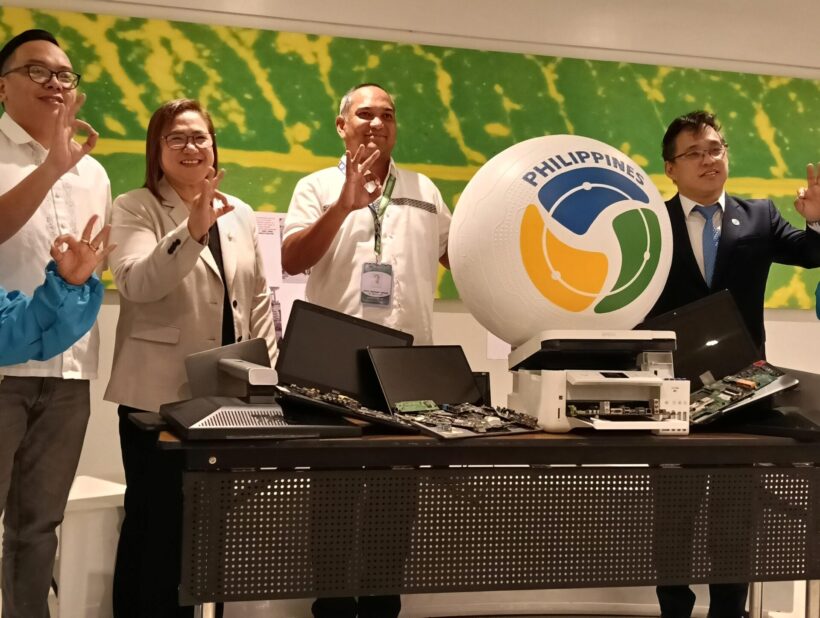
To address these interconnected challenges, the ‘Sustainable Electronics Management in the Philippines’ Project will support action across three key stages of the electronics lifecycle:
Upstream: Strengthening the regulatory framework for the ICT sector and incentive mechanisms supporting a circular electronics value chain, as well as promoting eco-innovative design principles and cleaner production technologies to reduce the use of hazardous substances and improve resource efficiency in manufacturing.
Midstream: Supporting repair shops, small and medium enterprises (SMEs), and authorized service centers to extend product lifespans and advance repair and reuse, as well as strengthening market demand for repairable ICT devices.
Downstream: Strengthening take-back schemes, regional collection, recycling, and recovery systems to support the environmentally sound management of persistent organic pollutants (POPs) and mercury, while accelerating the recovery of valuable and critical materials and functional components.
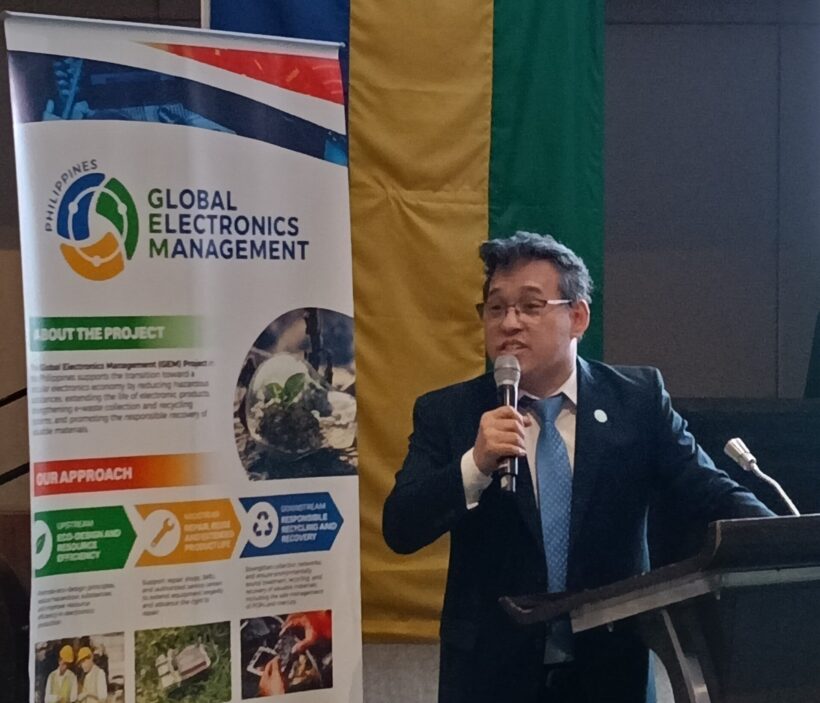
Highlighting the importance of global collaboration and innovation in advancing circular electronics, Dr. Carmela Centeno, Chief of the Responsible Materials and Chemicals Management Unit at UNIDO, emphasized:
“Managing electronic waste requires a systemic, cross-border perspective that connects responsible design with sustainable resource recovery. Through the Global Electronics Management Program, UNIDO is proud to support the Philippines in scaling up green technologies, fostering industrial innovation, and building inclusive recycling networks that turn toxic risks into economic opportunities.”
Underlining the Government’s commitment to institutionalizing circular economy strategies, Atty. Analiza Rebuelta-Teh, DENR Undersecretary for Finance, Information Systems, and Climate Change, noted:
“The DENR is fully committed to bolstering regulatory oversight, supporting LGU compliance, and embedding circularity into our national development policies. This multi-stakeholder partnership under the GEM Program reinforces our climate mitigation and pollution prevention targets, ensuring that economic progress does not come at the expense of our ecosystems and public health.”
Delivering environmental and social benefits
Oplus_131072
Over its implementation lifecycle, the initiative is expected to deliver significant Global Environmental Benefits (GEBs), including the direct avoidance of 14,831 metric tonnes of carbon dioxide equivalent (CO₂e) emissions, the safe recovery, removal, and disposal of 11.4 metric tonnes of POPs-containing chemicals, 4,781.2 metric tonnes of POPs-containing waste, and 0.4 metric tonnes of mercury, alongside avoiding 0.4gTEQ of unintended POP emissions.
The project also places strong emphasis on gender equality and social inclusion. It targets 1,000 direct beneficiaries, at least 50 per cent of whom will be women, while supporting safer and more inclusive participation in circular electronics value chains, empowering a recycling workforce traditionally dominated by women workers.
“Addressing the country’s growing e-waste crisis requires a radical shift from destructive, linear disposal toward an inclusive circular economy that protects both human health and the environment,” stated Aileen Lucero, National Coordinator of the EcoWaste Coalition. “Through the GEM Philippines Project, we are committed to strengthening the entire value chain to ensure that informal waste workers are integrated safely into formal systems, repair and reuse mechanisms are mainstreamed, and toxic chemicals are safely isolated rather than burned or dumped in our communities.”
From national action to global collaboration
Following the public launch, key government agencies including the Department of Science and Technology (DOST), Department of Information and Communications Technology (DICT), Technical Education and Skills Development Authority (TESDA), Development Bank of the Philippines, and Department of Trade and Industry (DTI), joined project partners and stakeholders in a High-Level Stakeholder Meeting to advance cross-sectoral coordination and agree on priorities for project implementation.
Through this collaborative approach, the Philippines project will contribute to the wider Global Electronics Management (GEM) Program, connecting national action with global expertise and experience while building on capacities and initiatives already present on the ground. By bringing together government, industry, financial institutions, civil society and local stakeholders, the initiative aims to help translate circular economy principles into practical solutions, keeping products and materials in use for longer, recovering valuable resources, reducing environmental and health impacts, and contributing to a cleaner, fairer and more inclusive electronics value chain.
About the Global Electronics Management (GEM) Program
The Global Electronics Management (GEM) Program is a Global Environment Facility (GEF)-funded initiative led by the United Nations Industrial Development Organization (UNIDO), in partnership with the African Development Bank (AfDB), the United Nations Development Programme (UNDP), the United Nations Environment Programme (UNEP), and the United Nations Institute for Training and Research (UNITAR).
Through ten nine Child Projects across 16 countries (Botswana, Cambodia, Colombia, Djibouti, Eswatini, Ethiopia, Kazakhstan, Lesotho, Mozambique, Namibia, Peru, the Philippines, Somalia, South Africa, Türkiye, and Viet Nam), GEM supports developing countries in transitioning towards a more circular and resource-efficient electronics sector. Grounded in national ownership, the Program connects country priorities with global expertise, bringing together governments, the private sector, financial institutions, local communities and other key stakeholders to advance resource efficiency, safer materials and circular business models across the electronics lifecycle, from sustainable design and cleaner production to reuse, repair, recycling and responsible material recovery. By fostering innovation, investment and locally driven solutions, GEM supports more sustainable, inclusive and resilient electronics value chains.
Read the full story at the source
Source: Pressenza