
World Pressenza
Philadelphia Muslim Community Pays Tribute to Br. Manzoor Chaudhry, A Pioneer of Islamic Work, Humility, and Selfless Service
The Muslim community of the Greater Philadelphia metropolitan area and beyond is mourning the passing of Br. Manzoor Chaudhry, (March 14, 1941-October 30, 2026) a pioneering Islamic community leader,
English (original) ·Read in Deutsch ⇄
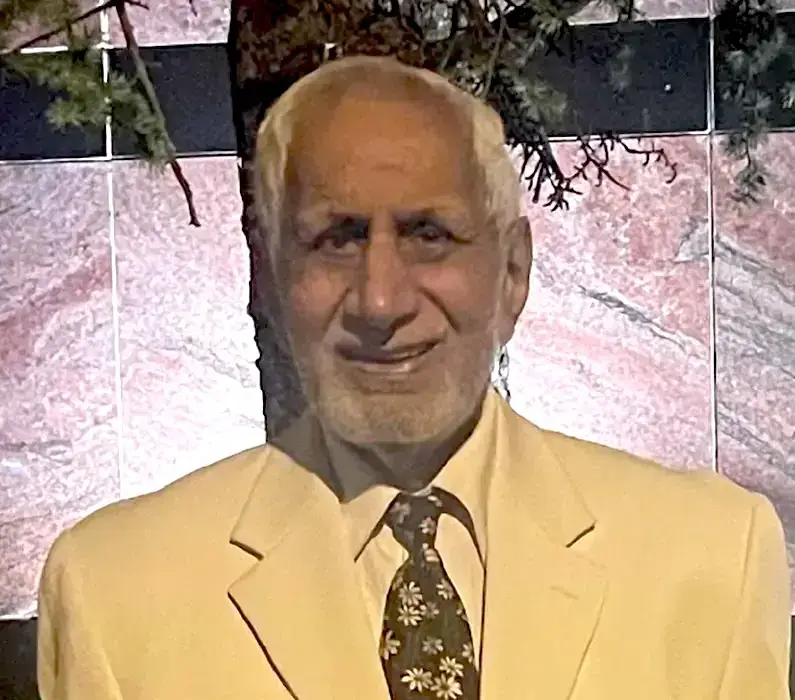
The Muslim community of the Greater Philadelphia metropolitan area and beyond is mourning the passing of Br. Manzoor Chaudhry, (March 14, 1941-October 30, 2026) a pioneering Islamic community leader, institution-builder, devoted family man, and a person widely admired for his honesty, integrity, humility, generosity, and exceptionally pleasant personality.
By Dr. Ghulam Nabi Fai, Chairman, World Forum for Peace & Justic
Br. Manzoor Chaudhry passed away in the morning hours of Friday, October 30, 2026. He was one of the founding members of the Muslim Society of Delaware Valley (MSDV), served as its chairman, and was instrumental in establishing and supporting numerous Islamic institutions throughout the Philadelphia metropolitan area.
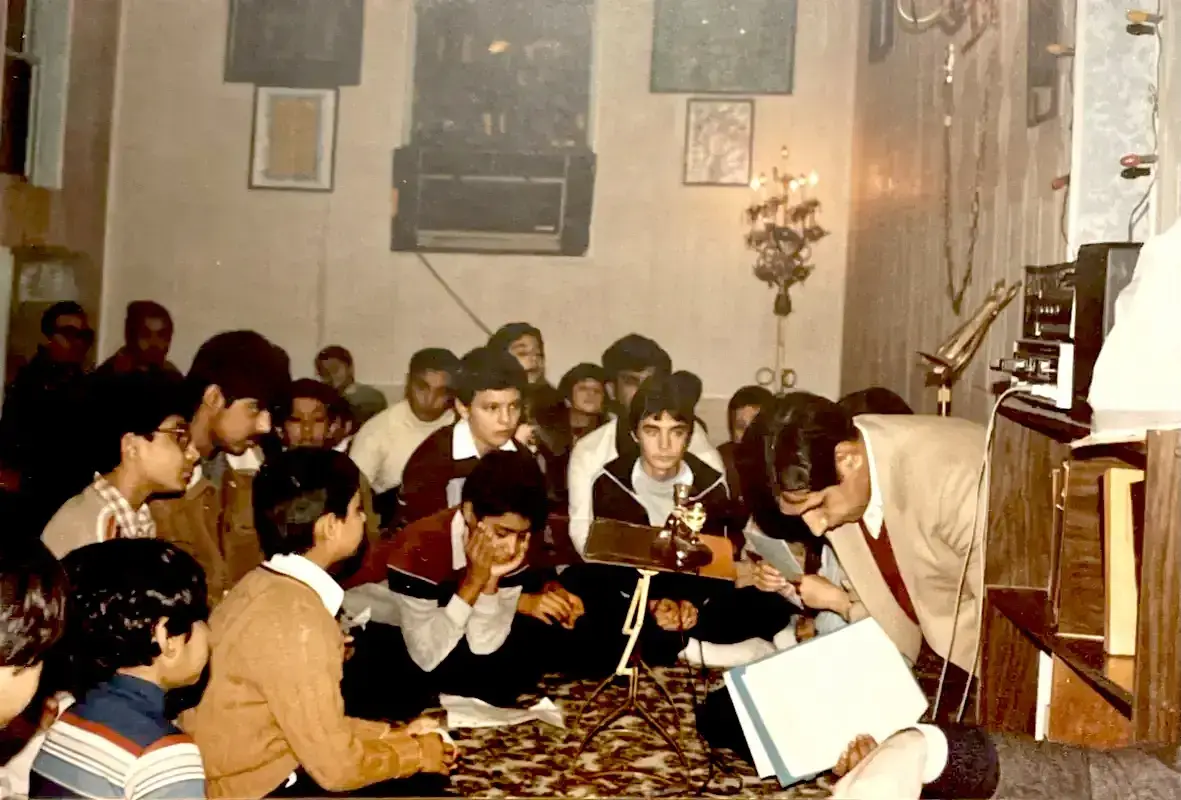
His Salatul Janazah was held at the Muslim Youth Center of Philadelphia (MYCP), located at 11080 Knights Road, Philadelphia, PA 19154, an institution of which he was also a founding member.
On Saturday, October 31, a memorial gathering was held at the Muslim Youth Center of Philadelphia, bringing together national and local Muslim leaders, Imams, scholars, and community representatives from Pennsylvania and New Jersey. Speakers reflected on his remarkable life, his pioneering contributions to Islamic work, and, above all, the outstanding Islamic character that defined him.
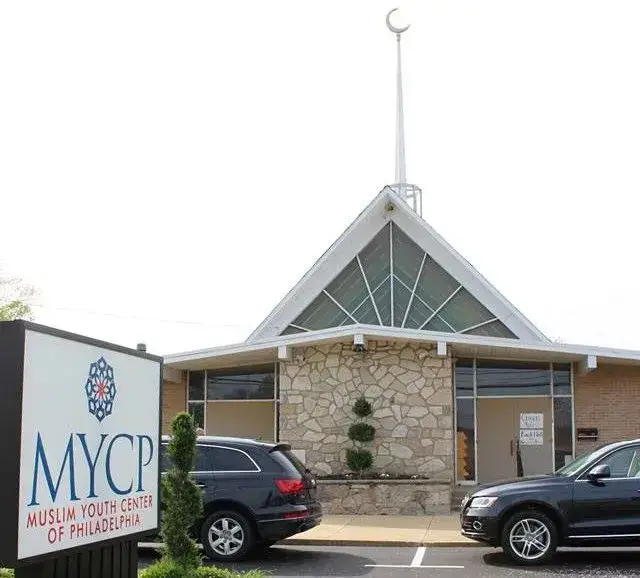
Speaker after speaker emphasized that Br. Manzoor Chaudhry’s life was a remarkable example of what it means to serve Allah through service to humanity. He helped establish institutions, nurtured generations of Muslim leaders, supported education, facilitated healthcare for the underserved, strengthened families, and extended kindness to countless individuals.
Yet, perhaps his most enduring legacy is not measured by the number of institutions he helped establish or the positions he held. It is reflected in the people he inspired, the family he raised, the friendships he nurtured, and the countless acts of kindness he performed without seeking acknowledgment.
He was a builder of institutions, but more importantly, he was a builder of people. He demonstrated that leadership does not always require a microphone, a title, or public recognition. Sometimes, the greatest leaders are those who quietly open their homes, offer a helping hand, provide a ride, support a struggling student, and give their time and resources for the sake of Allah.
Time and again, speakers became emotional as they recalled a man whose service was never driven by recognition, position, or personal gain. He believed in serving Allah by serving people. Whether working on a major institutional project or helping someone with an ordinary personal need, he never considered any task too small or beneath him.
Speakers described Br. Manzoor Chaudhry as one of the pioneers of Islamic work in the Greater Philadelphia area. As a founding member and longtime chairman of MSDV, he helped nurture an umbrella organization that brought together several important Islamic institutions, including Front Street Masjid, Muslim Youth Center of Philadelphia, Islamic Cultural Center of Willow Grove, and Nibras Day School.
Along with a dedicated group of early Muslim community leaders, he also played a pivotal role in the development and growth of other Islamic institutions throughout the region, including the Islamic Society of Greater Valley Forge, Al-Aqsa Islamic Society, Islamic Society of Chester County, and Al-Furqan Islamic Society.
His vision extended far beyond the Philadelphia area. In his native village in Pakistan, he established a full-time school on more than two acres of land. Today, the school enrolls nearly 800 students and continues to provide quality education at subsidized rates.
For approximately twenty years, he also helped organize and volunteered in overseas surgical eye camps alongside his children, bringing much-needed medical assistance to underserved communities.
His contributions were not limited to institutional development. He was always ready to help individuals and families, often quietly and without anyone knowing. His generosity was a reflection of his faith, and his kindness was an essential part of his personality.
Several speakers praised Br. Manzoor Chaudhry and Mukhtar Bibi for raising a family that reflects the values of Islam, education, service, and compassion.
His three sons, Dr. Iftikhar Chaudhry, Dr. Imtiaz Chaudhry, and Attorney Ijaz Chaudhry, have excelled in their respective professional fields while remaining actively engaged in Islamic service and Dawah. Their commitment to sharing Islamic values extends beyond their homes and into their educational institutions and broader communities.
Speakers also acknowledged Mukhtar Bibi’s remarkable role as a loving wife, devoted companion, and source of strength throughout the most challenging periods of Manzoor’s life. Her steadfast support and care over the years were described as a beautiful reflection of their deep love and lifelong partnership.
The family’s twelve grandchildren are another important part of the legacy he leaves behind.
Dr. Altaf Hussain, former President of the Islamic Society of North America (ISNA) and the Muslim Students Association (MSA), reflected on the Quranic account of Prophet Yaqub (AS) asking his sons whom they would worship after his passing. His sons affirmed their commitment to worship Allah, the One God of their forefathers.
Dr. Hussain observed that had Manzoor Chaudhry asked his sons the same question, he would undoubtedly have received the same assurance: that they would continue to worship Allah faithfully and uphold the Islamic values he had taught them.
It was a moving tribute to a father whose greatest achievement may well be the faith and character he instilled in his children.
Dr. Imtiaz Chaudhry, (his son) who served as the master of ceremonies for the memorial, offered a thoughtful account of his father’s intellectual and professional journey.
He explained that his father had an educational background in organic chemistry, as well as management and organizational behavior. He enjoyed a successful industrial career involving research and development, culminating in three United States patents.
Dr. Imtiaz added that beyond his professional achievements, Manzoor Chaudhry was deeply familiar with Urdu and Persian poetry. He often turned to poetry for wisdom, inspiration, and guidance in navigating life’s challenges.
His English writing was equally distinguished: organized, crisp, and refined. Decades of preparing corporate reports, scientific papers, and MSDV communications had helped him develop an exceptional command of written expression.
Dr. Imtiaz shared a particularly endearing observation: “Sometimes I would ask him a question in prose, and he would respond to me in poetry.”
This simple recollection captured another dimension of a man whose intellect, spirituality, and appreciation for literature enriched his personality.
Dr. Ghulam Nabi Fai, Chairman of the World Forum for Peace & Justice, described Br. Manzoor Chaudhry as a fascinating personality.
“Manzoor Chaudhry was a humble person, but a person of remarkable character. His kindness knew no boundaries, and his compassion had no limitations. He was a giant in the Philadelphia Muslim community. He was best known for his honesty, integrity, and pleasant personality. Undoubtedly, he was a man of character and truthfulness.”
Dr. Fai, who considered the Chaudhry family close personal friends, recalled numerous instances of their generosity and thoughtfulness during his student years at Temple University.
He remembered how, on Saturdays and Sundays, Br. Manzoor would collect Muslim boys and girls and take them to the Albanian Masjid for weekend Islamic school. After school, he would often stop by Cooney Hall, where Muslim students lived, knock on the door, and ask whether anyone needed a ride to Walmart, Target, or elsewhere for groceries.
He also recalled how Manzoor and Mukhtar Bibi regularly welcomed Muslim students into their home and helped them in ways that went far beyond ordinary hospitality.
One particularly touching memory involved their son, Dr. Iftikhar Chaudhry. After a Sunday school session, Manzoor visited Ghulam Nabi Fai and excitedly shared that Iftikhar’s school headmaster had called him aside to praise his son’s outstanding essay in a school writing competition. The headmaster had described Iftikhar as a gifted student. As Manzoor shared the news, tears of joy filled his eyes, and he asked Dr. Fai to make Du’a for his son.
Dr. Fai also recounted two occasions when Mukhtar Bibi and other Pakistani families came forward with extraordinary generosity.
For an international festival at Temple University, students were asked to bring dishes representing their respective countries for approximately 200 people. Dr. Fai had volunteered to bring a Kashmiri dish but soon realized the enormous challenge of preparing food for so many people. He called Manzoor Chaudhry, who talked to Mukhtar Bibi, who, together with other Pakistani families, prepared Shami Kebabs for the entire gathering.
On another occasion, after Dr. Fai’s marriage in Maryland, he was encouraged to arrange a Walimah upon returning to Philadelphia. Once again, he contacted Manzoor Chaudhry who talked to Mukhtar Bibi for assistance. To his surprise, she and other sisters arranged a gathering at Makkah Masjid for nearly 200 people and prepared food for everyone.
Dr. Fai emphasized that he did not pay a single dime for either occasion. These acts of generosity were entirely the kindness of Manzoor Chaudhry, Mukhtar Bibi, and their friends.
He concluded by expressing deep gratitude for a family whose generosity had touched his life in countless ways.
The younger generation also paid heartfelt tribute to their grandfather. His grandson, Ali, recited Rumi’s poem, “When I Die,” conveying a profound spiritual perspective on death. The poem reminds those left behind not to regard death merely as a departure, but as a transition toward an eternal existence beyond this worldly life.
Another grandson, Dr. Ahmed Chaudhry, beautifully recited Surah Al-Mulk. His fluent recitation and command of Quranic Tajweed reflected the importance of Quranic learning and Islamic upbringing within the family.
These moments offered a powerful reminder that the values Manzoor Chaudhry cherished are continuing through the next generation.
- Among those who expressed their appreciation and paid tribute to his life and contributions were:
- Imam Muhammad Shehata, Al-Aqsa Islamic Society
- Imam Basheer Bilaal, MSDV
- Imam Hamad Chebli, Islamic Society of Central Jersey
- Qari Abdul Basit, New Brunswick Islamic Center
- Shaikh Mobeen Kathrada, Masjid As-Saffat, Trenton
- Imam Muhammad Mustafa, MSDV
- Imam Muhammad Chebli, Prison Chaplain
- Shaikh Mamduh Selim, Islamic Society of Central Jersey
- Imam Faras Bootwala, Islamic Society of Chester County
- Dr. Altaf Hussain, Vice President, Yaqeen Institute, USA
- Dr. Ghulam Nabi Fai, Chairman, World Forum for Peace & Justice
Their collective reflections underscored the extraordinary respect and affection Br. Manzoor Chaudhry commanded across generations, institutions, and communities.
The memorial concluded with Du’a-e-Maghfirah for the departed soul.
May Allah SWT forgive Br. Manzoor Chaudhry, shower His infinite mercy upon him, illuminate his grave, accept his lifelong service to Islam and humanity as Sadaqah Jariyah, and grant him the highest place in Jannatul Firdaus. May Allah grant Mukhtar Bibi and the entire Chaudhry family Sabr-e-Jameel, strength, and comfort during this difficult time.
Du’a-e-Maghfirah followed by dinner.