
Labour Pressenza
Joint Statement: 47 organisations call on the EU to protect people’s rights, not outsource them
We, 47 human rights, humanitarian, civil society and trade union organisations from 15 countries, firmly reject plans to set up so-called return hubs outside the EU Today Austria, Denmark, Germany, Gr
English (original) ·Read in Deutsch ⇄
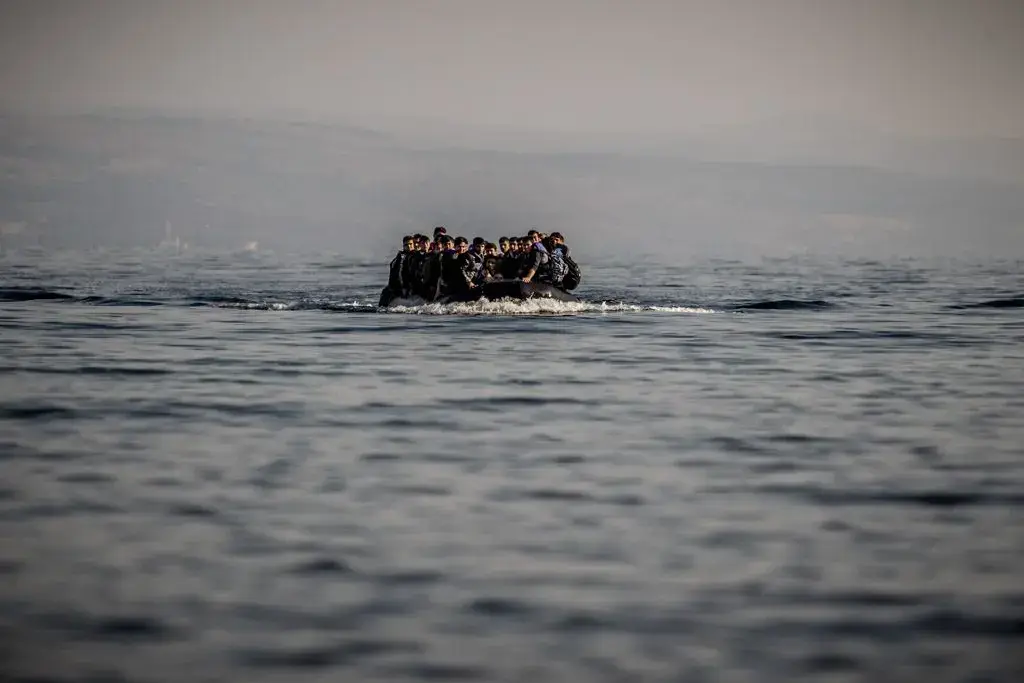
We, 47 human rights, humanitarian, civil society and trade union organisations from 15 countries, firmly reject plans to set up so-called “return hubs” outside the EU
Today Austria, Denmark, Germany, Greece and the Netherlands formally presented their plans to establish a “return hub” in Rwanda.
The announcement today outlines a new phase of harmful externalization policies, which we (47 signatories from 15 countries) firmly oppose. Enabled by the new EU Return Regulation, these plans allow people without a right to stay in the EU to be sent to countries with which they have no connection at all. These policies shift people, and responsibility for their safety and rights, out of public sight and beyond scrutiny. No choice of partner country, legal guarantees or institutional oversight can eliminate the fundamental risks associated with such ”return hubs”.
Some Member States are rebranding these “hubs” as ‘welcome centres’ or ‘opportunities’ for people on the move. This is a euphemism that masks forced removal, as part of a policy based on a fundamental disregard of migrants’ agency, and on the idea that the returning country has discretion over their lives and future. People will be removed to these deportation centres against their will, often after years of living and working in Europe, to a country they may have never lived in, without family, networks or meaningful prospects.
It signals that Member States accept the risk of serious human rights violations against one of the most marginalized groups in society, in return for a deterrence goal that evidence clearly suggests they will not reach. Such cruel measures drive people into further insecurity, and risk making migration routes more dangerous. When Israel deported people to Rwanda and Uganda, they were promised status and safety. But research indicates that many were driven onto dangerous onward journeys and into the hands of human trafficking networks. Rebranding such arrangements does not change their reality: they are forced transfers pushing people outside of the EU blurring the lines of responsibility and jurisdiction, into countries that often have shown disregard for their rights.
Rwanda: no protection, no independent oversight
The recently adopted Return Regulation only allows agreements with countries that respect international human rights standards and the prohibition of refoulement. Rwanda fails this test. Austria’s own asylum authority, in its country information on Rwanda, reports torture in detention, arbitrary arrests and impunity within the security services. In 2023, the UK Supreme Court found a real risk of refoulement, noting that people sent to Rwanda under the earlier Israeli deal were regularly moved on covertly to Uganda. In Rwanda, courts are not independent of the government, security forces arrested and detained persons arbitrarily and without due process, complaints of ill-treatment are routinely disregarded and the country has not demonstrated an ability to ensure fair procedures and adequate protection for people forcibly transferred from another country.
Above all, it remains unclear how oversight could work. The Return Regulation requires an independent monitoring mechanism of the agreement or arrangement itself only where onward removals are foreseen, but this is not enough. Monitoring is only effective if violations can be stopped and the Return Regulation does not clarify what happens when violations fall outside of the scope of the agreement or arrangement. Even within the EU, monitoring mechanisms have failed to stop border violence. Where the EU has neither jurisdiction nor enforcement powers, a monitoring mechanism on paper changes nothing.
By relying on third countries to take on its protection obligations, the EU makes itself dependent on non-EU states, enabling third countries to leverage migration in line with their own political agenda. At the same time, such agreements, negotiated amid deep power asymmetries, shift responsibility onto countries that already host more refugees with far fewer resources. They reduce African agency and erode the promise of an equal EU–Africa partnership. By placing its own return agenda above the priorities African countries have recently set out, the EU undermines its credibility as a trusted partner.
Frontex: lack of accountability for rights violations
The Commission’s newly proposed Frontex Regulation would allow the agency to support returns in third countries, including a possible role in implementing “return hubs”, subject to an EU agreement. Frontex currently still operates with a de facto lack of accountability: unclear responsibilities between the agency and Member States have long prevented effective judicial accountability. Instead of addressing these failures, the new proposal removes the current obligation to assign at least one Fundamental Rights Monitor to each operation. Frontex would become more powerful, but not more accountable.
The risks associated with “return hubs” are not implementation failures but are the very purpose of the model. We as civil society call on Austria, Denmark, Germany, Greece and the Netherlands to abandon plans to establish the so-called ”return hub” in Rwanda and to not transfer people to countries with which they have no meaningful connection. Instead, EU Member States should uphold their international obligations and provide durable solutions with sufficient resources to give people a real chance to become full members of society. These are the values the EU is based on, and we encourage the EU to live up to them.
Signatories:
- International Rescue Committee (IRC), Belgium
- Human Rights Watch
- INTERSOS HELLAS, Greece
- WeMove Europe, EU
- Greek Council for Refugees (GCR), Greece
- Jesuit Refugee Service Serbia, Serbia
- 11.11.11, Belgium
- JRS Switzerland, Switzerland
- European Network Against Racism (ENAR), Belgium
- CNCD-11.11.11, Belgium
- Fondation pour la promotion des droits, Algeria
- Jesuit Refugee Service (JRS) Europe, EU
- Jesuiten-Flüchtlingsdienst Deutschland, Germany
- Jesuit Refugee Service, Kosovo
- Netherlands Refugee Foundation (Stichting Vluchteling), The Netherlands
- ASKV, The Netherlands
- Jesuit Refugee Service Poland, Poland
- Irídia – Centre per la Defensa dels Drets Humans, Spain
- Klikaktiv, Serbia
- FEANTSA – European Federation of National Organisations Working with the Homeless, EU
- Here to Support, The Netherlands
- Vluchtelingenwerk Vlaanderen, Belgium
- JRS France, France
- Brot für die Welt, Germany
- Validity Foundation – Mental Disability Advocacy Centre, Hungary
- HIAS Europe, Belgium
- Medico International, Germany
- Dutch Council for Refugees, The Netherlands
- PRO ASYL, Germany
- EuroMed Rights, Belgium/Regional
- Statewatch, United Kingdom
- Terre des Hommes, Germany
- Sea-Watch, Germany
- SOLIDAR, Belgium
- Equinox Initiative for Racial Justice, EU
- Platform for International Cooperation on Undocumented Migrants (PICUM), EU
- ECCHR – European Center for Constitutional and Human Rights, Germany
- EPSU European Public Service Unions, EU
- Red ACOGE, SPAIN
- Asylkoordination Austria, Austria
- Novact, Spain
- Quaker Council for European Affairs, Belgium
- ILGA-Europe, Belgium
- JRS Romania, Romania
- Churches´Commission for Migrants in Europe CCME(CCME), Belgium, EEU
- CIRÉ, Belgium
- SOS Balkanroute, Austria & Bosnia-Herzegowina
The International Rescue Committee responds to the world’s worst humanitarian crises, helping to restore health, safety, education, economic wellbeing and power to people devastated by conflict and disaster. Founded in 1933 at the call of Albert Einstein, the IRC is at work in over 40 countries helping people to survive, reclaim control of their future and strengthen their communities. Established in 2001, IRC Brussels leads on the International Rescue Committee’s engagement with the EU institutions. Learn more at Rescue.org/EU and follow the IRC on Twitter and LinkedIn.