
World Pressenza
El-Sayed: political style in comparison with Mamdani
In the first article in this series, we built the yardstick before using it. In the second article, we applied the first part of the yardstick ‘policies and ideas’ to Abdul El-Sayed, Democratic senato
English (original) ·Read in Deutsch ⇄
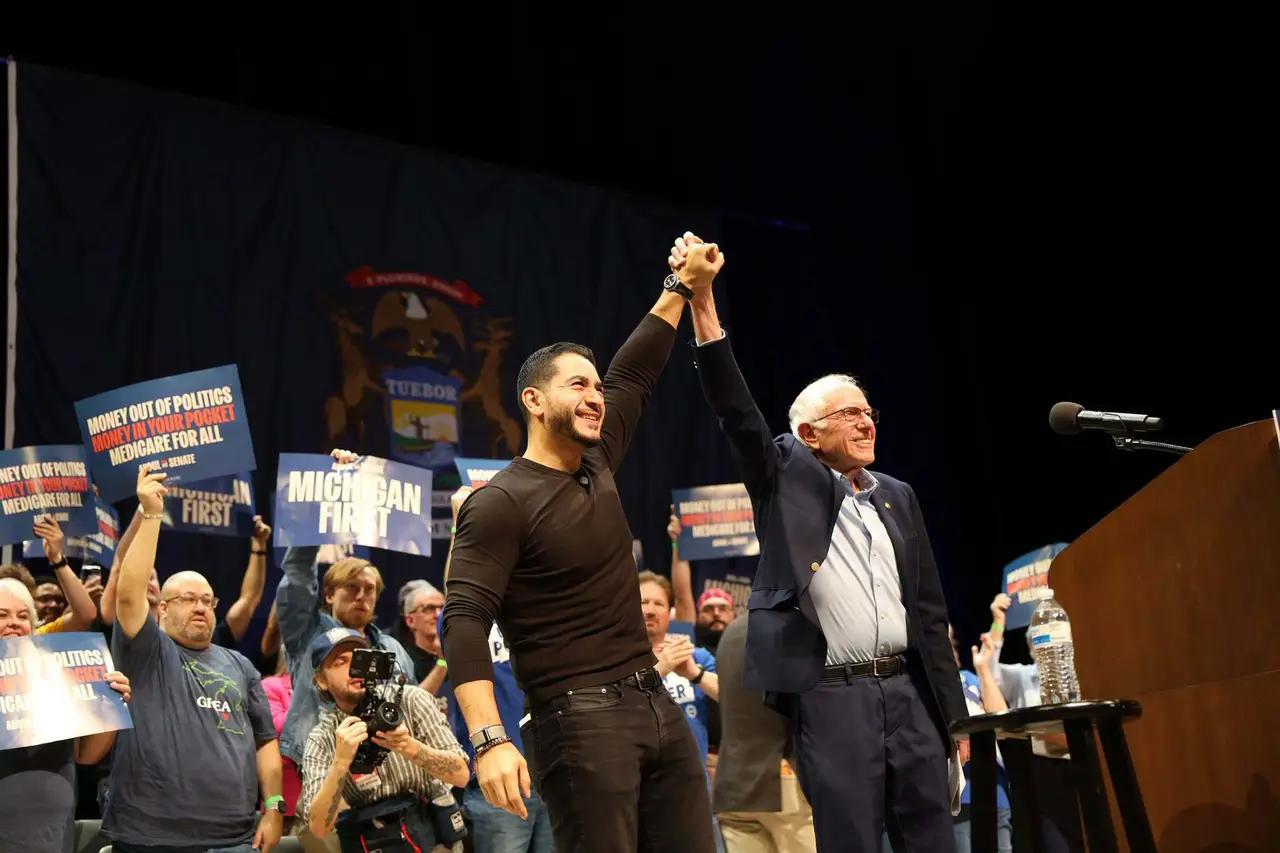
In the first article in this series, we built the yardstick before using it. In the second article, we applied the first part of the yardstick ‘policies and ideas’ to Abdul El-Sayed, Democratic senator-elect from Michigan. The focus now changes: ‘style and conduct’. How does he speak, treat opponents, respond to violence, correct errors and verify facts? Mamdani remains the main reference point. Three targeted comparisons — Massachusetts Democratic senator Ed Markey, former Democratic Florida state representative Angie Nixon, defeated in the Senate race, and Texas Democratic senator-elect James Talarico — appear only where they help clarify El-Sayed’s profile.
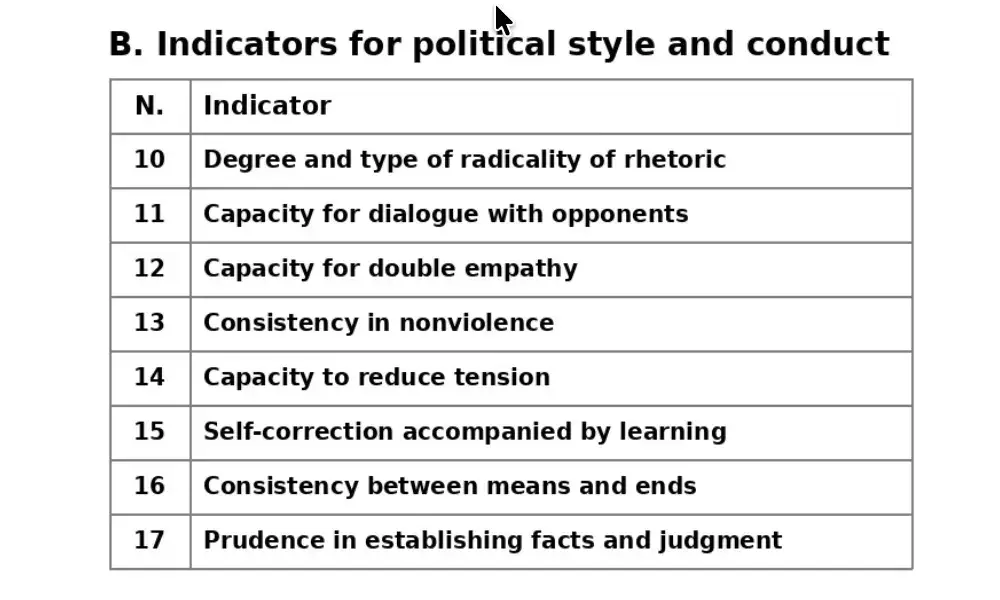
Screenshot
The eight indicators will be read in four thematic areas: language and dialogue (10–11); empathy, nonviolence and tension (12–14); self-correction and consistency between means and ends (15–16); prudence in establishing facts and judging them (17).
The first area concerns language and dialogue. In the first article, indicator 10 was “degree of radicality of rhetoric”. Applying it shows that degree is not enough: type also matters. Criticism may address someone’s actions and responsibility without necessarily denying their dignity. Where such criticism ends and an attack on the person begins is a question to examine, not assume.
Mamdani offers a revealing case. He called Benjamin Netanyahu “a war criminal” and “an architect of a horrific genocide of the Palestinian people”.¹ The phrases invoke responsibility for Gaza, but also apply labels directly to a person. Whether doing so without a judicial conviction constitutes an attack on personal dignity cannot be settled by harshness alone. The observed sample has not been shown to be representative, so no conclusion about frequency is warranted.
El-Sayed offers a relative contrast. He too sometimes uses sharply personal judgments, as his remarks about JD Vance in the interview cited in note 2 show; this alone does not establish an attack on personal dignity. Yet another trait appears in the cases observed: rather than closing the exchange, he tends to question the premise of the question. With a MAGA interlocutor he considered to be acting in bad faith, he said he chose to respond “in good faith” and continue because “people deserve the right to ask questions”.² He does not abandon harshness, but tries to bring the clash back to premises and arguments. That combination makes his profile less linear.
Markey provides a useful control: a progressive with long institutional experience also had very harsh debates with Seth Moulton in 2026.³ Harshness alone therefore does not identify El-Sayed; in the cases observed, what matters more is his tendency not to let personal attack exhaust the exchange.
Distinguishing harsh criticism from an attack on a person’s dignity makes the criterion more precise. But how rigorously can we identify this boundary in individual cases? Not always with certainty: we must examine the context and effects of the words without rushing to conclusions.
The second area concerns double empathy, nonviolence and reducing tension. The hardest case remains Temple Israel. Immediately after the attack, El-Sayed sought a broader context, including the phrase “Hurt people hurt people”. Many Michigan Jews understood those words as justifying or mitigating the attack. Months later, before the Democratic Party’s Jewish caucus, he acknowledged: “I made a mistake”; he said the condemnation should have stopped there, “full stop”, and later apologized.⁴
The issue that emerges is less the absence of empathy than the moment when it is expressed. Seeking context immediately may show concern for more than one side; reducing tension may instead require, at that moment, unqualified recognition of the suffering of those attacked. A universalist intention can thus conflict with the communicative effect.
Nixon makes another dynamic visible. Protesting on the Florida House floor against a new district map, she used a megaphone, was reprimanded and said she would do it again with an even bigger one.⁵ Here an openly confrontational method was deliberate and defended as protest. With El-Sayed, by contrast, the tension arose from an attempt at empathetic contextualization.
The third area looks at what happens after an error. An apology alone does not demonstrate learning: what matters is the sequence error, criticism, understanding, correction and verification over time. In the Temple Israel case there are a public correction and an attempt at repair; whether they become stable conduct remains to be seen.
On consistency between means and ends, Mamdani offers a useful contrast: while maintaining very harsh criticism of Donald Trump, as mayor he continued to meet him and said he would speak with anyone who could “deliver relief to the people of this city”.⁶ Political conflict does not necessarily exclude practical cooperation.
Talarico helps clarify self-correction. In September 2026 he corrected a 2021 formulation about “six” biological sex categories; FactCheck.org also found that an opponent’s advertisement had recombined several of his remarks out of context.⁷ Here the correction concerns a specific factual claim; with El-Sayed, Temple Israel concerns mainly the timing and effect of communication. They are different forms, both requiring verification over time.
The fourth area concerns prudence in establishing facts and judging them. In an interview El-Sayed cited Ukraine and “Serbia, for example, back in the ’90s” as examples of moments when the United States had followed the rules of the international order.⁸ The phrase is too compressed to identify which Serbian episode he meant and does not justify concluding that he approved the 1999 NATO bombing. Prudence therefore applies to the analyst too: a clue must not be turned into a conclusion.
How much weight should a historically ambiguous formulation carry? And when does prudence require suspending judgment?
The eight indicators thus produce a more precise profile. El-Sayed can be combative and sometimes personal, yet he also tends not to close the relationship with those who challenge him and to return the exchange to premises, facts and policy effects. Temple Israel reveals another limit: trying to understand more than one side can, if communicated at the wrong moment, increase tension. Self-correction is visible, but not yet established as stable learning.
The central point is that these traits cannot be reduced to one label. Harsh language and dialogue can coexist; criticism of a person and criticism of actions are not the same; empathy does not guarantee de-escalation; an apology is not yet learning. The profile emerges from the relationship among the indicators, not from a single quotation.
One question remains that neither policies nor style can answer alone: what happens when these qualities enter the real world of organizations, voters and coalitions? That is the move to the fourth article: from individual conduct to the capacity to build support and cross real divisions.
Notes
- Reuters, 22/9/2026, Mamdani on Netanyahu.
- The New Republic, 21/10/2026, interview with El-Sayed.
- WBUR, 4/8/2026, Markey–Moulton debate.
- JTA, 29/8 and 1/9/2026, Temple Israel.
- WUSF, 14/5/2026, Nixon protest.
- AP, 9/2026, Mamdani–Trump meetings.
- FactCheck.org, 15/9/2026, Talarico and AI ad.
- Newsweek, 25/4/2025 / archive, interview with El-Sayed.