
Climate Pressenza
Civil society groups at COP31 launch new framework to advance reuse across products and packaging
Break Free From Plastic and the Global Alliance for Incinerator Alternatives release the first of the multi-part resource, “Everything Reuse: A Toolkit for Understanding, Implementing and Scaling Reus
English (original) ·Read in Deutsch ⇄
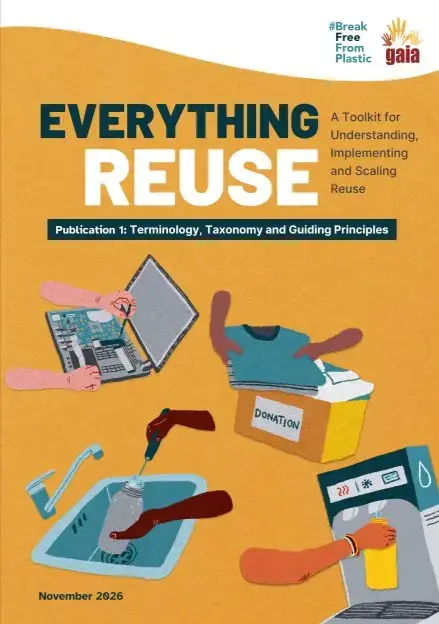
Antalya — As governments gather in Antalya, Türkiye, for the 31st United Nations Climate Change Conference (COP31) to advance climate action, the Global Alliance for Incinerator Alternatives (GAIA) and the Break Free From Plastic (BFFP) movement launched “Everything Reuse: A Toolkit for Understanding, Implementing and Scaling Reuse.” The launch of the resource on 16 November 2026 aimed to bring reuse into the wider climate conversation—highlighting the need to move beyond waste management and recycling towards approaches that reduce consumption of resources and prevent waste and pollution at the source.
Civil society groups emphasize that addressing resource-intensive production and consumption must be an integral part of the climate conversation. While the energy transition remains essential, tackling climate change also requires rethinking how materials are produced, used and consumed. The continued expansion of virgin plastic production and dependence on single-use products reinforce resource-intensive systems and add to the environmental pressures driving the climate crisis.
“As more countries and businesses commit to reuse, a shared understanding of what constitutes reuse and a practical framework for classifying different reuse approaches can help shape clearer policies and direct financing towards diverse reuse models,” said Ambily Adithyan, co-author of Everything Reuse and Regional Zero Waste Officer at GAIA. “But scaling reuse is not just about expanding these models. It is equally important to ensure that reuse systems protect human health, minimize environmental impacts, uphold producer accountability, respond to local realities, and safeguard the livelihoods of workers and communities.”
The first publication in the newly launched toolkit, “Publication 1: Terminology, Taxonomy and Guiding Principles,” introduces shared terminology and a practical framework for recognizing and classifying reuse across products and packaging. It addresses a gap in how reuse is understood and provides a common foundation for policymakers, civil society organizations, businesses, researchers and other stakeholders working to advance reuse.
The taxonomy classifies reuse according to two dimensions: the type of asset being reused (ie, product or packaging), and the primary pathway that enables its next reuse cycle. It recognizes different reuse arrangements, from household and community-based practices to organized commercial systems. Alongside the taxonomy, the publication presents five guiding principles to support the responsible adoption and scaling of reuse.
“Having a common language for reuse is important because it shapes what we recognize, value and support. Reuse takes many forms, from everyday household and community practices to more organized systems, yet many of these practices remain invisible or undervalued,” said Pinky Chandran, co-author of Everything Reuse and Asia and Pacific Regional Coordinator at Break Free From Plastic. “We need to recognize this diversity and ensure that the transition to reuse builds on existing knowledge and experience, rather than overlooking or displacing the people and livelihoods already connected to it. Ultimately, advancing reuse must go hand in hand with a just transition for workers and communities.”
The publication was developed through expert consultations, reviews of literature, policies, and standards, and testing the proposed taxonomy against reuse examples across different products, packaging, sectors, and contexts. Ambily Adithyan (GAIA), Pinky Chandran (Break Free From Plastic), and Froilan Grate (GAIA) authored the publication, with Navya Pala Kunnummal as editor. This also reflects contributions from individuals and organizations who shared their knowledge and experiences through consultations, discussions and reviews.
“Everything Reuse: A Toolkit for Understanding, Implementing and Scaling Reuse” was launched at the session, “Scaling Up the Reuse Economy,” organized at the ongoing 31st Conference of the Parties (COP31) to the United Nations Framework Convention on Climate Change (UNFCCC). The session brought together perspectives on the policies, systems and practical experiences needed to advance reuse.
###
-
Publication available here
About BFFP — #BreakFreeFromPlastic is a global movement envisioning a future free from plastic pollution. Since its launch in 2016, more than 2,700 organizations and 11,000 individual supporters from across the world have joined the movement to demand massive reductions in single-use plastics and push for lasting solutions to the plastic pollution crisis. BFFP member organizations and individuals share the values of environmental protection and social justice and work together through a holistic approach to bring about systemic change. This means tackling plastic pollution across the whole plastics value chain – from extraction to disposal – focusing on prevention rather than cure and providing effective solutions. www.breakfreefromplastic.org .
About GAIA —The Global Alliance for Incinerator Alternatives (GAIA) is a global network of grassroots groups, non-governmental organizations and individuals working towards a just, zero-waste world built on respect for ecological limits and community rights. GAIA works to advance environmental justice by strengthening grassroots movements working on solutions to waste and pollution. www.no-burn.org
Media contacts
Eah Antonio
Asia and Pacific Regional Communication Manager
Break Free From Plastic (BFFP)
Sonia G Astudillo
Global Climate Communications Officer
Global Alliance for Incinerator Alternatives (GAIA)