
World Pressenza
Call for Applying a Gender Lens Alongside a Shift in Mindset to Eliminate Discrimination
Experts and civil society representatives at an international conference in Dhaka have called for securing land rights for marginalized communities- particularly women, Indigenous peoples, and smallho
English (original) ·Read in Deutsch ⇄
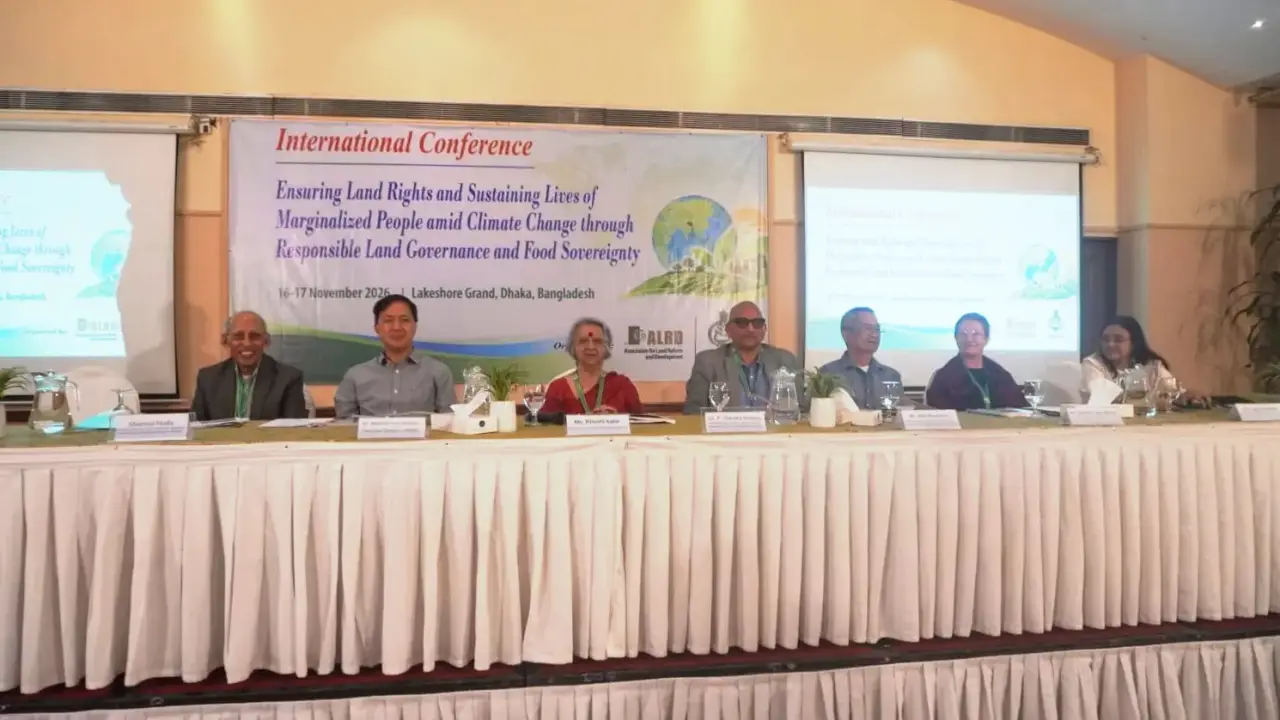
Experts and civil society representatives at an international conference in Dhaka have called for securing land rights for marginalized communities- particularly women, Indigenous peoples, and smallholder farmers- to combat climate change impacts and ensure food sovereignty. Speakers also emphasized applying a ‘gender lens’ across all policy-making and development initiatives.
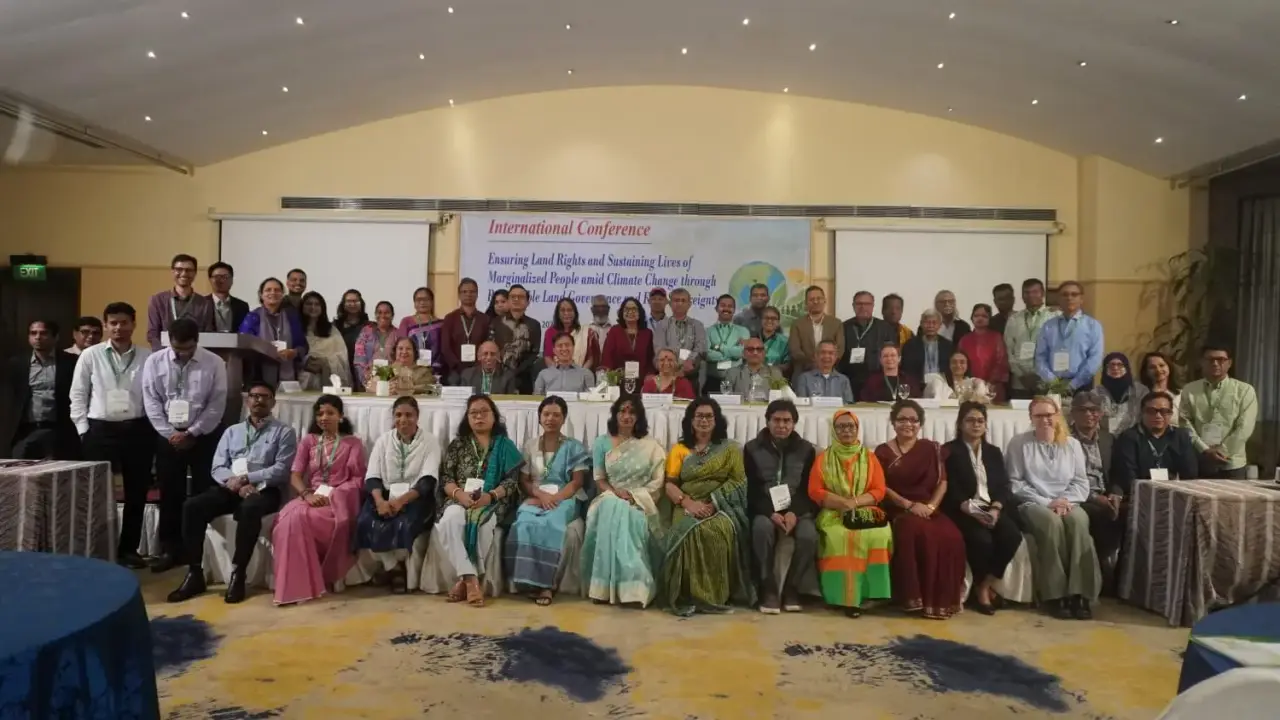
The calls were made on Monday (November 16) at Hotel Lakeshore in Gulshan, Dhaka, during an international conference titled ‘Responsible Land Governance and Food Sovereignty to Establish Land Rights and Ensure Sustainable Livelihoods for Marginalized Communities Amid Climate Change.’ The event was jointly organized by the Association for Land Reform and Development (ALRD) and the Asian NGO Coalition for Agrarian Reform and Rural Development (ANGOC), bringing together civil society delegates from Bangladesh, India, Nepal, Indonesia, the Philippines, and the United States.
Inaugural Session: Eliminating Systemic Disparities
Presided over by ALRD Chairperson Khushi Kabir, the inaugural session highlighted how population growth and mounting pressure on land, compounded by climate change, are deepening food insecurity. Speakers noted that women hold only 15 percent of land rights globally- and even less in Bangladesh- despite being the primary driving force in agriculture. To bridge this gap, speakers urged a shift in societal mindset alongside adopting a gender-sensitive approach in every sector.
Dr. P. Chandra Shekara, Director General of CIRDAP, attended as the guest of honor, while Sabine Lauber, Chief of Mission at the Office of the United Nations High Commissioner for Human Rights (OHCHR), joined as a special guest. Roel Ravanera from the Philippines presented the keynote paper, following welcome remarks from ALRD Executive Director Shamsul Huda and ANGOC Executive Director Nathaniel Don Marquez. Dr. Ujjaini Halim (IMSE, India) and Jennifer Amy Brown (Landesa, USA) also addressed the session.
Legal Implementation and Marginalized Communities
Chaired by Maheen Sultan, Senior Fellow of Practice at BRAC, the first working session featured country presentations from Bangladesh, India, Indonesia, and Nepal on the land tenure realities of smallholder farmers, women, and Indigenous populations.
Delegates pointed out that while protective laws exist, weak enforcement and inherent legal discrimination continue to deprive marginalized groups of land ownership. Consequently, their inability to adapt to climate change disrupts agricultural output and threatens daily food security. Gender and social policy specialist Annie Drong, researcher Dr. Ishita Dastidar, and Dhaka University Professor Dr. Sanjida Akhter participated as panelists.
Sustainable Agriculture and Structural Crises
The second session, focusing on ‘Sustainable and Climate-Resilient Agriculture and Biodiversity Conservation, was chaired by Syeda Rizwana Hasan, Chief Executive of the Bangladesh Environmental Lawyers Association (BELA). Country-specific papers were presented by Dr. Dwijen Mallick, Senior Fellow at the Bangladesh Centre for Advanced Studies (BCAS), and Jagat Deuja, Executive Director of CSRC, Nepal.
 Citing data from the Bangladesh Bureau of Statistics (BBS, 2022), Dr. Dwijen Mallick noted that agriculture contributes roughly 11 percent to Bangladesh’s GDP and employs 40 percent of the total population. Women make up about 24 percent of the agricultural workforce, compared to 18 percent for men. Furthermore, 83 percent of the country’s farmers are marginal and smallholders who cultivate nearly half of all arable land. However, he warned that the excessive use of chemical fertilizers and pesticides is degrading soil health and biodiversity, while high production costs are squeezing farmers’ profit margins.
During the panel discussion, Gawher Nayeem Wahra of the Disaster Forum urged greater focus on the rights of sharecroppers and women’s food nutrition. He remarked that the Ministry of Women and Children Affairs has become overly project-centric, causing core issues of women’s rights and nutrition to be sidelined. Sharmin Islam (Gender Team Leader, UNDP Bangladesh), Md. Mostafizur Rahman (BARC), and Sayla Sabnam Richie (YouthNet Global) also spoke as panelists.
Citing data from the Bangladesh Bureau of Statistics (BBS, 2022), Dr. Dwijen Mallick noted that agriculture contributes roughly 11 percent to Bangladesh’s GDP and employs 40 percent of the total population. Women make up about 24 percent of the agricultural workforce, compared to 18 percent for men. Furthermore, 83 percent of the country’s farmers are marginal and smallholders who cultivate nearly half of all arable land. However, he warned that the excessive use of chemical fertilizers and pesticides is degrading soil health and biodiversity, while high production costs are squeezing farmers’ profit margins.
During the panel discussion, Gawher Nayeem Wahra of the Disaster Forum urged greater focus on the rights of sharecroppers and women’s food nutrition. He remarked that the Ministry of Women and Children Affairs has become overly project-centric, causing core issues of women’s rights and nutrition to be sidelined. Sharmin Islam (Gender Team Leader, UNDP Bangladesh), Md. Mostafizur Rahman (BARC), and Sayla Sabnam Richie (YouthNet Global) also spoke as panelists.
Originally published byPressenza
Read the original
Want more of this in your Google feed?Add Faultline as a preferred source — it'll show up more often in Top Stories.
Add as preferred source