
World Pressenza
Are we on the cusp of a global humanist moment?
To some, this headline may seem reckless or naïve, a mere wishful thinking, or even just propaganda. A ‘realistic’ analysis would tell us that poverty and inequality have not diminished, that massacre
English (original) ·Read in Deutsch ⇄
To some, this headline may seem reckless or naïve, a mere wishful thinking, or even just propaganda.
A ‘realistic’ analysis would tell us that poverty and inequality have not diminished, that massacres and forced displacement caused by war continue, that environmental degradation has not been halted, and that new technologies, far from serving the common good, remain subject to the petty interests of a handful of corporations. That, in the face of the maelstrom of sweeping changes, large groups of people are seeking salvation and refuge in ancient dogmas; that conservative political tendencies have gained ground in governments; that hate speech and disinformation have grown rampant; and that mental health issues have reached pandemic proportions. That the majority are desperately suffering from loneliness and are distressed by an uncertain future.
However, something seems to have changed.
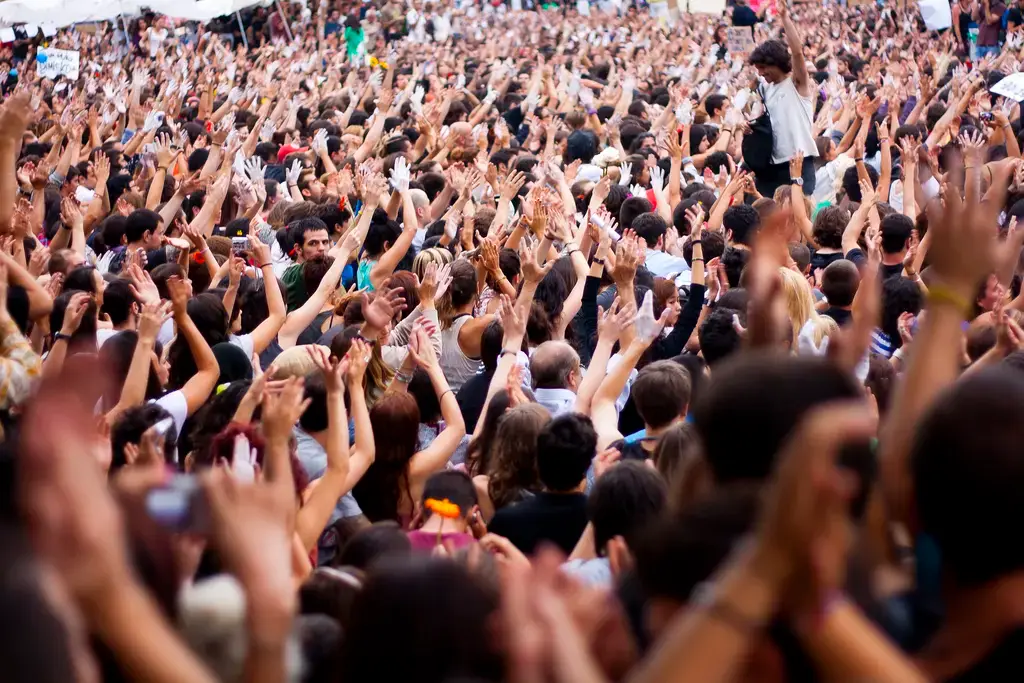
Young people – as they have done at every turning point in history – have taken the lead and are taking to the streets en masse to demand opportunities for the future. They are calling for better education, decent and affordable housing, and rejecting corruption, manipulation and the high cost of living.
They are not merely limiting themselves to protests, strikes or prolonged sit-ins; rather, they are throwing their weight behind electoral campaigns, swaying the results in favour of their proposals, and even putting forward innovative and independent political alternatives.
This might seem irrelevant or fleeting if viewed merely as a simple outburst of defiance in the face of the system’s flagrant abuses. But the phenomenon has become a global tidal wave and reflects an unstoppable undercurrent. Moreover, the demands are taking on a character of systemic transformation – that is to say, revolutionary – going far beyond the outrage at specific incidents that sparked the protests.
Various social sectors have now joined the widespread youth movement in solidarity, adding their discontent and reviving substantial demands.
The rebellion of converging diversity
It is interesting to observe how diversity manifests itself whilst pointing in a common direction. In the US, the massive demonstrations against the executive’s purported autocracy (“NoKings”), alongside fervent grassroots activism, paved the way. The mid-term elections in that country resulted not only in the defeat of the Republican Party, but also in the possibility of renewal through younger people, more women, and figures from diverse religious and cultural backgrounds, bringing a clear political orientation in favour of the people and not aligned with corporate interests.
This is similar to the widespread protests in Europe, where, starting from specific circumstances – such as poor educational standards, property speculation, the high cost of living, a lack of job opportunities, and opposition to the arms race and corruption – the established order ends up being challenged almost unanimously. The system responds to all this with further violence and repression.
In South and South-East Asia, too, the voices of the younger generations are making themselves heard with great force. The uprisings in Sri Lanka, Bangladesh and Nepal, which succeeded in toppling entrenched governments, were joined by massive protests in India and Indonesia; like their European and American counterparts, these young people no longer accept the lies and repression of reactionary rulers.
In the South American giant, Brazil, a massive wave of social mobilisation managed to reverse what seemed like an inevitable defeat for the progressive government in the run-off election. Once again, the leading role was played by young people who felt called upon to act and threw themselves actively into demonstrations, grassroots work across the country and digital spaces to halt a potential rise of fascism.
This global convergence cannot go unnoticed. But to affirm the emergence of a global humanist moment, we must clarify the terms.
What is a humanist moment?
The Dictionary of New Humanism describes a humanist moment as a “historical situation in which a younger generation struggles against the generation entrenched in power, thereby altering the dominant anti-humanist paradigm. This moment is frequently identified with social revolution.
Further on, the same entry adds that “the humanist moment acquires its full significance if it ushers in a phase in which successive generations can adapt and deepen the founding proposals of that process. Often, the humanist moment is brought to an end by the very generation that had come to power with the intention of bringing about a change in the paradigm. It also happens that the generation that initiates the humanist moment fails in its project.”
Finally, the author of the work, Silo, the proponent of New Humanism, states: “Within the configuration of the closed global civilisation (or globalisation) that is currently unfolding, a new humanist moment that might be ushered in by ‘descending’ from the pinnacle of political, economic or cultural power is no longer possible. It is assumed that this will occur as a consequence of the growing disorder within the closed system and will be driven from the grassroots level, which—despite still suffering from general disintegration—will find itself with the opportunity to develop small, autonomous organisations driven by its immediate needs.
These specific actions are now in a position to become a demonstration effect, thanks to the narrowing of geographical distances brought about by technological development and, in particular, the expansion of communications. The global, rebellious synchronisation of a small generational cohort in the 1960s and part of the 1970s was a symptom of this type of phenomenon. Another example is that of social upheavals capable of synchronising across widely separated geographical locations.”
It is clear that this description, formulated in a visionary manner by Silo more than three decades ago, fits perfectly with current events and presents a framework capable of situating the current situation within a broader process.
What is to be done?
This famous question was inspired by Nikolai Chernyshevsky’s novel of the same name, written in 1862, and was later popularised by Lenin. Chernyshevsky led the Narodnik movement, which can be regarded as a precursor to the subsequent Soviet Revolution.
From a considerable historical distance, for the masses who today are calling for fundamental social change, in order to chart a course for future action, it is important to ask this question once again.
We therefore posit that the current framework has already changed. The monstrosity that has emerged from the twilight zone—where the new is not born and the old has not quite died—will not survive for much longer, amongst other things because the pace of change does not allow it to remain entrenched for long.
Above all, however, it is essential to recognise that something new has already come into being.
People are calling for equal opportunities, for the expansion and effective exercise of their rights, for greater freedom, and for genuine democracy. Autonomy, diverse life choices, decentralisation, horizontal structures, and the use of technology for human well-being are now increasingly widespread imperatives. The vast majority of people are increasingly rejecting violence in all its forms and advocating for a life lived in peace, with opportunities for progress.
Therefore, the answer to the question ‘what is to be done?’ lies in strengthening the new that has already emerged and in transforming what remains in our consciousness as a memory of past tendencies, drawing on its progressive elements whilst discarding those that hinder human evolution.
To reject attachment to memories and renew the inner and social landscape is to practise the principle of progressive adaptation—a path that humanity has retraced at every problematic turning point. This adaptation does not tolerate the acceptance of conditions adverse to evolution; on the contrary, it rises victoriously above circumstances, affirming the capacity for transformation.
In these circumstances, Universalist Humanism possesses a significant conceptual and analytical toolkit to make available to the Social Movement currently underway.
Similarly, this movement, which has consistently emphasised the need to accompany the transformation of society with the humanisation of each person’s everyday behaviour, has developed a rich array of practical tools to make this possible. The experience gained from more than five decades of ongoing action can offer valuable insights, alongside a resolutely open-minded approach to new experiences and knowledge. In addition, Humanism can contribute to this new historical moment in a variety of ways, such as through the Parks of Study and Reflection, the meeting places of humanist organisations, and the Silo Message centres located across a wide range of cultures.
Opening up the future means awakening an inner faith amongst people that change is possible and depends on our actions. There is no doubt that this inner faith is awakening worldwide amongst the younger generations.