
World Pressenza
An Intention That Transcends Us
My mother is 91 years old, and we speak every day. Most of our conversations begin with the same question: How am I doing? What is interesting is that my well-being seems, in some ways, more important
English (original) ·Read in Deutsch ⇄
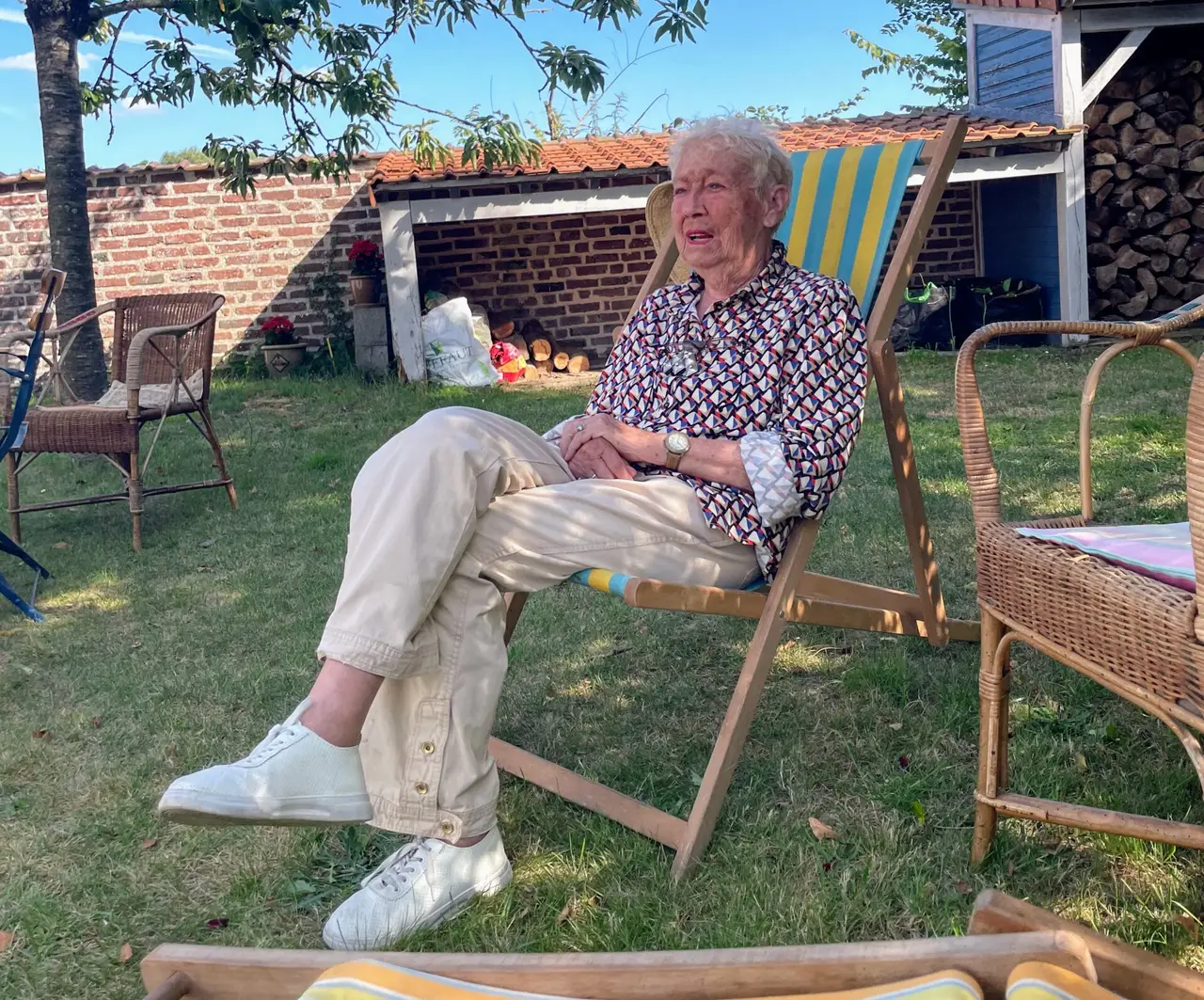
My mother is 91 years old, and we speak every day. Most of our conversations begin with the same question: How am I doing?
What is interesting is that my well-being seems, in some ways, more important to her than it is to me. At her age, with all the concerns that come with growing older, her attention continues to be directed toward someone else, toward another life, another future.
Perhaps what matters most to her is not understanding the present moment, but knowing that we will be all right in the future—a future she continues to care about, even though she may not be part of it.
There is something extraordinary about this simple experience. Something that perhaps reveals a form of transcendence.
In Silo’s thinking, there is the suggestion that human life carries an intention that goes beyond the biological organism in which it develops. We live inside an animal that must eat, sleep, protect itself, and eventually die. But the Human is not simply that animal. Something else is trying to express itself through this extraordinary creature.
It is almost as though the Human were the entrance of another plane into this world, another possibility of existence expressing itself through biological life.
Without that intention, Silo suggests, it would be difficult to justify life itself. Human history could then be understood as the unfolding of an intention seeking to express itself, generation after generation, through the activities of this rather peculiar creature we call the human being.
And this brings me to something I find rather funny about death.
Many people are convinced that when we die, everything ends. There is nothing afterward. Finished. Gone.
But where in the natural world do we actually observe something simply disappearing into nothingness?
Everything around us is constantly dying and transforming. A leaf falls from a tree. It does not become another tree, but it decomposes, enriches the soil, nourishes other organisms, and participates in the development of new life.
The oil we use today is the result of transformations that began millions of years ago. Ancient organic matter, subjected to geological processes over immense periods of time, eventually became the liquid whose energy moves our cars and contributes to powering our civilization.
Nothing simply vanishes. Everything participates in processes of transformation.
Of course, this does not prove that human consciousness survives biological death. The continuity of matter and energy is not the same as the continuity of personal experience. But it does invite us to question why we so easily imagine human existence as something that simply begins, lives for a few decades, and then disappears without any further significance.
Perhaps we are asking the wrong question.
Instead of asking whether the individual continues after death, could we ask what continues through human life?
Look at human history.
Generation after generation, human beings have struggled to overcome pain and suffering. They have developed languages, cultures, knowledge, medicine, technologies, and increasingly complex forms of social organization. Each generation inherits the experiences of those who came before it, transforms them, and opens possibilities that previous generations could hardly have imagined.
The human being of today carries within their world the accumulated intentions of countless people who no longer exist.
In this sense, history is not simply a succession of civilizations, discoveries, wars, and achievements. It is an extraordinary process of transformation in which human intention continues to express itself.
And the process is accelerating.
Our lives are becoming more complex, our possibilities more extensive, and our capacity to transform the world more powerful. We can communicate across the planet instantaneously, explore the universe, intervene in biological processes, and develop machines capable of performing activities once considered exclusively human.
Yet there is a remarkable contradiction.
Our technological possibilities are advancing at an extraordinary speed, while our capacity to overcome violence, discrimination, exploitation, and suffering seems to advance much more slowly.
Perhaps this is where the real question of humanization appears.
Each new generation transcends the previous one in certain capacities, but it must also confront the unresolved contradictions inherited from the past. Nothing guarantees that greater technological power will produce a more human world.
That remains an intention to be realized.
And perhaps transcendence is connected precisely to that intention: the persistent human effort to overcome limitations, to move beyond suffering, and to open possibilities for others.
Which brings me back to my mother.
At 91, she continues to ask how I am doing. Her concern is not an abstract philosophical idea. It is a living intention directed beyond herself.
Perhaps the extraordinary thing about human existence is that we are capable of caring about a future that we may never personally experience.
We plant trees whose shade we will never enjoy. We educate children who will inhabit a world we cannot imagine. We struggle to overcome forms of suffering that may disappear only after we are gone.
And perhaps, through all these activities, something continues to express itself that is much larger than our individual lives.
I do not know what happens after death. But I find it difficult to imagine that the immense adventure of human existence, with all its accumulated experiences, struggles, discoveries, affections, and intentions, can be adequately described as a collection of individual lives that simply begin and end.