
World Pressenza
A Chance for Jewish Prophecy? Or, An Exercise in Hope for Today
Mr. Moni Y Gold tucked a used train ticket from the Haifa-Beirut coastal railway line into his diary, bearing his name and the date: May 7, 2047. It is a memento of a trip he took the year before. But
English (original) ·Read in Deutsch ⇄
Mr. Moni Y Gold tucked a used train ticket from the Haifa-Beirut coastal railway line into his diary, bearing his name and the date: May 7, 2047. It is a memento of a trip he took the year before. But the diary opens on May 15, 2048: “I woke up, happy to still be alive at the age of ninety-four. Every new day is a blessing, and even though I’m not particularly religious, I say first in Hebrew ‘Hascéva Laèl,’ then in Arabic ‘Al hàmdu lillàh,’ and finally in English ‘Thank God.’”
For the reader, this is the opening of a diary from the future, partly a memoir. It is the eighth year since the Wathba (“leap forward”), the turning point of 2040 that transformed Israel into the new Palestine—a multinational state with equal rights for all from the river to the sea, where a long and peaceful revolution is underway, consisting of the implementation of UN Resolution 194 on the right of return for Palestinians expelled during a century of ethnic cleansing, and the painful catharsis of restorative justice. Debate continues over what to name the new state, though many favor “Isratine.” And the reader’s mind races to the happiest memory. “For that entire year, I couldn’t write a single word. I had to process the revolution, the transformation, the excitement, the trauma, the fear, and the hope. What a whirlwind!”
Moni recounts in great detail the stages leading up to this long, peaceful revolution, during which the new state is being built. From the dismantling of the Palestinian National Authority following the death of Abu Mazen, to the creation of a new PLO, comprising representatives of historic Palestine, Palestinians in Israel, refugee communities, and the diaspora; to the resignation of the Israeli government, overwhelmed by waves of hundreds and hundreds of thousands of protesters, and finally to its collaboration with the new PLO in preparation for two-stage elections: one within the country and the other among the refugee and exile communities.
But any reader who, today, November 4, 2026, wishes to indulge in an exercise in hope should immediately turn to a page, in this memoir from the future, that kindles a perhaps prophetic spark in the darkness of our present. In Moni Gold’s diary, it bears a date further in our future. But in the light—perhaps fleeting—of today, only two years might separate us from the event:
“But the truly big news came from Washington: the United States has finally elected a Democratic president who identifies with the party’s progressive wing…. [In the end], the United States joined the sanctions, suspended military aid, and declared its support for the new PLO’s proposal to hold, under international supervision, elections for a democratic state across all of historic Palestine. The U.S. delegation to the United Nations sponsored a Security Council resolution calling on Israel to stop obstructing the process and to begin talks with the new PLO on the country’s future. The Democratic U.S. president went further, praising the courage of the young Palestinian men and women who protested throughout historic Palestine against these Israeli policies, despite the grave risks to their lives, and comparing them to activists in the American civil rights movement.”
However, as Moni Gold points out, “The Global North—whether the United States or the United Kingdom—has not been that significant in our lives in the 2030s. Other countries—in South America, Southeast Asia, Asia, and Africa—have been far more influential on the international stage regarding the Palestinian issue.”
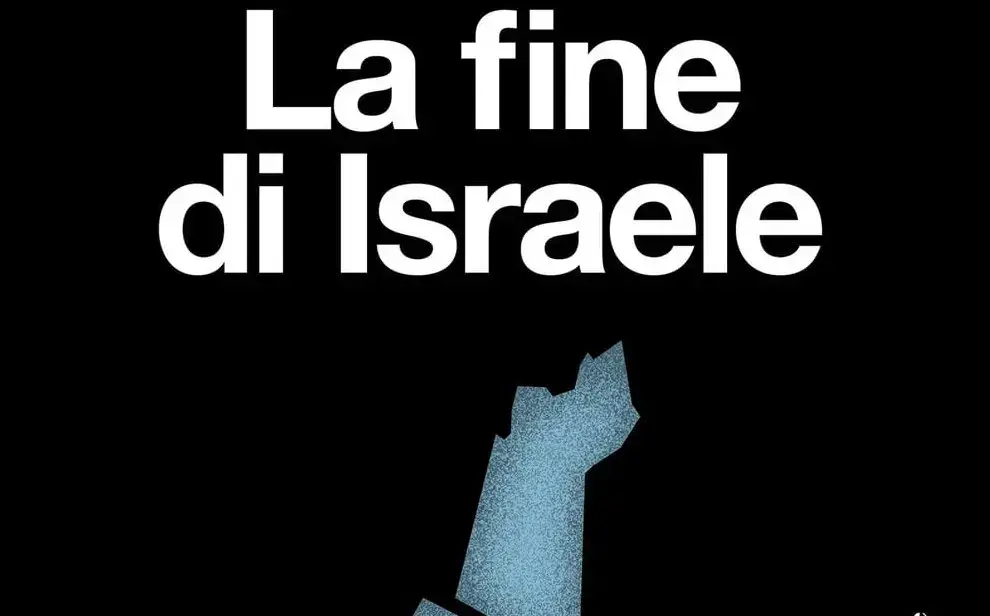
Utopia is not the optimism of reason; it is the nourishment of hope for the optimism of the will. And the reading I propose for this day of hope—before it fades—is taken from a 2025 essay, The End of Israel. More specifically, from the third part, which almost no one has managed to read so far. There, the essayistic tone breaks down, and the writing suddenly becomes a narrative—or rather, a diary. “A diary from post-Israel Palestine.” Moni Gold is simply the alter ego of Ilan Pappé, the author of this book. Enjoy the read.
Roberta De Monticelli