
World Perspektive Online
The onset of winter in Gaza exacerbates the humanitarian crisis
Heavy rains have flooded tens of thousands of tents in the Gaza Strip. The onset of winter could further worsen the catastrophic humanitarian situation. There is no end to the Israeli attacks either
Deutsch (original) ·Auto-translated to English
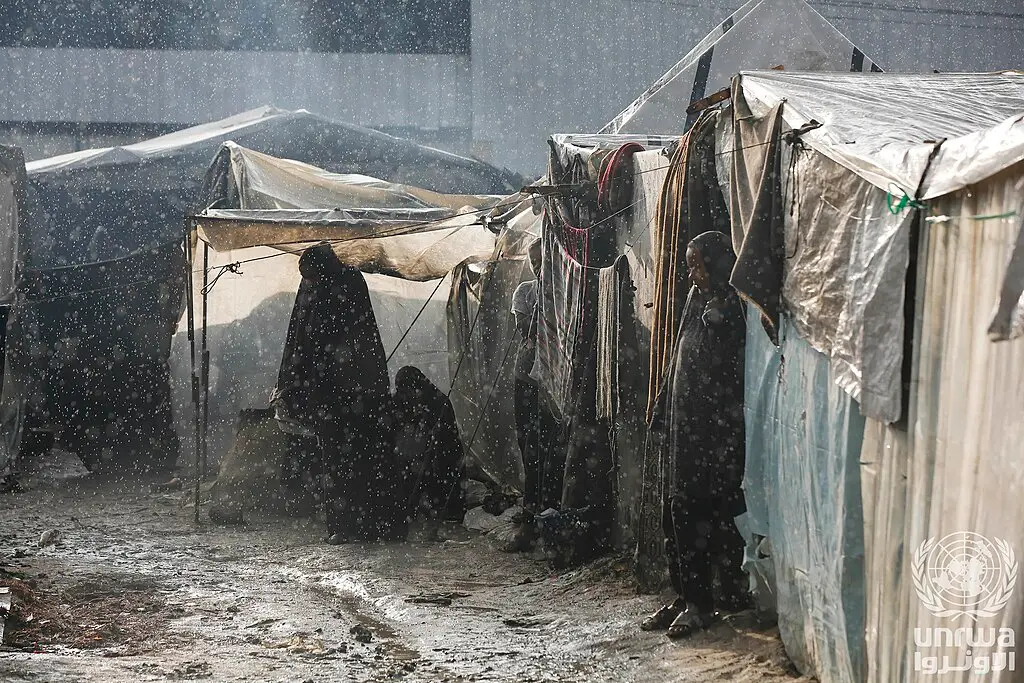
Heavy rains have flooded tens of thousands of tents in the Gaza Strip. The onset of winter could further worsen the catastrophic humanitarian situation. There is no end to the Israeli attacks either.
The first severe winter storm of the season hit the Gaza Strip at the weekend. Heavy rain and gusts of wind turned numerous camps and refugee shelters into muddy areas. The rainwater that quickly penetrated the tents soaked sleeping mattresses and blankets and entire accommodations were destroyed.
According to the UN Emergency Relief OfficeOCHAAs of November 8, more than 26,000 households reported damage to their housing or belongings. The actual extent is likely to be even greater. The Hamas government's media office even spoke of around 70,000 flooded tents.
The storm also claimed lives. On Sunday evening, a sand embankment collapsed onto a tent camp south of Deir al-Balah. Five people, including three children, were killed. According to OCHA, an infant also drowned in the water. The rescue workers received numerous emergency calls, but they were only able to provide very limited help due to a lack of equipment and the infrastructure that had been destroyed after several years of war.
Gaza in ruins, the world in motion - three years after October 7th
Ongoing attacks and catastrophic humanitarian situation
For the people of the Gaza Strip, the onset of winter and the floods mean that their already precarious living conditions are further aggravated. Many of the tents in which they are staying were already damaged long before the recent rains.
According to theInternational Rescue Committee (IRC)At the beginning of November, various aid organizations estimated the need for around 121,000 tents, 561,000 tarpaulins and 1.7 million mattresses. In the Gaza Strip itself, only around 2,800 replacement tents were available. Numerous relief supplies, including more than 150,000 tents that had already been procured, were waiting to be imported outside the Gaza Strip.
The ceasefire agreed in October 2025 has not stopped the attacks. Israeli airstrikes, artillery shelling and ground operations continue to cause Palestinian casualties. Military advances and the ongoing shifting of the so-called “Yellow Line,” which demarcates the area controlled by Israeli troops, have repeatedly triggered new displacements. AfterDeclarationsAccording to the Ministry of Health in Gaza, a total of 1,522 Palestinians have been killed and 5,421 injured since the ceasefire began until October 19, 2026.
Almost a year later: Israel continues to attack Gaza despite Trump's 20-point plan
Hunger crisis continues
Israel also continues to systematically use hunger as a weapon of war. Although supplies temporarily improved after the start of the ceasefire - the amount of aid imported increased and the food situation eased somewhat - there can be no question of sufficient supplies.
The international initiative Integrated Food Security Phase Classification (IPC), in which UN organizations are involved, among others, continues to classify the situation in the entire Gaza Strip in the “crisis” category. Around 1.4 million people will be affected by acute food insecurity by the end of December 2026.
At the same time, the reach of food aid is declining. While around 2.1 million people were reached in January, it was only 1.3 million in September. As of October, fewer than a million people are expected to receive monthly support. The food rations distributed only cover around half of the minimum daily calorie requirement. At the same time, food prices in Gaza rose by an average of 20 percent in October.
Israel prevents medical care, reconstruction and education
Access to clean water and medical care also remains severely limited. According to the World Health OrganizationWHOAs of September, only 19 of the 36 hospitals in the Gaza Strip were partially functioning. Not a single hospital was able to fully operate.
Medicines, medical equipment and fuel are missing. Cancer patients cannot receive adequate treatment, and people with kidney disease do not receive the necessary dialysis on a regular basis. Around 1.7 million people remain displaced and mostly live in catastrophic conditions with inadequate sanitation. The WHO warns of increasing diarrheal diseases and contaminated water.
Israel also controls the access of aid and construction materials, blocking reconstruction in Gaza. Since March 2025, the Israeli authorities have also prevented the UN Relief and Works Agency for Palestine Refugees (UNRWA) from bringing their own relief supplies and humanitarian personnel directly to the Gaza Strip. As a result, food and shelter already stored outside the area could not be distributed as planned.
Children are particularly affected. Many have not received regular schooling since the beginning of the war. According to OCHA, as of October 2026, around 200,000 children did not have access to any form of structured education. Numerous schools were destroyed or damaged and some are used as emergency shelters. The renewed floods have also affected at least 55 temporary learning places for around 55,000 children.
The postThe onset of winter in Gaza exacerbates the humanitarian crisisappeared firstperspective.