
Labour Left Voice
With Just 18% Approval, President Kast and Chile’s Business Leaders Stay Upbeat Amid Social Crisis
Kast’s approval has fallen to 18 percent amid fuel hikes, soaring prices and unemployment, yet business leaders remain upbeat as banks, pension funds and arms firms profit. A truckers’ strike showed w
English (original) ·Read in Deutsch ⇄
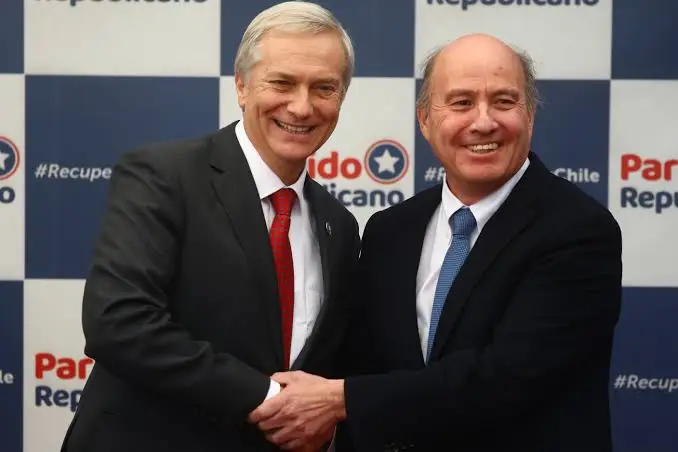
Things have gone downhill for José Antonio Kast since he was elected president of Chile last year. The latest polls put his approval at just 18 percent. The overall trend had been visible for weeks. Now, a truckers’ strike has emerged, marking a turning point: even some of those who voted for Kast are beginning to turn against his government’s policies.
For now that rejection is confined to those at the bottom. At the top, the business associations and chambers of commerce are still counting their winnings. The plan of Finance Minister José Quiroz, a sweeping construction bill that Congress passed in July,handed them an enormous concession by cutting the corporate income tax from 27 to 23 percent through the tax reform, and Kast’s plea at ENADE, the annual business summit, that it was now the employers’ turn to create jobs, fell on the deaf ears of people who care only about their own pockets.
This strategy of resting the government’s project on business confidence was on full display when Kast set off on a tour of Asia-Pacific countries for the APEC (Asia-Pacific Economic Cooperation) summit, arm in arm with the heads of Chile’s major business groups. The purpose of the trip is to strengthen big business’s dealings with China, the country’s main trading partner.
Even as the social crisis in Chile continues, with high inflation (4.5 percent in the twelve months to October), relentless unemployment (9.8 percent, more than a million people out of work), and a monthly economic activity index (Imacec) scraping the floor (0.2 percent), Kast and the right justify the tour on the grounds of its strategic value for trade alliances with the Asia-Pacific. This stands in flagrant contradiction with Kast’s own words during the government of his predecessor, Gabriel Boric, when he wrote on X: “In the midst of a serious economic crisis, with the country in recession and unemployment rising, the president goes off on a tour of China.”
Beyond the anecdote, the trip is a faithful portrait of Kast’s project: a government prepared to strengthen the big business groups at any price, regardless of the costs at home or of its own popularity.
If the majority of the population is disappointed, hopeless, angry, sad, or afraid, who is cashing in on all of this?
According to the latest report from the CMF, the financial market regulator, bank profits over the last twelve months reached the obscene figure of $4.6 billion. The AFPs, the private pension fund administrators, made profits of 377.3 billion pesos through June of this year, an increase of 13.3 percent. And although the Chilean Chamber of Construction (CChC) cut its growth forecast for its own sector from 4.5 to 3.5 percent, it estimates that productive investment, mainly in mining, will reach $9.157 billion, a 12 percent rise, and expects it to be higher still in 2027.
Arms companies — especially U.S.-based multinationals — are also making a killing off Kast and Quiroz’s policies. The 2027 Budget Law provides for consolidated spending of 2.65 trillion pesos on renewing the Armed Forces’ equipment, which means going from the 6.8 percent set aside in the 2026 budget to 7.6 percent in 2027.
In short, the country’s big bourgeoisie and the large multinationals are still counting their winnings as Kast approaches the end of his first year in office.
While those at the top rub their hands, the rising cost of living keeps hitting working-class families hard.
The inflation figure is no small matter. Among the items that rose most, gasoline has climbed 26.2 percent over the course of 2026 and diesel 53.5 percent, with increases of 4.5 and 12.3 percent in October alone. In food, potatoes (12 percent) and tomatoes (11.2 percent) led the month’s increases, within a group of vegetables, legumes, and tubers that rose 4.6 percent, while bread, cereals, flour, and pasta went up 0.8 percent. In all, 56 of the 81 food items became more expensive in October. These increases have forced families to cut back their spending or go into debt to cover basic needs, and to be far more selective about what they buy.
The situation has been denounced even by the organizations of the ferias libres, the open-air street markets, which report sales falling by as much as 60 percent. That figure is critical, because the markets are where most working-class families do their shopping.
As noted above, unemployment is another of the most pressing concerns. Women are the hardest hit, with unemployment ranging from 11 to 12.8 percent in the several regions.
The combination of the two (a rising cost of living and high unemployment) also goes some way to explaining the growth in household debt. According to the latest report from Universidad San Sebastián, a private university, and the credit bureau Equifax, more than four million people have unpaid debts, one in four adults in the country, and 74 percent of them have been behind on payments for more than twelve months. The group with unpaid debts above 3 million pesos grew 13.9 percent in a year.
In socioeconomic group E, the lowest-income bracket, almost half of all people (46 percent) have fallen behind on payments, with unpaid debt equal to 5.1 times their average income: a hole that is truly impossible to climb out of.
This past week, a stoppage by truckers and transport workers shook the ground under the government’s feet. Without stepping forward to take the heat himself, Kast asked them to clear the highways and quickly sat down with the federations representing the groups on strike.
The possibility that the road closures and blockades might escalate deeply unsettled the government, above all because of the risk that the sectors already under attack, such as public employees and education, would join in solidarity. That led a sour-faced Quiroz to offer$900 million in subsidies to contain the rise in fuel prices and partially bring down their cost.
Strikingly, the mobilization won broad popular support. The road closures did not lead to major clashes, and even the mainstream press ran footage of the much-demonized “el que baila pasa” (“dance and you may pass”), with drivers and even grandmothers getting out of their vehicles, grinning from ear to ear, before going on their way. Comparisons with the uprising of October 2019 were not long in coming.
The backing recorded in polls such as Criteria, which puts it at 80 percent, reveals the underlying problem that drove the transport workers into the streets: the rising cost of living has become unbearable.
We already know that Kast came to La Moneda, the presidential palace, to govern on behalf of the most concentrated sectors of the economy, the same ones who are celebrating while those at the bottom foot the bill for the party of the rich.
But these last few weeks have also exposed the core of the government’s weakness. Its project on behalf of the elites is carried out at the cost of impoverishing and battering working-class families.
The strike also expresses the break of a sector that until now had been watching and waiting, and which has now opened a definitive rift with the government: small business owners, shopkeepers, and other sectors hit by Quiroz’s policies.
That is what the government fears. The mobilization began outside the big transport confederations, Sergio Pérez’s CNTC and Juan Araya’s CNDC, which, faced with seven consecutive fuel price increases, preferred ministerial waiting rooms to the highways. It was small owners who drive their own trucks, kept afloat by debt and self-exploitation, together with salaried drivers, school transport operators, taxi drivers, tow-truck operators, and groups such as No + TAG (the campaign against electronic highway tolls), who blocked Route 5 (Chile’s main north-south highway), the access roads to the ports of Valparaíso, San Antonio, Talcahuano, and Antofagasta, and the mining routes of the north. In a few days they won what months of technical roundtables had failed to deliver: the subsidies and a bill to freeze prices until March.
The lesson is clear: when the nerve centers of the export model are hit, the government retreats. But the limits are just as clear. The subsidies come out of the same public purse that Quiroz is cutting in education, health, and public services, while the mining companies, the exporters, and the big shippers go on offloading the cost of diesel onto freight rates and onto supermarket shelves. A partial and temporary concession, negotiated sector by sector, is precisely the formula with which the government seeks to clear the roads without touching a single peso of the big groups’ profits.
While the transport workers were putting the highways under strain, Chile’s main union and student groups, organized in the Frente Común (Common Front), kept to a fragmented calendar: the student confederation Confech on November 11, the CUT union confederation on November 18, and a movement of residents of working-class neighborhoods on November 27. None called on the unions to join the strike already under way, consistent with the CUT leadership’s response to layoffs, the “bencinazo” (the fuel price hike) and budget cuts: parliamentary pressure and negotiation over mobilization.
November 18 cannot be just one more march. The leaderships of the CUT, of the big union federations, and of Confech have a responsibility to break with the routine of token strikes and turn that date into an active national strike, with blockades and road closures, uniting workers, students, working-class neighborhood residents, and transport workers. If they refuse, it will be plain to their own rank and file who is playing the role of containment and of guaranteeing governability for Kast.
For that to happen, waiting for a call from above will not be enough. Assemblies need to be convened in the unions, the universities, and the workplaces, and strike committees built from the rank and file, with delegates from unions, student councils, federations, pobladores’ organizations, and the mobilized transport workers themselves. Those are the bodies that can concentrate the forces that are scattered today and open up the discussion of how to extend the stoppage to the strategic sectors of the economy: mining, the ports, transport, health, education, and the public administration.
That fight needs a common set of demands. First, repeal the fuel price hike and freeze the prices of food and basic goods, so that the rise in diesel stops being passed on to the street markets and supermarkets. Second, wages that adjust automatically with inflation: with inflation at 4.5 percent and a basic food basket up 5.2 percent in twelve months, paychecks stretch a little less every month. Third, an end to layoffs and to cuts in education, health, and public services. For small truckers, that means freight rates tied to the price of diesel and paid for by the big mining companies, exporters, and shippers.
None of this will come from the “business confidence” that Kast went to Asia to cultivate. While banks pile up $4.616 billion in profits and the 2027 budget sets aside 2.65 trillion pesos to renew the military’s weapons, the urgent needs of working people can only be met with progressive taxes on great fortunes and the nationalization of copper and other strategic industries, such as the ports, railways, and forestry, under the management of their workers and communities.
The truckers’ strike showed that Kast’s austerity has cracks in it and that the strength to stop it lies below. In Europe, workers and young people in France, Italy, Belgium, and Spain are fighting the cost-of-living crisis with general strikes and blockades. That is the way forward: uniting today’s scattered struggles in an active national strike, as a step toward a general strike organized from the rank and file, to defeat the fuel price hike, the cuts, and the plan of Kast and Quiroz.
Originally published in Spanish on November 16 in La Izquierda Diario Chile