
World Left Voice
Indonesia Might Be Heading into a Deep Political Crisis
The largest country in Southeast Asia has been rocked by a wiretapping scandal as Indonesians are souring on Prabowo’s administration. The post Indonesia Might Be Heading into a Deep Political Crisis
English (original) ·Read in Deutsch ⇄
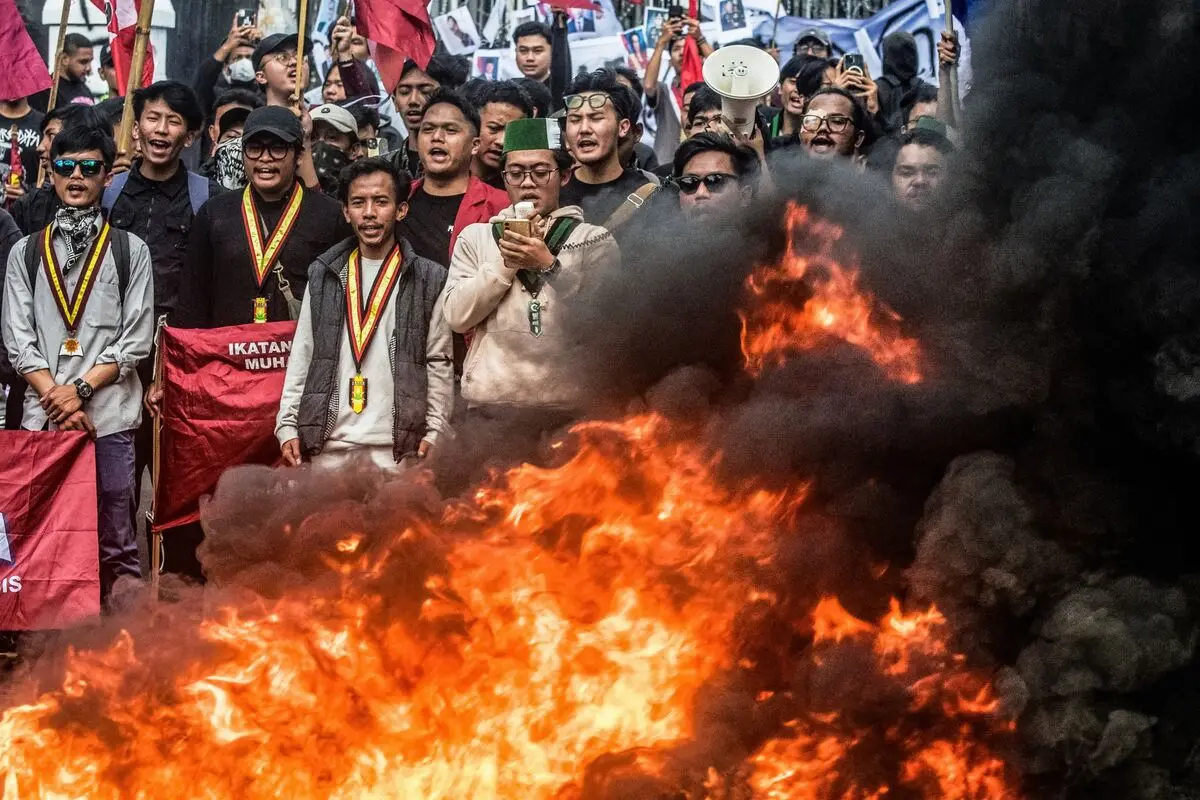
Indonesia, which in recent years has risen to the status of a middle power, might soon be rocked by a significant political crisis. Following news of a wiretapping scandal which targeted the country’s president, Prabowo Subianto, the government deployed tens of thousands of military personnel to Jakarta. The government also detained three senior police generals including former national police chief, Listyo Sigit Prabowo (unrelated to president Prabowo).
Despite the massive military deployment, a report by Bloomberg suggests that on the ground in Jakarta, things appear to be functioning as usual, and the military presence isn’t noticeable. But the same report also explains that behind these developments is a larger conflict between President Prabowo and the former president Joko Widodo who had appointed Listyo as national police chief. The conflict between the current president and former president embodies a deeper conflict between the country’s military, of which Prabowo was a top general, and the country’s police, an institution which remains close to Widodo.
The conflict at the level of the regime comes as Indonesians are souring on Prabowo’s presidency. In recent weeks students and civil society groups have been protesting in Jakarta against the government’s handling of ongoing forest fires in the country. Protesters have denounced that these fires were caused by the clearing out of sensitive lands for palm oil plantations.
Hundreds of Indonesian students and civil society groups protested in the capital, Jakarta, and other cities against President Prabowo Subianto's policies, including the handling of ongoing forest fires and government spending priorities. pic.twitter.com/E5BrXBQDtf
Additionally, mineworkers have begun a sit-in at the largest nickel-mine in the world to demand a fair contract. A pillar of Indonesia’s geopolitical significance is that it is home to the largest nickel reserves in the world. Along with nickel being used in many everyday goods, it is a key component to rechargeable batteries, giving Indonesia strategic leverage in the EV industry. This also makes Indonesian miners a strategic sector of Asia’s working class, and it will be important that workers of the world show solidarity with their struggle.
Mineworkers at the largest nickel-mining site in the world (100k+ workers) in Indonesia are staging protests and now a sit-in demanding a fair contract. Workers say at least one worker a month dies due to the lack of safety equipment and the wages are unlivable. pic.twitter.com/3hRBimgyQS
Most protests in Indonesia have remained modest in size, especially compared to student-led demonstrations which have spread across Europe and even emerged in countries in Asia and Latin America. But they speak to larger disapproval of Prabowo. After two years in power, Prabowo’s approval rating currently sits at a low of 44.5 percent, the lowest any president has received in the time that Indonesia has conducted polling. This comes as the country’s economy is stagnating, and its stock market is at risk of being downgraded, which could result in a currency crisis.
Indonesians have also turned on Prabowo due to the failure of his multi-billion dollar meals program, a flagship policy which had been meant to address malnutrition. The program, which was popular as a campaign point, has been roiled by allegations of corruption and thousands of cases of young people being poisoned or being served rice with glass and maggots. The administration has also received backlash for strengthening the role of the military in the government and restricting civil liberties.
In his time as a general, Prabowo led the violent persecution of pro-democracy activists under the country’s brutal military dictatorship which ended in 1998. However, Prabowo successfully branded himself as a cuddly, grandpa-like figure during his 2024 presidential campaign.
Another key to his electoral victory was the support he received from Widodo. The former president left office as one of Indonesia’s most popular leaders, having played a key role in elevating Indonesia to middle power prestige. While the country’s constitution barred him from running for another term, he made a deal to back Prabowo in exchange for cabinet positions for his political allies. This agreement is now falling apart amid the wiretapping scandal, spelling deeper crisis for Prabowo’s regime.
However the different factions in Indonesia’s government choose to maneuver, neither political block represents Indonesia’s students and workers who are beginning to take action against air pollution, exploitation, and attacks on democratic rights, among other issues. What role the workers and popular sectors in the country play in the event of greater political instability is to be seen.
Originally published on Novemer 6 in CRP News.