
Germany labournet.de
Union wants to abolish the Freedom of Information Act and return to the era of “official secrecy”.
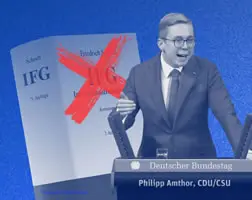
Dossier "In the coalition negotiations, the CDU and CSU are pushing to abolish the right to state information. The project is being driven by Philipp Amthor - who is controversial because of his
Deutsch (original) ·Auto-translated to English
dossier
“In the coalition negotiations, the CDU and CSU are pushing for the right to state information to be abolished. The project is driven by Philipp Amthor - who himself suffered from IFG inquiries because of his controversial sideline activities at Augustus Intelligence. (…)This emerges from the negotiating paper of the working group on “modern justice”,that we publish  . The SPD has not yet approved the project. First hadthe RND reports about it . (…) The Union has never publicly called for the abolition of the IFG, but had apparently prepared this in secret. The Union also wants to partially abolish the Environmental Information Act (UIG). The special law for environmental information is based on EU law. The restriction envisaged by the Union would therefore be contrary to European law…”Contribution by Arne Semsrott from March 26, 2025 at FragDenStaat (“Union wants to abolish Freedom of Information Act”) – see also the protest from Netzwerk Research and an apt comment from the people-shatterers – before things got even worse:
- Authoritarianism has long been there - even without the AfD - if the changes to the Freedom of Information Act specifically attack question portals such as 'Ask the State'

- Less government transparency: Dobrindt’s plans are an “attack on freedom of the press”

“There is widespread opposition to the Interior Minister's plans to restrict freedom of information. The journalism union dju speaks of an “attack on freedom of the press,” while the Federal Data Protection Commissioner considers the plans to be “legally questionable.” Resistance to recent plans to restrict freedom of information is growing. Criticism comes from, among others, the new Federal Data Protection Commissioner, Human Rights Watch and organizations that advocate freedom of the press.
It is not the first attempt of this kind. Federal Interior Minister Alexander Dobrindt (CSU) had previously tried to restrict freedom of information. After there was massive opposition to the original plans even within the SPD parliamentary group, the ministry is now choosing a different approach, as FragDenStaat reports. Accordingly, the state should be allowed to refuse transparency in many areas in order to supposedly protect critical infrastructure, as can be seen from the draft for a “Transparency Adjustment Act”. According to FragDenStaat, this includes information on the areas of energy, transport and traffic, finance, healthcare, water, nutrition, information technology and telecommunications. (…)
Danica Bensmail, Federal Managing Director of the German Journalists' Union (dju), also points this out to netzpolitik.org: When it comes to topics that affect critical infrastructure, journalists are already standing in front of locked filing cabinets. "Anyone who uses security as an excuse to abolish transparency seems to want to avoid control. Locking out journalists from the outset is a direct attack on freedom of the press." Bensmail also points to the Freedom of Information petition, which currently has more than 685,000 signatures. "The bill must be removed from the table in this form. We call for the IFG to be further developed into a transparency law.”…”Contribution by Markus Reuter from November 10, 2026 in Netzpolitik.orgwith a few more voices and: The Secret Asylum:video  andFact check
 for the broadcast on November 10, 2026
- Draft law: Dobrindt launches new attack on the IFG
“The federal government is making no progress in abolishing the Freedom of Information Act. That's why the Interior Ministry is trying a different way - hidden in a different law.
Everything speaks against Alexander Dobrindt's plan. The Federal Minister of the Interior has been trying to abolish the Freedom of Information Act (IFG) for months. But the SPD parliamentary group does not want to support his plan, public resistance is massive and Dobrindt cannot provide a single piece of evidence that the law needs to be reformed. But the CSU politician keeps trying. A bill that has now become known from Dobrindt's ministry shows: The IFG should continue to be gutted. But because the planned IFG reform itself has received too much publicity, Dobrindt is now apparently trying to attack transparency in a different way. The important change is to be hidden in another bill on critical infrastructure. A huge transparency exception is planned, which could result in an unmanageably large number of IFG requests being rejected in the future. We are publishing the previously unknown draft law…”Contribution by Arne Semsrott from November 5, 2026 at FragDenStaat - Attack on the IFG: No evidence, nothing, nowhere - The Interior Ministry fought against having to provide evidence for this all the way to court - until it finally had to admit: it has none.
"It's not every day that we have to sue the federal government in order to find out the data basis for a legal reform. When it comes to attacking the Freedom of Information Act (IFG), however, things work differently than with other laws. When the Union and the SPD announced in July that they wanted to actually abolish the IFG, they gave two reasons for this: Firstly, the IFG would threaten the security of administrative employees and the Federal Republic. And secondly, bureaucracy had to be reduced, which had become too large as a result of the law However, the government did not provide any evidence for the two claims. We therefore asked all ministries what data the project was based on. That is why we had to go to court (...) However, after our urgent application to the court, the entire justification for the proposed law collapses to be answered clearly…” Message from Arne Semsrott from October 20, 2026 at FragDenStaat - Interior Ministry plans: tougher cuts in freedom of information?
"The changes to the Freedom of Information Act planned by the Union and SPD have triggered enormous protests. Now MDR research shows: The Federal Ministry of the Interior (BMI) wants even more profound cuts than previously known. This is proven by a previously unknown note from the Ministry of the Interior, from the beginning of February 2026, which is available to MDR Investigative. (...) In it, the officials from the BMI propose to abolish the task of the Federal Commissioner for Freedom of Information. Today's paragraph 12 of Freedom of Information Act (IFG) could be deleted, and the corresponding department at the Federal Commissioner for Data Protection and Freedom of Information would be eliminated. Paragraph 12 regulates that anyone who sees their rights under the IFG has been violated. The Federal Commissioner also controls other authorities on the question of the lawful application of the IFG (...) According to the non-public document, the BMI also apparently wants to protect the rights of members of parliament and journalists that previously apply (...) If it were to happen that journalists and members of parliament would no longer be able to contact authorities with an IFG application with reference to the press law or the parliamentary right to ask questions, this would have significant consequences: Both of them give rise to a right to answer questions, but unlike the IFG, this does not mean a right to inspect files or the release of official documents; journalists and members of parliament would then have access to official documents and documents denied.(…) The suggestions from Interior Minister Alexander Dobrindt (CSU), however, go even further. The BMI wants an obligation to identify applicants - a change that would directly attack one of the central players in the area of freedom of information in Germany: "Question portals such as 'Ask the State' could therefore no longer be used as a 'straw man'," says the paper. (…) In addition, according to the will of the BMI, those areas that generally do not fall under the IFG should also be expanded: In the future, not only the large area of research and teaching should be exempted across the board, but also ongoing legislative procedures - it would only be possible to examine possible influences on a new law based on government documents and documents yourself if the law has already been passed. In addition, according to the will of the BMI, authorities should no longer be allowed to release documents and documents that were created in other authorities in response to an IFG application...” Contribution by Marcus Engert from July 23, 2026 on MDR online - Authoritarianism has been there for a long time - even without the AfD
“Interior Minister Dobrindt wants to specifically combat the work of the “FragdenStaat” platform, which regularly exposes political scandals. It's time to wake up.
Not only does the federal government want to undermine the Freedom of Information Act (IFG), it also boldly claimed that this was about more transparency. Orwell sends his regards - because in reality the opposite is the case: the reform of the black-red coalition will mean that it will be significantly more difficult for the press, citizens and organizations to obtain information from within the authorities. That much was already known.
We now also know from MDR research: Interior Minister Alexander Dobrindt's plans for the IFG are specifically aimed at combating the “FragDenStaat” platform (…)
When authoritarianism comes, it doesn't show up one day and say: Hello, now I'm here and I am authoritarianism. No, it creeps into every corner of the political system and says at every opportunity: Hello, I am a small measure for order or law or against terrorism. Only those who pay close attention can look at all these small opportunities together and realize: Here comes authoritarianism. (…)
The AfD is not needed for that. That's why anti-fascism shouldn't just target them.”Comment by Pauline Jäckels from July 26, 2026 in the taz online - See also our dossier:At the authoritarian tipping point: “Law and order” politics is booming
- Less government transparency: Dobrindt’s plans are an “attack on freedom of the press”
- Government program “for recovery and employment” does not tolerate freedom of information requests: frontal attack on journalism and transparency
- Freedom of information: Black and Red are planning a frontal attack on journalism and transparency.
“The leaders of the Union and SPD want to massively restrict freedom of information. Civil society is horrified and speaks of the “severest attack on government transparency”.
The Freedom of Information Act (IFG) in its current form allows all people, civil society organizations and the media to make all kinds of requests for state documents. The respective authorities and bodies must release the available documents - this makes government actions transparent and has already uncovered many a scandal. Freedom of information is considered one of the pillars of a liberal democracy because it regulates the accountability of the state. But this freedom of information is apparently a thorn in the side of the black-red coalition. In the coalition committee, the government decided to massively restrict freedom of information. Arne Semsrott from FragDenStaat speaks of the “severest attack on government transparency in the history of the Federal Republic”. Civil society organizations are horrified. (…) Several projects are hidden behind the rather flowery words in the “Program for Recovery and Employment”. In the future, freedom of information requests should only be possible with “legitimate interest”. Applicants must therefore prove each time that they have a special right to information. Because this would exclude many requests, the existing right to freedom of information would be practically undermined. Currently, a person making an IFG request does not have to justify why they are doing so. Inquirers would have to expect significantly higher costs in the future. So far, a fee cap ensures that inquiries do not cost more than 500 euros. This cap should be removed and instead the fees should be adjusted “in accordance with the cost recovery principle”. Some authorities are already trying to fend off inquiries with costs.In the future, a single request could cost several thousand euros. In the future, only natural persons will be allowed to submit inquiries. The coalition wants to deprive legal entities of this right. These are legally independent organizations such as a registered association, a foundation or a company. Civil society organizations such as German Environmental Aid or Amnesty International could no longer make inquiries. People from third countries could also be excluded. The federal government wants to check whether only Germans and EU citizens living in Germany are allowed to request information. People making a request would then have to prove their nationality. In future, the names of all government employees will be blacked out in the published information. It would then no longer be possible to understand who is responsible for official decisions. This would make government actions no longer easy to understand and corruption more difficult to uncover. In addition, authorities should be able to refuse to release information by referring to “complex threat situations”. With a similar reason, the Berlin House of Representatives restricted the Berlin Freedom of Information Act and the State Data Protection Act at the end of March. (…) Other points in the paper are also relevant to internet policy. The coalition wants to take action against the “abuse of social benefits” and to implement the Commission’s proposals for welfare state reform as quickly as possible. Among other things, the Commission wants to weaken data protection and accelerate procedures that are largely automated, “including using artificial intelligence”.(…) The Union and SPD also want to simplify national data protection. To do this, she wants to “consistently” use “all available leeway” in the European General Data Protection Regulation (GDPR). Research and business should be able to use data more freely. The plan to abolish reporting and documentation obligations towards state authorities as far as possible with a view to “reducing bureaucracy” goes in a similar direction. (…) In the end, only those reporting obligations should remain in place whose necessity is explicitly justified by the responsible ministries. In addition, every fourth documentation requirement should be abolished within one year, unless it is mandatory under EU or constitutional law...” Contribution by Daniel Leisegang and Markus Reuter from July 2, 2026 at Netzpolitik.org - IFG: Former federal representatives consider coalition decisions to be “devastating”
“In a joint statement, Peter Schaar and Ulrich Kelber make serious allegations against the coalition of CDU, CSU and SPD.
The two former commissioners for data protection and freedom of information accuse the black-red coalition of “disturbing mistrust of citizens and civil society organizations” when reforming the Freedom of Information Act. “Instead of restricting the rights of citizens, we need more transparency in government actions and in the processing of personal data.”…”Article by Falk Steiner from July 4th, 2026 on heise news - IFG: Coalition attacks press freedom
"The German Journalists' Union (dju) in ver.di rejects this enormous deterioration of the IFG and, in addition to strengthening the IFG into a real transparency law, calls for a legally anchored right to information for journalists. In the federal government's current package of measures, the Freedom of Information Act is not being further developed as agreed in the coalition agreement, but is actually being abolished, criticizes Lars Hansen, chairman of the dju in ver.di. (...) "The federal government wants to create a black box that Withholding information from the public and making journalistic work more difficult. “The Freedom of Information Act is a democratic tool for controlling government actions. It must not be restricted under any circumstances,” said the trade unionist. "This initiative is directed against the transparency of government action and democratic participation. Foisting such a far-reaching plan on the public in a large package of measures with other political priorities is not fair play," says Hansen. The IFG has been in effect since 2006 and grants citizens access to official information and documents. Since then, it has been used hundreds of thousands of times and has helped to bring significant grievances to the public through research by non-governmental organizations and journalists. (…) In addition to further developing the IFG into a transparency law for everyone, it is overdue to explicitly secure the information rights of professional journalists towards federal authorities in a federal media information law, said Hansen.(…) The Bundestag must not allow these scandalous plans to go through because they are a direct attack on freedom of the press,” says Hansen.” Press statement from dju in 'People make media' from July 2, 2026 - Attack on freedom of information continues to generate strong criticism
“… There is talk of the “most serious attack on government transparency in the history of the Federal Republic” and of the federal government trashing freedom of information. The civil society organizations are not alone in their judgment. Louisa Specht-Riemenschneider, the Federal Commissioner for Data Protection and Freedom of Information (BfDI), also shares the criticism. “Some of the adjustments mentioned by the coalition committee would have significant implications, which would come close to abolishing the freedom of information that has existed for twenty years,” said Specht-Riemenschneider to the Editorial Network Germany (RND). (…) Criticism of the plans also comes from the Left Party. Digital politician Sonja Lemke criticizes the fact that the coalition wants to de facto abolish freedom of information. "With the attacks on the Freedom of Information Act, the federal government wants to enforce its backroom politics. Transparency towards citizens is mandatory in a democracy! Because this is the only way conflicts of interest and secret machinations can be uncovered," Lemke told netzpolitik.org. (…) She points out that IFG inquiries uncovered “illegal activities” by government politicians.“Be it Spahn and his mask deals or his villa, Katharina Reiche with her business cronyism or Phillip Amthor’s advertising for Augustus Intelligence: These people make it clear why there is a need for government transparency with a clear identification of those responsible.” The investigative journalist Markus Grill on Bluesky also points to such a connection (…) “The restriction of the IFG (…) does not result from administrative practice, but from the political will against more transparency,” says [Yannick Müller from D64]. Manfred Redelfs from the investigative team at Greenpeace speaks of a “massive blow to transparency and participation rights”. He writes: "Especially at a time when many people are at odds with democratic institutions, the federal government is trying to curtail central democratic rights. However, trust cannot be created through isolation and secrecy, but only through transparency." Lilli Iliev from Wikimedia Germany also points out the trust problem (…) She therefore demands: “We need more transparency, not less – for everyone.” Contribution by Markus Reuter from July 3, 2026 at Netzpolitik.org - SPD, stop the frontal attack on freedom of information!
Petition on campactfrom FragDenStaat to the SPD parliamentary group in the German Bundestag - Blind, deaf, ideal
“The Freedom of Information Act – this inconvenient window through which citizens can take a look at the inner workings of the state – has long been under general suspicion in Berlin. Those who confuse government with rule naturally see transparency as a problem that needs to be remedied.
And this is what Klingbeil is currently discussing about the climate‑Transformation funds are treated like a political magic kit in order to plug budget holes that are not intended or even to continue to serve fossil fuel subsidy packages in violation of their intended purpose. And for the Union, on the other hand, corruption is such a natural part of its DNA, as it actually sees the federal budget as private assets and citizens as annoying employees.They call the budget shuffling “creative scope”. Our living space and our future would probably describe it significantly differently, but neither has a voice or a hearing in this coalition.Of course, the citizens' guaranteed right to information and insight, which only enables their constitutional maturity, is a problem here. But what government wants responsible citizens when it can have uninformed and therefore submissive subjects?“Comment from July 4, 2026 by Guido Kühn on the cartoon
- Freedom of information: Black and Red are planning a frontal attack on journalism and transparency.
- No abolition of the Freedom of Information Act: 41 organizations demand: SPD must protect the Freedom of Information Act
“On the occasion of the Union parties' announcement in the coalition negotiations that they want to abolish the Freedom of Information Act (IFG), a broad civil society alliance is calling on the SPD leaders to protect freedom of information. 41 organizations, associations and projects from areas such as human rights, transparency and journalism wrote a public letter to Saskia Esken and Lars Klingbeil. They appeal to the SPD leaders not to make freedom of information a bargaining chip. Instead, the next federal government should strengthen the public's right to information with a transparency law. In view of a strengthening authoritarian right and the AfD's growing presence in the Bundestag, we need a resilient democracy, a transparent state and a federal government that not only demands the trust of its citizens, but also creates the necessary conditions for this..." Open letter from April 1, 2025 at FragDenStaat - Save #IFG: No coalition without freedom of information! A lot of resistance and 2 petitions against Amthor's revenge - and calls for the transparency law
- [Petition] SPD, no coalition without freedom of information!
“The interim results of the coalition negotiations between the CDU, CSU and SPD show something shocking: the Union wants to abolish the Freedom of Information Act (IFG) and thus the fundamental right to government information. This is a frontal attack on freedom of information, government transparency and our democracy - and we cannot accept that. Public control and transparency are apparently a thorn in the side of the Union for its upcoming government. Anyone who is afraid of freedom of information has something to hide. Because of the Freedom of Information Act, everyone has a right to information from federal authorities and administration. The IFG is therefore a cornerstone of our democracy. It helps us as citizens to hold elected politicians and authorities accountable and it enables journalists to uncover abuses in politics and authorities…”Petition from Ask The State on Campactto Saskia Esken and Lars Klingbeil and also:
- Save #IFG: No coalition without freedom of information!
Petition at openPetitionto Saskia Esken and Lars Klingbeil (SPD) from FragDenStaat, Lobbycontrol, MPswatch.de, Network Research, Campact
- Save #IFG: No coalition without freedom of information!
- Union against the public: A lot of resistance to the move by the CDU and CSU
"…"Ask the State” described the planned abolition as a “frontal attack on freedom of information”. The portal, co-founded by activist Arne Semsrott, has been offering an easier way to get answers from authorities and make them generally accessible since 2011. According to the company, “Ask the State” was used for more than a quarter of a million inquiries to authorities. The operators always saw the fact that the portal was unpopular with ministries or administrations as a sign of quality. There is also a piquant personality in connection with the Union's demand for the abolition of the IFG: MP Philipp Amthor headed the working group on the topic for the Union. In recent years he has been involved in an affair involving controversial sideline activities, which became public, among other things, through “Ask the State” and IFG inquiries. Semsrott therefore accuses Amthor of wanting to evade democratic control by abolishing the IFG. (…)
In its coalition agreement, the traffic light coalition actually intended to expand the IFG into a transparency law. However, a draft reform failed due to the SPD-led Federal Ministry of the Interior. Activists also criticized the Greens for having done less for transparency in government than in opposition. (…)
The journalism association DJV also sharply criticized the attempt to abolish the law at the federal level. The move endangers “democracy in favor of maintaining power and opaque machinations,” said its federal chairman Mika Beuster. The transparency NGO Lobbycontrol explained that access to official information is essential for democratic control…”Article by Daniel Roßbach from March 29, 2025 in the FR online - Civil society has already presented a proposal for a transparency law in 2022:https://transparenzgesetz.de/
- Attack on Freedom of Information: Amthor's Revenge
“The CDU and CSU would like to abolish the Freedom of Information Act in the coming coalition. If they succeed, more corruption can be expected…”Comment by Arne Semsrott from March 27, 2025 in the taz online
- [Petition] SPD, no coalition without freedom of information!
- Union plans to abolish the Freedom of Information Act - Research Network: Develop transparency, not restrict it
“…"Anyone who calls for the abolition of the Freedom of Information Act without allowing another transparency rule to take its place is obviously afraid of more openness and proximity to the citizen. In times in which more and more people distrust state institutions, it is a dangerous wrong turn to want to curtail democratic rights and take the path of isolation," comments Manfred Redelfs, who is responsible for the right to information and freedom of information at Network Research.
The Freedom of Information Act aims to shed more light on administrative processes by giving journalists and all citizens the right to inspect official documents or request copies 20 years ago. It stands for a modern understanding of the state and democracy. This makes in-depth research possible for journalism thanks to access to original files. The Union obviously wants to return to the era of “official secrecy”. Instead, what is needed is further development, e.g. with automatic publication obligations, as Network Research and other associations have long been calling for and for which there is already a separate,modern draft law from civil society is available…” Report from March 26, 2025 - “The Union would like to abolish the Freedom of Information Act in its current form. The only way we can still get access to official information from federal authorities is if an AfD minister adds a SPIEGEL journalist to the Signal chat at some point.”Post from Volksverpetzer.de on March 27th. on bsky
Most recently see the threat in March 2024:Federal Administrative Court axes the Freedom of Information Act: Anonymous applications are inadmissible according to the IFG
The postUnion wants to abolish the Freedom of Information Act – and return to the era of “official secrecy”.appeared firstLabourNet Germany.