
Germany · labournet.de · · 8h
Morocco's youth protests: We have football stadiums, where are the hospitals?
Deutsch (original) · Auto-translated to English
dossier
“In Morocco, Gen Z is taking to the streets for better educational opportunities and against corruption. There is great anger over spending on the 2030 World Cup and the timing of the protests is explosive. Young people have been protesting in several Moroccan cities for days against the ailing education and healthcare systems. These are the largest anti-government protests in Morocco in years. The demonstrators, most of whom belong to Generation Z, are loudly denouncing what they see as the government's wrong priorities for the first time. (…) In Morocco, the protesters are not only outraged by the lack of prospects for young people, but also by the high youth unemployment: almost one in three is unemployed. Things really started to boil over last weekend, the last one in September, after eight women died giving birth to their children in a public hospital in the coastal city of Agadir this month alone…”Article from October 1, 2025 in derstandard.de  , see further information:
- Parliamentary election in Morocco: Why young people want to emigrate rather than vote...

- Parliamentary election in Morocco: One country, two worlds
“Morocco is dressing up for the 2030 World Cup, but people are groaning under the economic crisis. Trust in politics is almost zero. (…)
The Moroccan capital is recovering from a tourist season that was characterized by never-ending heat waves, heavy rain and the rush of visitors for the Africa Cup of Nations. A kind of dress rehearsal for the 2030 World Cup, which is scheduled to take place in Spain, Portugal and Morocco. A historic project that is intended to bring the nation of 32 million inhabitants together and for which construction, renovation and investment is being carried out all over the country. But neither the World Cup, the parliamentary elections nor climate change are currently arousing people's minds. As soon as it comes to the exploding costs of food and life in general, the mood changes. (…) But the parties' leaflets apparently immediately drop many of those addressed by the mobile advertising teams. Everywhere, in Rabat, Casablanca or Tange, municipal cleaning teams are collecting slogans printed on paper. It says “future”, “hope” and “progress”, but many Moroccans are left unaffected by this.
It is also usually quiet outside the Ain Sebaa courthouse. Here in the north of Casablanca, families of defendants are waiting for the trials of sons or husbands to begin. During the street protests of Gen Z, those under 30, last fall, hundreds of demonstrators were arrested. Many are still waiting for a verdict to be announced, others are still waiting for the indictment. Once again, a small group of demonstrators in the north of the economic metropolis mingled with parents in the park in front of the court.
“Freedom for Yasser,” “Freedom for all prisoners,” they chant. Bystanders largely ignore the protest, partly out of fear of the plainclothes officers who always appear wherever crowds gather. Popular graffiti artist Yassir Mounbir allegedly insulted the king with one of his paintings and is awaiting trial in prison.
The 22-year-old artist from Casablanca has made a name for himself among supporters of the Gen Z-212 movement for his anti-government tags. Even before the youth storm on Ceuta on July 31st, the authorities took action against the rapper scene. With their texts they could probably start a new protest movement overnight. That is the lesson from the storm of 80,000 on the Spanish enclave.
The Moroccan state is responding to the Gen Z movement and Ceuta in its usual manner by arresting the leaders. Even his lawyer probably doesn't know the indictment against Youssir Mounbir. Because of a strike by lawyers, only a few proceedings are currently taking place, and the courts have also partially stopped their work.
“The lawyers' strike for better legal status is convenient for those in power before the elections,” says a friend of Mounbir. It goes without saying that his name cannot be printed, he says. And looks in the crowd for unwanted observers of the protest. “None of my friends vote,” says the 24-year-old student. “We, the young generation, are the main issue in the election campaign, but no party is offering anything concrete. Last autumn we did not call for the overthrow of the government or the king, but only demanded two things that are actually self-evident: freedom of expression and an income with which one can start a family or at least build an existence."
300 artists have handed over a petition calling for the release of Mounbir and other rappers and graffiti artists. “But only a few of them believe that such interventions or elections will change anything,” says 28-year-old Nabil. “None of us went to Ceuta because we want to change something in our homeland.” The economics student lived in Berlin for two years. “I learned there that a well-organized civil society can actually make a difference. Like here in 2011, when the king restricted some of his power after the so-called Arab Spring. But he has now given this to a circle of advisors, not all of whom are publicly known.…”Article by Mirco Keilberth, Rabat, from September 23rd, 2026 in ND online - Why do Morocco's youth want to emigrate?
“Morocco's economy has been booming for years, but many young people only want one thing: to get out of the country where they see no future for themselves. The mass rush to Ceuta at the end of July, a piece of Spain on the African continent, also showed what risks some people risk. Why do so few people benefit from economic growth in Morocco? Philipp Abresch talks about this with ARD correspondent Sebastian Kisters and expert Anja Hoffmann from the Heinrich Böll Foundation in Rabat. Also on topic: The parliamentary election this week and the question of whether the king and a football official can bring about the hoped-for change.”Podcast by Paula Kersten and Felix Wnuck from September 25th, 2026 on SWR, see also: - Morocco: Emigration despite the boom
Video of the article in Weltspiegel from September 27, 2026 
- Parliamentary election in Morocco: One country, two worlds
- Between the Africa Cup and the uprising: On the situation in Morocco
“We have one in the fallText by Helmut Dietrichpublished about border regimes and social protests in Morocco. The situation in Morocco is currently getting worse. In each of the ultra-modern football stadiums where the Africa Cup of Nations has been running since December 21, 2025, a police station was quickly built, combined with ultra-modern all-round video surveillance. The Moroccan royal family – also as co-host of the 2030 World Cup – sees itself on the way to becoming a major continental power. The country is currently in a state of quiet turmoil. Uprisings, especially by young people, have shaken the country, with demands for schools and hospitals instead of large-scale projects like the new football stadiums. National football players have publicly supported the demands of “Generation Z”.
Shortly before the start of the Africa Cup, social disasters occurred that even attracted international attention. In Fez, two neighboring houses collapsed on December 10, 2025. 22 slum dwellers who had been resettled there died under the rubble of the new houses, which had been built with poor building materials. On December 14, 2025, at least 37 poor people in the old town of Safi died when floodwaters from a storm entered their dilapidated homes. Without warning, they fled to the back of their dilapidated houses.
These social catastrophes and the repression against the Gen Z movement in the fall of 2025 ensure that social and political discontent will continue. The freedom of the prisoners, the termination of the investigation and the investigation into the fatal shootings by the gendarmerie near Agadir (three dead demonstrators) are demanded…”Report from December 22, 2025 in Social.History Online - Mudshahedin el khobs – martyr of bread before Ceuta, at Fortress Europe. About regional precursors, forms of action and transnational dimensions of the uprisings in Morocco
"The supposedly stable conditions in Morocco were shaken up for two weeks since September 27, 2025 by a youth revolt that found broad support among the population. "The people want hospitals and schools" - this is how the main slogan of the street can be translated. What was demanded was the overthrow of the government, which is closely linked to the royal family, and the release of all prisoners, including those from previous uprisings. The background to the revolt is the rapid and extreme impoverishment, not only of the traditional “poor populations”, but also of parts of the lower middle class. (…) What is characteristic of the ongoing revolt is that the demonstrators as well as the riot youth have lost their fear of the police. (…)
The global dimension of this insurgent youth is often referred to under the label “GenZ 212” (Generation Z plus Moroccan telephone country code). The technical finger on social media with global reach as far as Madagascar, Nepal and South Asia is certainly correct, but it does not explain the social coordinates of this movement. (…)
The fact that Morocco is located on the borders of Fortress Europe plays an important role. (…) During these years, thousands of Moroccan children and young people set off swimming to Ceuta. Morocco and the Spanish enclave of Ceuta, located on the African continent, hermetically closed the border in 2020. In 2021, women's demonstrations in the Moroccan border town of Fnideq (Spanish: Castillejos) articulated the demand for an immediate border opening. Their displeasure then translated into the young people's cross-border swimming activities. (…)
The cross-border regional swimming campaigns and the nationwide youth revolt of “Generation Z” can be described as informal globalization “from below” in view of the uprisings in Madagascar, Nepal and South Asia. The swimming actions counteract the state's de-globalization of border closures for the poor and lower middle classes, the measures against Covid-19 and the fight against duty-free small-scale goods movement. The swimmers literally risk their lives in the hope of a better future after the meager family income of cash and their prospects for health and school care have disappeared. It is a youth revolt that – if it continues and expands – will feed the fears of global donors. The major modernization projects in Morocco depend on investment flows not only traditionally from the USA, France and Spain, but also from the Gulf states, Israel, Turkey and India. (…)
New massive border crossings - on land and water - to Ceuta were announced for the night of October 15th to 16th, 2025. But this time, Moroccan police and border troops set up checkpoints well in advance. Flanked by helicopter reconnaissance, they carried out raids in the mountains between Tangier and Tétouan, arrested around 900 sub-Saharan refugees and Moroccan and Algerian youths and deported them to the Moroccan south or east. The judiciary is now taking draconian sentences against the “Gen Z” movement. (…) One to five year prison sentences are imposed everywhere in the country for simple calls for demonstrations via Facebook. “From Sunday, October 19, 2025, the “Gen Z” movement wants to resume its street protests with sit-ins in numerous cities and a boycott of large companies owned by the current head of government, Akhanouch.” Article by Helmut Dietrich as a pre-publication from issue 39 of Sozial.geschichte Online  (“Mudshahedin el khobs – martyrs of bread before Ceuta, at Fortress Europe”)
 - The Gen Z 212 Uprising in Morocco: “We always say that unlike previous uprisings and previous generations, we will not give in.”
“…We are Yousra and Qamar, feminist activists living in Casablanca. Qamar starts teaching at the university and Yousra works in an office in Kenya. We are both involved in a feminist and queer network that stretches across the country. The network functions primarily as a series of bases for material solidarity and collective assistance, a platform for politicization and mobilization, and for advocacy.
While Qamar was active during the 2011 uprising, Yousra was still too young. In addition to participating in the organizing platform and demonstrations, we are currently working to obtain legal and medical assistance during this uprising.
Before we answer the rest of the questions, we would like to offer a few caveats. This uprising has only been underway for a short time, and anyone who claims to have a clear idea or analysis of what is going on - even if they are as close to the events as we are - is lying. (…)
Several things triggered this movement. First of all, in Agadir, as already mentioned several times, eight women died during caesarean section operations in the same hospital in just one month. This led to the first demonstrations against the World Cup, demanding better healthcare. Then, on the second anniversary of the Al-Haouz earthquake, a new high-tech soccer stadium was inaugurated and put on display near Marrakesh, where many of the victims who lost their homes still live in tents and camps. This shows how indifferent they are. This clearly shows the priority of the state, and while people were shocked by this policy, the propaganda machines were babbling about certain cultural assets that they could classify as Moroccan at UNESCO. As if we care! So we coined a new term for this chauvinistic, fascist and aesthetic nationalism that refuses to see what is going on in our country: “Zlayji”, in reference to the Zellige they were so worried about.
Finally, the leader of the 2017 Rif Hirak movement, Nasser Zefzafi, was also temporarily released. He is the leader of the pacifist Riffi movement (the Riffi are the Amazigh of the northern region, named after the Rif Mountains), which called for less exclusion and better access to hospitals, education and jobs. Nasser Zefzafi is currently serving a 20-year prison sentence and is refusing to sign documents accepting royal clemency, which would grant him freedom in return for a "public apology for inciting a separatist movement." He was temporarily released for his father's funeral, and people were very moved by his speech. We from Generation Z were very young when the Rif movement took place. Then, when dozens of videos from the 2017 movement began circulating, we understood that they were fighting for the same cause as us and decided to take inspiration from this movement. Today we scream for the liberation of Zefzafi and all Riffi demonstrators from every city in Morocco.
And when everything seemed dark here, our screens filled with pictures, videos and articles about the revolution in Nepal. It is safe to say that without Nepal, Moroccan youth would not have stood up like we did. When the first medical corps protests broke out in Agadir, people began to organize. That was two weeks before the first demonstrations on September 27th and 28th. (…)
Although the demand for the overthrow of the government was always present, it became increasingly important as the repression increased in intensity. From the first days, dozens and later hundreds of innocent and pacifist people were taken into preventive detention, including even parents with children. We were beaten with insane violence and hatred; some women had their hijabs forcibly removed. On the fourth day, police ran over people in Oujda, leaving a young man in critical condition. The next day, people were shot with real bullets in Agadir, including minors. There were three martyrs and a dozen wounded from bullets alone. In Marrakech they arrived with tanks and took almost half of the city's young people into preventive detention. Some have been released, others are still awaiting trial and face up to 20 years in prison. All of this is justified by the state propaganda machines in the absence of a free press. (…)
The forces within the movement are diverse. These are primarily disenfranchised young people, but also people who are disappointed not only by all political parties, but also by all organizations and associations. The mobilization is mainly carried out by informal networks. Since it is a large-scale movement, these compete with each other in every field, e.g. B. regarding cultural conservatism or collaboration with other organizations or parties, but everything is discussed in the Discord. However, the most conservative side is not winning for now, as the government's ridiculous attempts to draw attention to "promoting homosexuality" have not worked.
We were expecting support mainly from the Ultras (the football fan groups who are often perceived as the voice of the people), but unfortunately they didn't show up in large numbers. As for political parties, several left-wing and Islamist parties tried to ride the wave by giving many interviews and attracting a lot of attention during the demonstrations. This was very poorly received by the Genz212 group, who saw it as an attempt to hijack the movement - especially since afterwards they all made a big deal out of a few burned cars and said little about the victims on the demonstrators' side. (…)
[We read about the “Gen Z 212 Collective” in the news. Could you share with us what you know about her background? What role did they play in the protests?]
Gen Z 212 is the platform and name of our movement. It is the name of the Discord. During protests it serves as a catalyst, every city has chat rooms where we decide where the demonstrations should take place. Lately we have also been organizing help for the detained and wounded. We vote on almost everything. And often the administrators are checked. (…)
The Genz212 movement sees and presents itself as a continuation of the 2017 Rif movement and the uprising of February 20, 2011, even making reference to the demonstrations and riots under Hassan II as well as to the trade unions and student organizations such as Ila al Amam (i.e. Marxism-Leninism). One of the main reasons for this is that nothing has really changed since 2011; the freedom they had gained was taken back. Participants either agreed to work for the state or went to prison or exile.
The Arab Spring in Morocco began to address the political problems of an oppressive system, while the Rif movement and our movement began to make demands about material conditions; now we are trying to formulate political criticism of the reasons why we cannot have hospitals and schools. Some of the main differences are also the age of the movement's participants and catalysts, which are much younger in the Genz212 movement, not to mention a less moderated/regulated style of organizing.
We always say that unlike previous uprisings and previous generations, we will not give in. (…)
[What can people outside of Morocco do to support anti-authoritarian activists there?]
It is important for all Europeans to know that in the past, after all movements and uprisings in Morocco, there were huge waves of emigration, regardless of the outcome. The state opens the borders to get rid of those deemed undesirable, and people mostly flee to Europe. This happened, for example, after the Rif movement in 2017. One way you can help is to fight fascism where you are and organize with people who arrive without papers so that they can arrive safely.
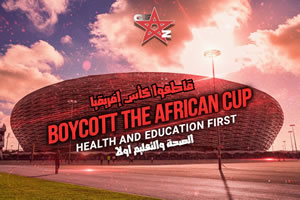
Also: BOYCOTT THE 2025 AFRICAN CUP
BOYCOTT THE 2030 WORLD CUP
These events are stained with the blood of our comrades.
TOURISM BOYCOTT IN MOROCCO…” EnglishInterview from October 13, 2025 in CrimethInc(“Morocco: The Gen Z 212 Uprising”, machine translated) – with great photos – with two participants of the Gen Z 212 movement in Morocco. See also:
- Morocco: “Nobody feels responsible” – Where young people risk their lives for a better future
“More and more young people around the world are protesting against unemployment and a lack of prospects. Several people were recently killed in demonstrations in Morocco. Now the wave of protests is showing its first successes: the Moroccan king has promised quick reforms.
Last Saturday it was that time again: After a week-long break, the Moroccan “GenZ 212” called for demonstrations. This is what the mostly young local protesters call themselves, based on the Moroccan country code. In the society of the North African kingdom, those under 30 make up the largest part of the population. They are disproportionately affected by unemployment. But the number of participants was lower than a month ago when the protests began (…)
The demonstrators' message appears to have reached the “authorities” in the capital Rabat. During the demonstrations, Prime Minister Aziz Akhannouch had already declared that the government was “ready for dialogue and discussion”. Last Friday, King Mohammed VI called for in a speech to parliament calling for rapid social reforms. He did not specifically address the protests. Afterwards, Moroccan Economy and Finance Minister Nadia Fettah Alaoui announced that the upcoming budget would be revised in favor of health and education. “What we heard from the youth protests is that they are demanding better education and health care,” said the minister.
The provisional budget for next year now earmarks the equivalent of around 12.5 billion euros for health and education and for the creation of more than 27,000 new jobs in these areas. New hospitals are to be built and 90 more renovated. The focus is also on educational reforms, job creation for young people and the development of disadvantaged rural areas.
In its reforms, the government also took into account the eight women who died during caesarean sections in the state hospital in Agadir. After internal investigations, the Ministry of Health called in the responsible public prosecutor's office. Several hospital employees have been suspended and the hospital, which is over 50 years old, is to be renovated for 18 million euros.”Article by Alfred Hackensberger from October 24th, 2025 in the world online - According to the Moroccan Human Rights Association AMDH, 600 people are currently behind bars after taking part in previous protests – seehttps://www.amdh.org.ma/fr
- Morocco: “Nobody feels responsible” – Where young people risk their lives for a better future
- Morocco: Despite repression and exemplary harsh punishments, the rallies of “Generation Z” continue – also against and in football
- Fearless protest. Morocco: Despite repression and exemplary harsh punishments, the “Generation Z” rallies continue
"The steamroller of repression could not stifle the protest. Early on Saturday evening, people again gathered in twelve Moroccan cities for rallies. These included the capital Rabat, where there was a meeting in front of parliament, the economic metropolis Casablanca and northern Tangier. After a week-long break in action, several hundred mostly younger people defied harsh threats of punishment and repression.
According to the Moroccan Human Rights Association AMDH, 600 people are currently behind bars after taking part in previous protests. In the majority of cases, they are in custody awaiting their later trials. However, some have already been tried in summary trials. In particular, on October 14, seventeen people were sentenced to heavy sentences in the southern Moroccan city of Agadir, which was the starting point of the protests. They were accused of “damaging public or private property,” setting vehicles on fire, or “obstructing traffic by erecting barricades.” It was about taking part in protest demonstrations in the town of Aït Amira near Agadir. The maximum sentence imposed that day was fifteen years in prison, which was handed down to three people. Another person was sentenced to twelve years, nine were sentenced to ten years each, and the remaining defendants were sentenced to prison terms of between three and five years. (…)
The “Gen Z 212” collective, which has increasingly politicized its demands, is now also calling for the government of Prime Minister Aziz Akhannouch to resign. According to the US magazine Forbes, the politician and businessman's fortune amounts to 1.6 billion US dollars. Akhannouch owns about half of all gas stations in the country. Shortly before the speech by King Mohammed VI. On October 10th - this was theoretically intended to calm the situation, the monarch called on the government to take urgent action to solve the problems and otherwise did not want to see any contradiction between "social programs and major projects" - "Gen Z 212" initially paused the protests for a few days to wait for reactions to the king's words.
Shortly before his speech, "Gen Z 212" had also called on the monarch himself to voluntarily hand over his assets or part of them. In doing so, the collective touched on a taboo in Moroccan politics, where people criticize the king's advisors or the government, but not the king himself. In 2015, Forbes had the private property of Mohammed VI. estimated at 5.7 billion, no new figures have been available since then. In a sense, it represents the elephant in the room that hardly anyone speaks about publicly.”Article by Bertold du Ryon in the young world from October 20, 2025 - Stadiums instead of hospitals: Young fans announce football boycott
“Hundreds of demonstrators took to the streets in Morocco again. They denounce an ailing health and education system.
Predominantly young demonstrators in Morocco have called for a boycott of football games in the country's new stadiums. “The stadiums are there, but where are the hospitals?” protest participants chanted as hundreds of them took to the streets again at the weekend after an eight-day break. In Casablanca, Tangier and other cities, demonstrators voiced their anger over deficiencies in the health and education systems and called for the resignation of Prime Minister Aziz Akhannouch, whom they accused of corruption. Participants told the AP news agency on Saturday that they would boycott the Africa Cup of Nations games in December. Most did not want to give their names for fear of arrest. They criticized inequalities between public and private schools and railed against politicians who send their children to private schools rather than those for which the government is responsible.One protester reported being kicked out of class because he couldn't get a textbook. "I'm done with school and learning, but I'm here to demand reforms for future generations," he said…”Report from October 19, 2025 in tagesanzeiger.ch - African Championship in Morocco: FIFA's next scandalous tournament?
“Before the start of the African Cup, demonstrations and social problems in Morocco are causing unrest and raising questions about stability.
The ultras in Morocco have recently hardly wanted to deal with football. The largest fan groups have avoided the professional league in the past two weeks, including the Moroccan national team's home games against Bahrain and Congo. “Rosso Verde” wrote on social media that this was intended to express “connection with the nation’s issues”. This fan group has accompanied the national team for many years. The Ultras want this boycott to be understood as solidarity. Thousands of people demonstrated in major cities in Morocco over several days. They want to draw attention to the misery in education and healthcare as well as to corruption in the state. Some protests have been marred by violence and looting. The government increased police presence. And King Mohammed VI. called for unity in a speech. Since then the situation has calmed down somewhat. DBut the problems are profound, and so the demonstrations can start again at any time (…) The demonstrators' frustration is also directed at the football offensive. The African Championships begin in Morocco on December 21st. And in 2030 the country wants to host the World Cup with Spain and Portugal. The government and the royal family have been gearing their investments towards this for years, for example with a new football academy and the hosting of youth tournaments and congresses. Perhaps the most important symbol is the construction of the world's largest stadium near Casablanca, which is expected to cost $500 million. (…) In Reporters Without Borders' press freedom ranking, Morocco ranks 120th out of 180 countries and territories evaluated. During the protests in recent weeks, the police took massive action against the demonstrators. At least three are said to have died.
It is likely that football fans will react to this now that the international break is over. “For years, the Ultras have been taking up political issues with chants and banners,” says Nadim Rai, who gives lectures on fan cultures in the Middle East and North Africa. Fans sing about emigrating to Europe, about corrupt authorities or aggressive police officers. Once, ultras from Raja Casablanca referred in a banner to “Room 101,” the torture chamber from George Orwell’s novel “1984.”…”Article by Ronny Blaschke from October 19, 2025 in the FR online
- Fearless protest. Morocco: Despite repression and exemplary harsh punishments, the “Generation Z” rallies continue
- The ongoing youth protests in Morocco are a reminder that education and social justice cannot be replaced by tourism and FIFA
- Protests in Morocco: The country is booming, the youth are rebelling
“As Morocco attracts more and more tourists and makes a name for itself with international sporting events, young people are protesting against the government. They demand better public services – and social justice.
Morocco is currently the most visited country in Africa, replacing Egypt. The Africa Cup of Nations starts here in December. And in many places, posters are already pointing to the 2030 Men's World Cup. But these days, stones are flying in Morocco's cities, and hundreds of young people are taking to the streets across the country every evening. (…)
Football stadiums or hospitals?
Morocco is currently preparing for the 2030 World Cup. New stadiums are being built everywhere and billions are being invested in the infrastructure. Many of the young people find this prioritization of spending unfair - while in some regions of Morocco there are not even hospitals.
The public education system is also ailing. Anyone who has money sends their children to private schools in Morocco. But the majority cannot afford this, and so many students learn in overcrowded classes and dilapidated school buildings.
Education experts like Azeddine Akesbi from the University of Rabat have been warning about an education emergency for years. The number of school dropouts and illiterates among young people is very high. Girls in rural areas are often particularly affected.
Where are the protests leading?
The images of burning cars and looted stores last week went around the world. The state responded to the riots with a large police presence. Since then things have become quieter. But it is not yet clear where the protests will develop and how long they will last. It is clear that if young people were given their rights, then most would not think about leaving Morocco, says Souad Brahma, lawyer and chairwoman of the human rights organization AMDH. She is convinced that the protests will continue…”Report by Anne Baier, ARD Rabat, from October 7th, 2025 on tagesschau.de - Morocco against the World Cup madness
“Angry protests against the billion-dollar FIFA tournament have been raging for days in the North African host country of the 2030 World Cup. Even Morocco's national goalkeeper Bono supports the demonstrators…”Article by Rolf Heßbrügge from October 7th, 2025 at 11Freundeunfortunately behind paywall - Gen Z protests – what’s going on on Morocco’s streets?
“Young people have been demonstrating in Morocco's cities for a week. Who is behind the protests and what are their demands?
The streets of the Moroccan capital Rabat have been unusually quiet since last week. In the evening, however, the city center becomes the scene of demonstrations led by an anonymous collective called Gen Z 212. Gen Z, that gives an indication of the age of the demonstrators, mostly teenagers or young people in their twenties. The number 212 stands for the country code for Morocco. Smaller protests began on September 27, but within days they spread to working-class areas of Rabat, then other major cities, including Casablanca and Agadir, and finally smaller towns. (…) Pictures show demonstrators provoking Moroccan security forces, setting cars and shops on fire, breaking windows and throwing stones. According to the Moroccan state news agency, two people died on October 1st after police in the southern Moroccan city of Lqliaa shot at the demonstrators, according to their own statements in self-defense. (…) Huge sums of public money have flowed into the construction of football stadiums in Morocco that are used for various tournaments including the Africa Cup of Nations in 2026 and the FIFA World Cup in 2030. Schools and hospitals, however, remain underfunded. (…) Around 30 percent of Morocco's population is between 15 and 34 years old. Although the demand for work is not one of the central demands of Gen Z 212, this age group is overrepresented in the unemployment figures: around 37 percent are unemployed. In the cities, the unemployment rate is as high as 48 percent.(…) The group is “purely a product of the Internet,” says Moroccan political analyst Rachid Belghiti to DW. “It has neither traditional organizational structures nor a well-known management team.” (…) This distinguishes it from previous anti-government movements in Morocco, such as the “February 20 Movement,” said Belghiti. (…) Fatima-Zahra Mansouri, Moroccan housing minister and mayor of Marrakesh, described the protests as a sign of “democratic vitality”. “We are not afraid of young people,” she said earlier this week. “Protests are legitimate, but we hope that they remain within the law and thus enable dialogue.” (…) The activists of Gen Z 212 emphasize that they are not targeting this system. “We only care about this government and its policies,” they assure in a statement. “Criticism of the situation should not be confused with rejection of the nation.” (…) Analyst Belghiti is convinced that the government will continue to use security forces to ensure that the protests do not get out of control. (…) If the youth protests continue or even become larger, Prime Minister Akhannouch could be forced out of office, Belghiti suspects. At the moment, however, the situation is still open. An assessment that was also shared by other experts contacted by DW.” Contribution by Mohamed Moustaid from October 3, 2025 at DW.com, see also thisVideo by Sebastian Kisters from October 5th, 2025 , ARD Madrid, currently Morocco, on ongoing youth protests in Morocco
- Protests in Morocco: The country is booming, the youth are rebelling
- Trouble over the 2030 World Cup: “Gen Z” protests in Morocco
“Young “Gen Z” demonstrators have clashed with the police in Morocco in recent days. On Tuesday evening, there were clashes between protest participants and security forces in several cities in the North African country, local media reported. The protests are directed against rampant corruption in the country and the government's large infrastructure projects before the World Cup in 2030. (…) There were some dramatic scenes. Videos showed security forces driving vehicles quickly through crowds and apparently hitting some demonstrators. (…) They are led by a youth movement that calls itself “Gen Z 212”. 212 is the international country code for Morocco. The movement calls for better education and better health carecare…”APA report from October 1st, 2025 in derstandard.atwith photos - Social protest in Morocco: Gen Z defies the monarchy
“Nationwide protests for better educational opportunities and against corruption. King reacts with bans and repression
The so-called Generation Z is fed up – in Nepal, Madagascar and also in Morocco. Since the weekend, thousands of young people have been taking to the streets in the North African kingdom to demonstrate against unbearable living conditions. What particularly outrages them are the unsustainable conditions in education and health as well as the lack of prospects - while at the same time billions are being wasted on lunar projects such as the men's World Cup in 2030 and social inequality is constantly growing. »King Mohammed VI costs 657,000 euros a day. "The Moroccans, whose personal advisor Mounir Al-Majidi, earns a whopping 120,000 a month - in a country where most people don't even have the minimum income of 280 euros," says one of several comments on the Internet.
The nationwide protests started on Saturday after an anonymous call under the keyword “GenZ212” on the short message service Discord and continued on Tuesday. The Moroccan authorities reacted immediately with bans and repression, but have so far searched in vain for the perpetrators. The news site Le Desk reported that emergency services in the capital Rabat and the economic metropolis Casablanca tried to break up any gathering immediately. Numerous minors were also arrested and brought before the magistrate on Tuesday. Video clips circulating on the Internet document the police's brutal violence against women and fathers with children.
Moroccans have every reason to take to the streets. The health system in the North African country has been in ruins for a long time. It's not just that corruption is omnipresent and the only way to get ahead is with bribes. Even more, those in need of help literally risk their lives in public clinics. The situation is similar with education. While a small upper class sends its offspring to private schools for horrendous amounts, the impoverished masses are only left with institutions in which parents have to fear for the well-being of their children. In general, young people in Morocco have no prospects - even if they have received training. But only rich people can legally go abroad.
Participation in the protests is so great that former Prime Minister Abdelilah Benkirane warned on Sunday of a "return of the Arab Spring," according to the information site Yabiladi. In fact, the same forces are supporting the demonstrations that had already pushed through, albeit marginal, constitutional reform and new elections in 2011 as part of the then “February 20th Movement”.…”Article by Jörg Tiedjen in the Junge Welt from October 1st, 2025 - See #GenZ212
See lastMoroccan unions are protesting against a draft law that bans protests against the cost of living or the government– will certainly still play a role…
The postMorocco's youth protests: "We have football stadiums, where are the hospitals?"appeared firstLabourNet Germany.
Read the full story at the source
Source: labournet.de