
Politics · labournet.de · · 3h
Fracking in Argentina: Let the earth shake
Deutsch (original) · Auto-translated to English
dossier
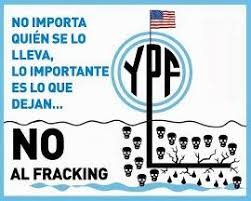
"... In Argentina, only a very limited number of local environmentalists and the Mapuche Indians are fighting against it. "Although we have a right to be heard according to the law, we are not even informed when an oil company occupies our land," said Jorge Nahuel, coordinator of the Mapuche Confederation. "Today, earthquakes are part of everyday life," says Hernán Scandizzo from the Petroleum Observatory in the South. "The government of Neuquén and the (national oil company) YPF ridicule the criticism of fracking. They refuse to discuss it. If they do talk about it, then only about what happens on the surface of the earth when the houses collapse. But they keep quiet about the consequences of these earthquakes on the underground pipe system." (…) As the earthquakes became more frequent, Professor Javier Grosso began to compare the data with the activities of the oil companies."…" - from theReport “Argentina: the end of fracking?” by Gaby Weber on February 25, 2020 at telepolis  about Argentina’s alleged new El Dorado and the long disputes surrounding this “project”…
- Gas for Germany brings destruction to Argentina: “Germany needs gas” and Patagonia pays the price.

“Interview with representatives of the affected population during their visit to Germany
Patagonia. The federal government has received a preliminary request for a state, unbound financial credit guarantee (UFK guarantee) for a planned project to promote liquefied natural gas (LNG) in the Golfo San Matías in Patagonia. Its “eligibility” has now been confirmed. Such UFK guarantees protect lenders of raw material projects abroad against political and economic risks ( Amerika21 reported). According to Urgewald, the guarantee could secure the supply contract between the German state energy company Sefe and the Argentine company Southern Energy, which provides for two million tonnes of LNG per year over eight years from the end of 2027.
Deutsche Bank is also involved in a $2 billion loan for pipelines that will bring gas and oil from Vaca Muerta to the Gulf. At the invitation of Urgewald and the Argentinian organization Farn, Ana Victoria Domínguez Britos, José María Musmeci and Natalia Di Giacomo traveled to Germany in September. The aim of their trip was to inform politicians and banks about the consequences of the project…”Interview by Lilith Mić from October 4th, 2026 in Amerika21 - Dead whales for German gas in Argentina: Liquefied natural gas terminals in Patagonia financed by German lenders threaten an entire ecosystem
"Numerous marine mammals are regularly observed in the Golfo San Matías. The construction of gas terminals and anchorage points for six huge transport ships could have a destructive impact on an important ecosystem and a huge impact on climate change. (…)
Germany has been importing liquefied natural gas via floating LNG terminals for around four years. LNG stands for “Liquefied Natural Gas” and currently reaches German households via northern Germany mainly from the USA, where it is obtained through fracking. With the beginning of the war between Russia and Ukraine, the Federal Republic began to look for alternatives to Russian gas deliveries. Now a similar trend is emerging through tensions between the USA and Europe. In this context, the German state energy supplier Sefe has reached an eight-year supply agreement with the Argentinean group Southern Energy to import LNG from 2027. The German federal government must now decide whether it wants to grant an unbound financial credit guarantee (UFG) for the necessary expansion of the infrastructure in the Golfo San Matías in Patagonia, as the German NGO Urgewald reports. Urgewald assumes that Deutsche Bank is behind the preliminary inquiry about the UFG: It is already significantly involved in a loan worth two billion US dollars for an oil and gas pipeline that is to run from the gigantic Vaca Muerta fracking area to the coast of the Golfo San Matías - in the same region in which the LNG delivery infrastructure for the aforementioned LNG business for Sefe is being built, according to a press release from the NGO. Meanwhile, there is protest in Argentina. The “Golfo Azul Para Siempre” (roughly: “Blue Golf Forever”) campaign was founded in March 2025.As part of the organization Fundación Ambiente y Recursos Naturales (Foundation for the Environment and Natural Resources, Farn), it campaigns against the expansion of the infrastructure at the port of Punta Colorada and against the construction of two pipelines - one for oil and one for gas - from Vaca Muerta to the Atlantic. One focus of their work is to influence potential lenders for the projects. (…)
Not only would Argentina become dependent on fossil structures and exports for decades. The main problem for the campaign is the excessive environmental degradation that would come with floating gas terminals, increased shipping traffic and potential oil and gas leaks. The gas would have to be liquefied for transport. This would happen in large, floating tanks into which cold seawater would be fed and then returned to the sea at a higher temperature after the process. Six terminals are being planned for this purpose. This is not only critical when it comes to global warming. It is a problematic undertaking for an ecosystem with great biodiversity: animals worthy of protection live in the Gulf, such as right whales, Magellanic penguins, dolphins and seahorses, which regularly come to the Gulf to reproduce. (…)
Biologist Mariano Sironi from Foro Mar Patagónico has known some of the whales for years. They often come to the Gulf to mate and raise their young because there are few ships sailing there. If the port were to be expanded to accommodate the huge container ships that transport oil and gas around the world, this would put an end to the marine paradise: increased underwater noise pollution and collisions between ships and whales would be the result. This often means the death of large marine mammals. A possible solution is a lawsuit that Farn has filed against the companies involved: Southern Energy, Pan American Energy, YPF, Pampa Energía, Harbor Energy and Golar LNG…” Post by Annabelle Köchling in Amerika 21 on August 18, 2026 - Out of sight, out of mind: Germany secures access to Argentine fracking gas – ecological and social consequences on the other side of the world
"The federal government wants to further increase the import of fracking gas. Liquid natural gas (LNG) is to be imported from Argentina from 2027. The local state-owned company Securing Energy for Europe (SEFE) concluded a contract with the Argentine consortium Southern Energy at the beginning of December. Deliveries of up to two million tons of LNG are planned annually over a period of eight years. The contract volume is around seven billion US dollars. From Berlin's perspective, the deal is part of the strategy to move away from Russian gas To permanently solve energy deliveries, the first major LNG export contract is intended to bring urgently needed foreign currency. The Federal Republic of Germany is not only accepting environmental destruction in Patagonia, but is also strengthening the government of the authoritarian head of state (…)
The deal has a political and ecological downside. The Argentine LNG, which is intended to help utilize the hastily constructed terminals on the North and Baltic Sea coasts, comes from the “Vaca Muerta” shale gas field in the Patagonian province of Neuquén – one of the largest “unconventional” gas deposits in the world. Funding is carried out there using fracking, a technology that is largely banned in Germany. The gas will be transported to the Atlantic coast via new pipelines and processed in floating liquefaction plants in the Gulf of San Matías. The first plant, the LNG ship “Hilli Episeyo”, is scheduled to start operations at the end of 2027, with a second to follow in 2028. From there the tankers should set course for Europe. The intensive expansion of oil and gas production - also pushed by the previous Argentine government - has turned the country from a net energy importer into an exporter. But the price for this is high.
During fracking, millions of liters of water, mixed with chemicals and sand, are pressed into the ground per drilling hole. This has serious consequences in the arid region of Patagonia: residents have been reporting for years about contaminated ground and drinking water, increasing earthquakes, cracks in house walls and declining harvests. Indigenous communities of the Mapuche, on whose territory large parts of the funding take place, are particularly affected. They defend themselves against land grabbing, environmental destruction and the displacement of entire village communities, but are increasingly encountering state repression. In July 2025, tens of thousands demonstrated in the provincial capital Neuquén against the planned relocation of around 2,000 Mapuche. Government and oil industry representatives reject the criticism and declare fracking to be essential to the national economy…”Article by Volker Hermsdorf in the Junge Welt from December 30, 2025 - “Fracking – Earthquake in the Belly of the Dead Cow” by Gaby Weber on February 16, 2020 on You Tube
 is set, is the film on the subject, which is presented as follows: “Gold rush atmosphere in Patagonia. Neuquén is considered the new El Dorado, the Saudi Arabia of South America. The world's largest oil deposits are said to be here, in Vaca Muerta, in German: the dead cow. What is meant is shale oil. 12,000 drilling rigs are planned. El Dorado in Patagonia – or is it all just a big bluff to delay the end of the fossil fuel era? There is fracking in Vaca Muerta. From the vertical boreholes, which are up to 6,000 meters deep, horizontal tunnels extend up to 4,000 meters in length. Up to a hundred per well. Entire layers of earth are perforated. Water mixed with chemicals is injected at high pressure to break up the rock…”
- “Protests against fracking in Patagonia” by Magdalena Kuehne on September 2nd, 2013 at Amerika21.de reported back then, among other things: “…Thousands of demonstrators gathered last Wednesday in front of the parliament building of the northern Patagonian province of Neuquén in the capital of the same name. They were protesting against the planned ratification of a contract between the Argentine state oil company YPF and the US multinational energy giant Chevron. Members of the CTA (Central de Trabajadores de la Argentina) trade union headquarters and left-wing parties, activists in social movements, students and teachers of the University of Comahue and representatives of indigenous groups loudly reminded the people's representatives of the negative attitude of a majority of the population to the plans for large-scale exploitation of oil reserves in the region using the risky and environmentally destructive extraction method “fracking”. While MPs debated and voted inside, the police massively attacked the demonstrators on the street using tear gas and rubber bullets...”
On the topic, see first: Everyday life in Argentina.Article by Gaby Weber, Buenos Aires, January 22, 2014
The postFracking in Argentina: Let the earth shakeappeared firstLabourNet Germany.
Read the full story at the source
Source: labournet.de