
World · labournet.de · · 1h
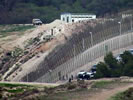
The European Wall in the Spanish exclave of Ceuta: successfully stormed again
Deutsch (original) · Auto-translated to English
dossier
Last week, around 500 refugees from sub-Saharan Africa managed to overcome the European wall in the Spanish exclave (read: colonial possession in Africa) of Ceuta. The short oneVideo film “Cientos de subsaharianos entran en Ceuta”, on February 16, 2017 by Faro TV on You Tube 
 posted shows their arrival and - last but not least - the joy of successfully overcoming it and seeing friends or family members again. That is the difference between the EU and Trump. He wants to build a wall at the border, the EU is building fortress walls “in enemy territory”… See the background and other “stormings”:
- For the Spanish government, the treatment of minors in Ceuta will be a litmus test as the last bastion of a humane migration policy.”

"... While in Spain the initial focus was on a possibly intentional failure of Moroccan border controls, in the rest of Europe the focus was on Madrid's role in the common migration policy. In just a few days, the border crisis turned into a European dispute over direction.
Italy's right-wing Prime Minister Giorgia Meloni made the impact. As early as July 31, Rome introduced controls for third-country nationals entering from Spain, citing risks to Italy's national security. Spanish Prime Minister Pedro Sánchez responded with a sharp letter to EU Commission President Ursula von der Leyen, in which, in addition to the "solidarity-based immigration policy", he also emphasized his country's effective border protection and called for an emergency meeting of the EU interior ministers. Almost at the same time, 22 EU states, led by Italy and Denmark, criticized Spanish migration policy as a possible “pull factor”. In its letter, the group primarily referred to a regulation that was internationally perceived as the linchpin of Spain's special approach to migration. In the spring, the left-wing coalition decided on an extraordinary legalization for people who had been living in Spain for a long time without regular residence status. Around 600,000 applications had been approved by the end of the deadline.
With a return coach at the beginning of August, the confrontation also continued on a symbolic level: Spanish border officials at ports and airports now asked people arriving from Italy for their documents. The confrontation between the post-fascist Meloni and the social democrat Sánchez could hardly be staged more clearly than with mutual controls. But the scenario changed faster than the strong images suggested.
Two weeks later, when social media mobilized again for a massive border crossing, there was no way through. Not only Morocco had sent thousands of security officers to the region on August 15th to secure the surrounding area, Spain had also significantly upgraded: armored army vehicles were available at the El Tarajal border crossing, and boats from the military and the Guardia Civil, Spain's militarily organized national police, patrolled the coast. The country under Sánchez's left-wing government has rarely presented itself in such a martial manner. She had already sharpened her tone significantly in the previous days. Foreign Minister José Manuel Albares announced that any migrant who crossed the border irregularly in Ceuta would be deported. (…)
In doing so, the government also sent a domestic political signal. Hardly any other issue sparks political polarization in the country as quickly as dealing with irregular migration, especially with underage migrants. According to the UN Convention on the Rights of the Child and Spanish immigration law, unaccompanied children and young people may only be returned to their families and their country of origin if they can be adequately cared for there. A case-by-case assessment is necessary for this. According to authorities, in Ceuta the police had registered 2,168 unaccompanied children and young people by August 18th. (…)
The radicalization of the discourse shows parallels to the isolation trend in large parts of Europe and the USA, but also has a specifically Spanish background. Spanish authorities have been aware of the phenomenon of children and young people traveling alone since the early 2000s, but have not developed a strategic response for a long time. This created a chronic problem. (…)
For Spain's government, how it deals with minors is becoming a litmus test. Will the country continue to examine cases on a case-by-case basis or will the left-wing coalition sacrifice its moral standards in order not to endanger its reputation within the EU? At the moment, only Youth Minister Sira Rego from the smaller coalition partner Sumar seems to be sticking to the current course. (…) The more Spain defines its role as a reliable partner in protecting the EU's external border, the more difficult it will be to maintain its self-description as the last bastion of a humane migration policy. This is the moral price of Spain’s foreign policy renaissance.” Article by Julia Macher from »Blätter« 9/2026(“Sacrificed Humanity: Spain to Ceuta”) - Protests and hostility are exacerbating the situation in Ceuta - Mission Lifeline: Where states fail, we act - Help us - help the people of Ceuta!
- Protests and hostility are exacerbating the situation in Ceuta: While demonstrations against the government's course are taking place across the country, refugees and their helpers are coming under increasing pressure
"In view of the situation in Ceuta, tens of thousands of people demonstrated at nationwide rallies for the North African exclave to belong to Spain and against the government's migration policy in Madrid. Participants and speakers accused the central government of Prime Minister Pedro Sánchez of an appeasement policy towards Morocco and a lack of aid for Ceuta. (...) In Ceuta, under a sea of Spanish flags, thousands of people demanded a return to normality and the exclave remaining with Spain. "Ceuta is selling “Don’t, Ceuta won’t surrender,” read banners. (…) Private aid organizations such as the German Mission Lifeline have also reported hostility in Ceuta. “I have already been verbally threatened with death,” said the head of the organization from Dresden, Nolte Bauer, to the German Press Agency. (…) According to Spanish media reports, locals accuse the helpers of only attracting more people with their help. As an example, the Spanish media reported that Mission Lifeline enabled refugees to charge their cell phones. The local aid organization “Luna Blanca” also reported that massive pressure had been put on them to no longer provide people with food. The Spanish Red Cross was partially prevented from delivering food by demonstrators. Bauer emphasized that humane treatment of refugees does not trigger a pull effect, but is simply the implementation of applicable law. (…) The rallies on the day of the regional holiday in Ceuta were called by the umbrella organization FEMP of Spanish municipalities, which is led by the conservative opposition People's Party PP.The right-wing populist Vox also took part in the demonstrations. “Ceuta is Spanish and will not be left alone,” said Mayor José Luis Martínez-Almeida. (…) In some cities, such as Barcelona or Bilbao, there were counter-demonstrations in which participants spoke out against racism. “No human being is illegal,” read the banners there.” Report from September 3, 2026 in MiGAZIN - Mission Lifeline: Where states fail, we act - help us - help the people of Ceuta!
"Hello dear supporter, when we set off for Ceuta at the beginning of August, we had the hope that we could not only help the stranded people, but also contribute to easing the situation there. Because it was clear that a city with only 80,000 inhabitants cannot easily support thousands of people in need of protection. The fact that Ceuta is left alone by European politics and there is almost no government aid is a scandal. That's why we are there and support local ones NGOs were able to distribute food, provide blankets and mats for girls and charge hundreds of cell phones every day. With the support of #LeaveNoOneBehind, we now have a truck on site for this purpose, and we can charge up to 300 cell phones on the beach every day (…) But the situation in Ceuta is getting worse: there have already been serious attacks on refugees during right-wing demonstrations, and our team has also repeatedly tried to burn down the huts The place is threatened and insulted, someone tried to slash our tires, they didn't get deep enough, but the traces are there. Right-wingers are spreading lies about our work. We also experienced hostility from the military. Our team members, who have already worked in active war zones, find the situation in Ceuta to be more unpredictable and dangerous because you can't rely on anything: not on the local population, not on the authorities, not on the military Refugees are the target of hatred, especially at night.Injured children are brought to us in the morning with pepper spray in their eyes or clear signs of blows and bruises. We also receive reports of police violence when serving food. There is no way out for the refugees in Ceuta - they are defenseless against the attacks. The authorities must finally consistently protect people seeking protection from organized right-wing violence. We demand that all refugees be brought to safety on the European mainland immediately. Protecting these people must be the top priority!” Solidarity call from Mission Lifeline from September 2026
- See also the call for donations “SOS from Ceuta – we support on site“by Mission Lifeline on August 12, 2026
- See also the call for donations “SOS from Ceuta – we support on site“
- Protests and hostility are exacerbating the situation in Ceuta: While demonstrations against the government's course are taking place across the country, refugees and their helpers are coming under increasing pressure
- Thanks to an invasion of right-wing extremists, after 4 weeks Ceuta is divided by racist agitation and open violence, including against those who help the migrants
- False images, real racism. Ceuta after four weeks: the mood turns into open violence
“After the arrival of tens of thousands of people from Morocco, Ceuta is overwhelmed. Within a few weeks, right-wing extremists took advantage of the situation: rumors, racist agitation and anti-Muslim sentiment spread. The tense atmosphere turns into open violence. (…)
What happened next is more than a story about overwhelmed authorities and an unresolved migration issue. Within a few weeks, an increasingly heated atmosphere developed in Ceuta. In some places, protests against crisis management turned into protests against the refugees themselves. Racist and Islamophobic resentments spread, and rumors and false information increased fear. At the end of August the mood finally turned into open violence. The protests were initially by no means uniform. Many residents criticized the Spanish government in particular and felt Madrid had left them alone to deal with the situation. At the beginning of August, representatives of Christian, Muslim, Jewish and Hindu communities also took to the streets together. They demanded support and a quick political solution for the overwhelmed city.
Rights take advantage of the situation
At this point in time, however, a second development emerged. Right-wing and extreme right-wing actors tried to use the situation for their political messages. The arrival of the refugees was portrayed as a threat to Ceuta and Spain. Some people spoke of an “invasion”. Right-wing extremist activists traveled to the city, but initially encountered considerable resistance. Among other things, Muslim residents of Ceuta opposed attempts from outside to divide the population along religious and ethnic lines. But the mood remained tense. The longer refugees stayed in the small exclave, the more often conflicts over their accommodation arose. (…)
At the same time, part of the dispute shifted to social networks and private messenger groups. Reports circulated there about alleged crimes committed by refugees, about upcoming new accommodation or supposed special rights. Some claims turned out to be false, but they still heated up the mood in the wake of the algorithms. Spanish media also documented how images and videos from other countries were distributed as alleged recordings from Ceuta. Scenes of riots or armed people that had nothing to do with the situation in the Spanish exclave were presented as evidence of the supposed danger of the newcomers. Some of the images reached an audience of millions. (…)
Over the course of August, the heated debate increasingly turned into mobilization on the streets. According to research by Spanish media, WhatsApp groups were created in individual neighborhoods in which residents exchanged information about refugees and agreed to take part in joint actions. Partly it was about keeping them out of certain areas or driving them out.
Those who help are themselves targeted
Shops and restaurants were also targeted. Lists of shops that were accused of selling refugees food, giving water or allowing them to charge cell phones were circulating in groups. Aid organizations were insulted and portrayed as part of the problem. The line between rejection of migration and open racism was increasingly crossed.
This was particularly evident in the fact that the hostility was soon no longer directed exclusively against the newly arrived people. Muslim residents of Ceuta were also targeted. This is particularly important in the city. A large part of Ceuta's population is Muslim. (…)
Muslim Spaniards reported insults and attacks. People were mistaken for refugees because of their appearance. A Muslim resident has been asked to return “to her country” – even though Spain is her country, according to media reports. A journalist was also attacked after apparently initially being mistaken for a newly arrived migrant. This gave the racist mobilization a clearly Islamophobic dimension. It was no longer a person's residence status that mattered, but rather their supposed origin and religion. People perceived as North African or Muslim increasingly became common enemies. (…)
At the end of August it was no longer just words. Demonstrators initially tried to stop Red Cross vehicles that were supposed to provide refugees with food and water. Journalists were insulted, harassed and sometimes attacked while doing their work. There were aggressive protests in several neighborhoods.
In the end the camp burns
On Thursday evening the situation finally escalated on Benítez Beach, where refugees had been waiting in a makeshift camp for weeks. Demonstrators set fires and repeatedly threw objects into the flames. The refugees retreated to a pier. Police separated them from the demonstrators. (…)
Frontex is intended to provide relief - the social conflict remains
Madrid has therefore now asked the EU border protection agency Frontex for support. Ten additional officers will help register the remaining people more quickly and subject their cases to an initial review. The EU Asylum Agency should also provide support with interviews and interpreters. The government is therefore faced with two tasks at the same time: It must find a legally and humanitarian solution for several thousand people. And it must prevent the situation from developing into a social crisis in which refugees and Muslim Spaniards become enemies.”Report from August 30, 2026 in Migazin - Migration to Spain: Violent protests in Ceuta
“Right-wing extremists who have traveled from Spain are fanning the flames of discontent among the population in Ceuta. In Madrid, pressure is growing on Prime Minister Sánchez.
“Ceuta is not a reception camp,” is one of the slogans that has been heard repeatedly at protest marches in the Spanish exclave for days. Since exactly a month ago around 70,000 people coming from Morocco swam around the border fortifications and literally overran the garrison city with just over 80,000 inhabitants, Ceuta has not been able to calm down. Although the majority of refugees left the city voluntarily in the following days, a minority remained. Some say 2,000, others say up to 10,000. Spain's government says it does not have exact figures. “This is not immigration, this is an invasion,” the demonstrators chant at the protests, which now take place daily. These are not always peaceful. Violent right-wing extremists who have traveled from the rest of Spain have mingled with the residents of Ceuta. Last Wednesday they burned down the immigrants' self-built huts on the beach, threw their belongings into the sea and prevented the Red Cross and other aid organizations from handing out food and drinking water to the immigrants. Some residents get carried away by these groups…”Article by Reiner Wandler from August 30, 2026 in the taz online - Hackers “gift” Europe data from 70,381 Moroccan secret service agents
““Jabaroot" implemented the threat and published data on secret agents who are said to be spying for Morocco throughout Europe. Moroccan secret service agents are also said to have been in charge of the "Ceuta Invasion". Jabaroot could be a Moroccan Snowden who could operate from Germany. There is now a threat to leak operational orders for the attack on the Spanish exclave of Ceuta a month ago…”Article by Ralf Streck from August 31, 2026 in overton-magazin.de
- False images, real racism. Ceuta after four weeks: the mood turns into open violence
- “Ceuta is a story about a different future” – and about the EU economic interests that are not being discussed
- After Ceuta, the main focus was on how Morocco exploited migration. But not about the EU economic interests that made this possible.
“…Numerous politicians are using the opportunity to call for a further tightening of border guarding - even though the European Union has been investing millions of euros annually in Spanish-Moroccan border security around Ceuta for decades and it could hardly be more heavily guarded.Some experts interpret the events as the instrumentalization of migration to enforce geopolitical interests, in particular the international recognition of Morocco's illegal claims to sovereignty over the occupied Western Sahara.In terms of realpolitik, there is a lot to be said for this view, even if it ignores what makes this “instrumentalization” possible in the first place: a deeply racist, deadly system of unequal freedom of movement, the causes and consequences of which include experts from those affected and aid organizationsOpen letter on the occasion of the World Social Forum in Beninanalyze. The indifference towards the at least 150 deaths that this European border regime has once again caused is shockingly obvious.
Clear violation of the law
As a lawyer, I am particularly outraged by the little-discussed fact that most people who came to Ceuta were sent back to Morocco more or less immediately and without individual examination. The Spanish authorities clearly violated the current legal situation under EU and international law.The so-called reasons for fleeing are discussed far too rarely in sufficient depth. People who want to come to the European Union, both from Morocco itself and from other regions of Africa, do so because life in their countries of origin is made unbearable for them - through armed conflicts, climate change, environmental destruction and exploitative working conditions. (…)
The causes of the escape
So while we in Europe built our economic development and thus our prosperity on fossil fuels and the exploitation of natural resources in the former colonies of Africa, these states are now not only bearing the consequences of colonial exploitation, but also the burdens of the climate crisis.
They have contributed only minimally to global greenhouse gas emissions, while European economic interests continue to exacerbate ecological crises, enable exploitation and fuel armed conflicts. Just one example: In order to extract natural gas, the French company Total allegedly took part in war crimes in Mozambique.
European governments are also preventing a fair design of the global economy, in which wealth could be distributed fairly and African governments would be able to deal with the challenges of the climate crisis. A strong coalition of African states is pushing for a global tax agreement currently being negotiated at the UN. It would allow them to adequately tax multinational companies, especially for the extraction of raw materials. Germany and the EU are against it. (…)
Isolation instead of foresight
So instead of pursuing a fair and forward-looking global economic policy and introducing a progressive global tax regime, the EU prefers to invest millions in agreements with governments in Morocco, Tunisia, Egypt and Libya. So that they then use violence and repression to prevent people from reaching the EU.
European border security is increasingly shifting to the African continent and is being subsidized with billions in EU money. Once again, it is European companies that are making a lot of money with this upgrade and mechanization of the EU's external borders…”Guest commentary by Miriam Saage-Maaß from August 23, 2026 in the taz online - “Ceuta is a story about a different future.” It was not just the fake news on social media that caused the Ceuta crisis
"For me, Ceuta is not just a Spanish city on the Moroccan coast, but part of my own history. This is also why I look at the events of July 30, 2026 differently. Unlike most of the media that reported on them. I tried to reach Ceuta in 2018 after being deported from Europe. Again, I was looking for a way out, fleeing the persecution and homophobia in Morocco, where same-sex relationships are prohibited Ceuta promised me a life of safety as part of the LGBTQ+ community. So I understand the desire to reach the exclave. Nor is it new for thousands of Moroccans.
The Spanish authorities in Ceuta and the Moroccan security forces always responded with violence. They committed pushbacks, beat the migrants and deported them to the southernmost corner of Western Sahara. Presumably with the aim of tiring them out until they eventually give up. But the migrants kept coming back. If you fail, you just wait for the next opportunity. Security forces beat them almost to death? They leave, hide, wait, try again. (…)
At the beginning there is a message: “Urgent! Confirmed report from Ceuta: Moroccan migrants are no longer being deported, but are being accommodated in centers - both young and older people. A message that makes thousands feel like a door is opening. The news is based on a real court decision. The Spanish Supreme Court had dealt with so-called “devoluciones en caliente”, the immediate and summary rejection of migrants who are intercepted at sea while trying to reach the exclaves of Ceuta and Melilla. Spain has not ordered that it has to open its borders. Nor is there a right to stay for those who have already reached Ceuta. (…)
Newspapers speculate that the USA or Israel could be behind the false news on social media. The Spanish government took a stand on the war in the Gaza Strip and recognized the state of Palestine. In this narrative, the migration movement of July 30th becomes a kind of punishment for Spain. There is no evidence of this. The right and the extreme right are trying to exploit the events. They move the discussions away from questions of economic inequality, a lack of freedom and asylum - towards questions of national security and threat defense. In an already charged debate, Ceuta becomes a symbol. More border controls, more toughness, higher fences. (…)
Ceuta is a story. She tells about people who have no future in the place where they were born. Of trying to leave a country that has failed them. The news that circulated on social media is only a small part of this story. And no matter who was behind the news: it didn't trigger this migration movement, it just awakened a dormant force. It was enough hope for thousands of people to swap their everyday lives for a journey to the borders of Ceuta and Melilla and into the unknown. The European Union considers Morocco to be a safe country. It pursues economic and security policy interests, which it values more highly than theoretical considerations about the importance of human rights. But just as for me and thousands of others Ceuta is not just a Spanish city on the Moroccan coast, for us these considerations are not just theoretical, but a formative part of our lives. Higher fences will never change that.” Essay by Badr Saameli in the translation by Lukas Tobler in the WOZ of August 20, 2026(Badr Saameli fled Morocco twice and is now, among other things, an activist with Queer Arab Solidarity, which relies on donations)
- After Ceuta, the main focus was on how Morocco exploited migration. But not about the EU economic interests that made this possible.
- Colonial order was restored on Ceuta (“tomatoes are allowed to travel, workers are not”) – up to 5,000 people who remained behind in a precarious situation between the helpful local population and the police
- Colonial order: tomatoes are allowed to travel, workers are not. Ceuta is not a Spanish industrial accident, but rather the result of the European division of labor.
“Morocco produces for Europe, but even employees of this model economy want to leave. Their flight points to an asymmetrical order that Europe helped create.
When more than 50,000 people from Morocco crossed the border into the Spanish enclave of Ceuta at the end of July 2026, the vocabulary of a siege dominated the European headlines: “onset”, “invasion”, loss of control. The cameras showed broken fences. They rarely showed the society from which dock workers, hotel employees and craftsmen emerged. At least 72 people lost their lives in the crush or in the sea.This was a Moroccan border crisis, not an African invasion rolling in from the Sahel. Interviews with workers from Fez or the port of Tanger Med contradict the comfortable European image that only completely impoverished people make the journey. Many of them had jobs. What they were missing was the prospect of being able to build a life for themselves through this work.
Beyond the border, even this hope quickly disintegrated. There was no route from Ceuta to mainland Spain. Instead, the Spanish authorities deliberately made food and infrastructure scarce. The logic of this attrition tactic is fatally reminiscent of instruments such as the German payment card for asylum seekers. The voluntary return of tens of thousands of people promised by Madrid became a forced return. (…)
Morocco has long been exporting more than tomatoes and phosphates. The country has worked its way into more sophisticated production chains. In 2025, just over half of EU imports from Morocco were machinery and transport equipment.
But this modernization produces growth without social development and opens up only limited opportunities for social advancement. While the working-age population is growing rapidly, there is a significant lack of jobs that provide a living wage. Foreign corporations control the lucrative end of the value chains. At the same time, the income remaining in the country is concentrated in networks that are close to the royal palace.
This in no way relieves Europe of its responsibility. The colonial-influenced economic system geared Morocco's infrastructure primarily to the needs of the European centers. The monarchy adopted this external orientation and adapted it to the requirements of securing its own power. Europe's structural economic power and Rabat's internal power order mesh seamlessly. (…)
The massive export of tomatoes in a drought-stricken country also effectively means the export of millions of liters of so-called virtual water. This refers to the water that is required for the cultivation and production of the exported products. The ecological and social consequences are borne primarily by small farmers and people in inland regions.At the same time, these producers are competing with a European agricultural economy that is protected by the state through billions of euros in subsidies. The Moroccan “cost advantage” is therefore based to a significant extent on low wages and the excessive use of natural resources.The tourism industry functions similarly asymmetrically. The European holidaymaker lands in Agadir and is welcomed as a courted guest. The Moroccan waiter, whose wages are not enough to support his family, appears to be a security problem in Ceuta.
The bouncer as co-owner of the door
The European partnership organizes the freedom of movement of goods, capital and travelers from the global north down to the last detail. On the other hand, they treat the freedom of movement of Moroccan workers like a military threat. In return, the EU pays Morocco as a bouncer and outsources part of its border protection to the North African country.
This strategy of externalization reveals the contradictions of European migration policy. Externally, Europe speaks of partnership. In practice, it is pursuing increasingly tough isolation, which is primarily understood as a security policy..”Article by Kiflemariam Gebre Wold from August 6th, 2026 in Migazin - Over 140 dead in Ceuta: Europe is betraying its humanity
“…At the same time, the extreme right in Spain - as well as organizations from other European countries, not least Austria and Germany - also took a position and tried to use the situation for their own benefit. Without further ado, celebrities from the movement traveled to Ceuta to spread hate locally and online.Protests against this are forming among the local population. Even if many of them seem overwhelmed by the acute situation, they want to defend Ceuta as a city in which different religions and people live together peacefully. (…)
Meanwhile, the situation on site remains challenging. Although the majority of people have returned across the border to Morocco, the supply situation for those who remain behind is extremely precarious and characterized by hunger. Local authorities estimate that there are between 3,000 and 5,000 people still in the city, including at least 860 unaccompanied minors. The people who often faced death while crossing the border are left alone. According to media reports, humanitarian aid is sparse.
There is little information about how exactly the return of the many thousands of people was organized and whether asylum applications could be made. The organization No Name Kitchen, which is active in Ceuta, reports that those affected were threatened with beatings. Journalists observed violent actions by the Spanish police to drive people out of Ceuta. The desolate supply situation may also have played an important role…”Per asylum notification from August 6th, 2026
- Colonial order: tomatoes are allowed to travel, workers are not. Ceuta is not a Spanish industrial accident, but rather the result of the European division of labor.
- Ceuta: The alleged “threat” posed by 60,000 desperate people has been “repelled”. There remain a nameless 130 (!) dead and a rare but brutal EU unit (except ES, IE, FR, LU and PT)
- Why the EU is opening itself up to blackmail: After the events in Ceuta, a progressive rethinking of European migration policy is needed
“It is not surprising that people are fighting for the right to freedom of movement in a world marked by global inequality and war-torn. This has been evident at various borders for decades. Europe cannot be hermetically sealed off - not even in Ceuta. The fact that the EU regularly falls into panic when people cross borders and want to make use of current asylum laws makes it vulnerable to pressure: be it from Turkish President Erdoğan, Belarusian ruler Lukashenko, the Kingdom of Morocco or the European right.
Between 50,000 and 60,000 people reached the Spanish enclave of Ceuta last Thursday. The Spanish border officials pushed almost all of them back to Morocco, sometimes using force. Not a single person reached mainland Spain.According to the Moroccan human rights organization AMDH, almost 130 people died trying to cross the border, including many children.The scandal surrounding the rejections and deaths does not materialize. Instead, an outdoing competition between anti-migrant positions begins in the European Union in order to tear down the last fundamental rights standards of EU migration policy and international cooperation. (…)
Europe must rethink: Migration is not a threat, but a social reality. If the EU makes itself so open to blackmail by demonizing border crossings, it will enter a never-ending spiral of disenfranchisement. In a globalized world, well-founded freedom of movement policies are needed. Until then, conservative governments would also be expected not to put the rule of law through the meat grinder at every opportunity and to put European partners who invoke European law in the dock.”Comment by Valeria Hänsel from August 3rd, 2026 at medico– We highlight the highest number of victims mentioned so far - Imperialist slaughter at the border: 57 dead, the gas from Algeria and the black hand of the CIA and Mossad behind the mass panic in Ceuta
“What the capitalist media and the fascist far right persistently call an “invasion” is nothing more than a diversionary tactic in an attempt to cover up a planned massacre. In Ceuta we are not dealing with a spontaneous migration phenomenon, but with the forced flight of more than 60,000 people driven into the abyss by a dictatorial regime that abuses its own youth as a political weapon and geopolitical cannon fodder. The stark, bloody reality is that 57 people have already died along the fences and in the waters of the border. Fifty-seven workers' lives have been snuffed out, fifty-seven bodies crying out for justice as the number continues to rise inexorably.
The evidence of this state crime is now indisputable. The leaked images and videos show how the Moroccan police direct, organize and physically push the young people towards the border. No amount of mafia can justify this; it is the Makhzen himself who opens the floodgates of despair. While the Alawite dictatorship carries out brutal repression on its own territory - murdering Sahrawi activists and mercilessly persecuting influencers and dissidents - it is turning people into throwing weapons at the border. And worst of all, the Spanish government, in an act of colonial subservience, refuses to denounce Morocco, cowardly hiding behind the narrative of “alleged mafia groups” so as not to anger their masters. They deliberately ignore that the UN itself condemned Morocco months ago for using migration as a state weapon, but Spanish diplomacy prefers to look the other way rather than defend human life.
However, to understand this barbarity, one must look up and look at the global geopolitical situation. This mass exodus is not a coincidence, but a punishment. The trigger for this bloody retaliation has a name and a surname: Spain's recently concluded strategic agreement to purchase gas from Algeria. US imperialism and its stooge in the Maghreb will not tolerate the Spanish state attempting to secure its energy sovereignty independent of Moroccan interests by strengthening relations with a country that takes a firm stance against imperialist aggression.
In addition to this "sin" in the energy sector, there are other "insubordinations" that are unacceptable for Washington and Tel Aviv: the Spanish government's public declaration of the Zionist massacre in Palestine as genocide and, above all, its categorical refusal to make the military bases in Rota and Morón available for bombing attacks against Iran. Donald Trump and Benjamin Netanyahu do not forgive these affronts. The CIA, Mossad and Moroccan secret services orchestrated this border chaos to destabilize the government, force a change in Spanish foreign policy and show who is in charge in southern Europe.
The strategic context is that of open war. Anglo-Saxon and Israeli imperialism is losing control of the Straits of Hormuz and Bab el-Mandeb, which are crucial to their economic and military dominance. Faced with this debacle, they must secure control of the Strait of Gibraltar with fire and sword. It is no coincidence that politicians and media in Israel are celebrating this setback and rubbing their hands at Spain's humiliation. They play with the lives of peoples as if they were pawns in a macabre game.
And while imperialism settles its scores, the Spanish state refines its death machinery. Recently, the Supreme Court had to remind people that human rights are not suspended at sea, thereby restricting “immediate returns” at sea. The reaction of the right and the institutional right-wing extremists? The President of Ceuta, Juan Jesús Vivas, has already called for a change in the law to create “maritime containment measures”. This is nothing more than a euphemism for calls for floating fences, more militarization and new death traps at sea. The state does not want to guarantee rights; He is looking for loopholes in the law so that he can continue to kill with impunity.
For us at CGT Andalusia one thing is clear: our enemy is not the young Moroccan who is fleeing hunger and dictatorship. Our enemy is in the palaces of Rabat, in the Pentagon, in the Mossad and in Moncloa. Borders are the bourgeoisie's tool to divide the working class and maintain its businesses.
For all these reasons we demand:
1. Immediate severance of diplomatic relations with the Kingdom of Morocco. Stop covering for a dictatorship that drives its people to their deaths. Their police videos are evidence of a state crime.
2. Immediate closure and dismantling of the military bases in Rota and Morón. We will not allow Andalusian soil to serve as a haven for the dirty wars of the United States and Israel against Iran and the peoples of the Middle East.
3. Absolute energy sovereignty. We defend the Algerian gas agreement against imperial blackmail. This country's foreign and energy policy is not being negotiated with either Trump or Netanyahu.
4. Complete repeal of the Aliens Act and end to immediate repatriations. We reject any “containment measures” on land or water. We demand the dissolution of Frontex and the immediate legalization of all migrants.
5. Justice for the 57 victims. Criminal responsibility for the senior political and police decision-makers – both Moroccan and Spanish – who ordered and carried out this massacre.
The truth is brutal, but it is our only weapon. There is no humanitarian crisis without political leaders whose hands are stained with blood. In memory of the 57 victims, in the name of class solidarity and against imperialism.
No one is illegal! Long live the struggle of the peoples!
For the internationalist solidarity of the working class!
Long live the free Sahara!“ Spanish statement of the CGT CGT Andalucía, Ceuta y Melilla on July 31, 2026documented on Laborsolidarity(machine translated), since at theCGT Andalucía, Ceuta y Melilla not online yet - Ceuta: The threat that wasn't
"Most of the Moroccan migrants from the exclave have now returned to their country. Some were no longer able to travel home.
It was described as an "attack" and an "invasion": the crossing of tens of thousands of Moroccans into the Spanish exclave of Ceuta in North Africa. The very smart ones already saw the downfall of the West or the next Islamist terrorist attack in Germany looming through him. In the end, however, all of this turned out to be scaremongering. Or to put it another way: They were primarily fevered fantasies of the political right. The majority of Moroccan immigrants have now returned to their home country.
So what's left after the excitement of the past few days? Three things in particular. First: The route to Ceuta cost the lives of more than 67 migrants. People that hardly anyone is talking about here at the moment, but who should not be forgotten. They show what Europe is for many immigrants: a place of longing that promises a better life, but often cannot keep this promise. And just getting there is dangerous.
Secondly, the events in Ceuta make it clear how poisoned the debate about immigration has become in our country since the AfD and its sympathizers set the pace. (…)Thirdly: We saw again in Ceuta that migration can also be a means of pressure. This is not the first time that Morocco has opened the floodgates to the exclave. Rabat will continue to do so as long as the conflict over the Moroccan-occupied Western Sahara is not resolved in its favor. The dispute over the territory rich in phosphates and fish smolders in the background, as do Spain's economic relations with Morocco's arch-enemy Algeria. This “instrumentalized migration” is not new…”Comment by Christian Klemm from August 1st, 2026 in ND online - “67 people died and Western politicians are foaming at the mouth because others survived“Comment by kami_kadse from August 1st, 2026 on bsky
- A celebration for the enemies of Europe
“The reactions to the state of emergency in Ceuta? Partly fact-free Spain bashing. (…) The migrants who arrived in Ceuta are back in Morocco because the Spanish government made it clear to them that they cannot stay and will not reach mainland Europe. Sánchez himself spoke of an "attack on Spain's territorial integrity" that deserved the "most decisive and energetic condemnation." Is someone who wants to implement “extreme left-wing, globalist policies” talking about how the White House commented on the events in Ceuta? The newcomers were repatriated quickly and unbureaucratically, so exactly what conservative and right-wing parties always demand happened…”Comment by Mark Schieritz from August 1, 2026 in Zeit online - “It may not be part of the mainstream, but we think of the thousands of people who want to flee to Europe for legitimate reasons, and we remember the up to 60 people who were killed, the victims of a European migration policy that is completely indifferent to human lives and fates. #Ceuta“Post from RAV from August 1st, 2026 on bsky
- Pressure on Spain over the situation in Ceuta: 22 EU heads of state and government sign open letter
“Are political decisions in Spain partly to blame for the crisis in Ceuta? A letter from several European leaders suggests that the signatories see it that way. Among them is Chancellor Merz. (…) In the letter, the signatories warn that political measures must be considered that could provide incentives for migration - and explicitly mention the "legalization of a very large number of irregular migrants" in Spain. A few months ago, the country initiated the legalization of around 500,000 irregular migrants as a measure to combat the labor shortage. However, asylum seekers who submitted their application before the end of 2025, not new arrivals, should benefit from this.
Spain and four other countries do not sign
The letter also makes a connection between the stampede and a ruling by the Spanish Supreme Court. This was "used to trigger this attack and abuse our migration and asylum system." The court had ruled that the immediate rejection of migrants is only permissible if they have overcome a fence or other barrier when crossing the border irregularly. For people who reach Ceuta or Melilla by sea, an individual case assessment is necessary. (…) Italy's Prime Minister Giorgia Meloni and Denmark's Prime Minister Mette Frederiksen initiated the letter, and 22 European heads of state and government signed it. In addition to Spain and Ireland, France, Luxembourg and Portugal have also not signed. (…) Instead of increasing the pressure on Morocco because of the refugee drama in Ceuta, many EU partners attacked Madrid…Agency report from August 1st, 2026 in Spiegel online - Ceuta: Global right rejoices
“Rabat has repeatedly opened its borders to the Moroccan enclave of Ceuta in order to put pressure on Madrid and Brussels.
The matter was clear in 2021, but it is not yet clear in 2026. In May 2021, the Moroccan border police opened the door to Ceuta and more than 8,000 Moroccans passed through. The background was diplomatic tensions with Madrid over the status of the former Spanish colony of Western Sahara, which was occupied by Morocco. The Spanish government gave in and recognized the Moroccan claim. In the subsequent migration agreement, Morocco committed itself to guarding the border facilities and accepting Spain's “hot deportations”.
Why the Moroccan border police watched in 2026 is speculation. Because Spain plans to grant the residents of Western Sahara citizenship rights, because Spain wants to intensify economic relations with its arch-enemy Algeria, because Morocco's King Mohammed VI. wanted to do his friend Donald Trump the favor of showing off his enemy, Spanish Prime Minister Pedro Sánchez? Everything is possible, but none of it has been proven yet.
What is certain is that the migration crisis in Ceuta is playing into the hands of the right. (…) Rabat has repeatedly opened its borders to the Moroccan enclave of Ceuta in order to put Madrid and Brussels under pressure. It worked time and time again. Brussels and Madrid would have the opportunity to free themselves from this blackmail. In the short term, this would mean creating legal and temporary access to European labor markets for many - instead of dangerous and illegal access for the few who make it into the EU fortress alive. In the medium term, this will not work without a common, solidarity-based refugee, trade and development policy. This is less in sight than ever.”Comment by Martin Ling from July 31, 2026 in ND online - Left demands acceptance of migrants from Ceuta
“Germany and the EU are obliged to look after the immigrants in Ceuta and to take in those seeking protection, says Left Party Vice-President Clara Bünger. Interior Minister Dobrindt and Chancellor Merz have a different opinion.
Germany should not leave Spain alone and take in immigrants from the exclave of Ceuta, demands Die Linke. “What is happening in Ceuta is not a natural disaster, but the result of political decisions,” explained parliamentary group deputy Clara Bünger. »People are fleeing war, poverty and the climate crisis. Higher walls don't stop them, they just make the escape more deadly. What matters most now is that no one dies anymore,” explained Bünger. People need to be provided with medical care, water and a safe place…” A voice too rare in theAgency report from July 31, 2026 on spiegel.de - For political background see also:
- Dossier:Solidarity support for Western Sahara is growing - as is that of German companies (especially Siemens) for Morocco's occupation
- Dossier:Morocco's youth protests: "We have football stadiums, where are the hospitals?"
- And our entire Interventions section » Asylum, labor migration and anti-racism » Asylum law and refugee policy »Fortress EU
- Why the EU is opening itself up to blackmail: After the events in Ceuta, a progressive rethinking of European migration policy is needed
- Thousands of (young) people from Morocco try to reach the Spanish exclave of Ceuta by swimming - countless drown and survivors are welcomed by right-wing mobs
- Escape to Ceuta: Thousands of people try to reach the Spanish exclave by swimming - often with fatal consequences
“In the past few days, more than 1,500 people have tried to swim from Morocco to reach the Spanish exclave of Ceuta. Among them were around 200 minors. Many come from the kingdom itself, but there were also people from sub-Saharan Africa. An unknown number of children drowned while trying to reach the city on the North African coast near the Strait of Gibraltar.
According to the Guardia Civil, six bodies washed ashore over the weekend alone. According to them, 60 people have drowned near the border fence since the beginning of the year. The city now no longer has any free capacity in facilities for unaccompanied minor refugees. No official figures were published by the Moroccan side. The right-wing liberal online newspaper El Confidencial, which has been closely following developments at the border for years, reported on this.
The recent increase in arrivals is linked, among other things, to a Supreme Court ruling three weeks ago. TheDaily newspaper eldiario.es spokeof around 700 people who came by swimming on Sunday alone and were cared for in an improvised Guardia Civil arrival center. Hundreds are said to have initially run away from there for fear of being deported again. Until the said verdict, around 2,000 people, mostly minors, are said to have come to Ceuta since the beginning of the year. In the past few days there have been an average of around 300 per day.
According to the ruling, security forces are not allowed to immediately turn back the migrants if they swim to the city. Pushbacks at sea are therefore not permitted. On the beach of Tarajal, where most people swim to reach Ceuta, at least 15 migrants died in 2014 when Guardia Civil forces used rubber bullets against people. Juan Jesús Vivas, regional president of Ceuta from the post-Franco Popular Party (PP), now called on the Social Democratic central government in Madrid to declare a state of emergency for "national security reasons" and to deploy the military on the border between Morocco and Ceuta to use. However, Prime Minister Pedro Sánchez refused. The Interior Ministry emphasized that the arrival of people presented a challenge, but did not justify declaring a state of emergency. Spain has a system for distributing unaccompanied minors among the different regions of the country. However, the very regions where the PP and the extreme right-wing Vox rule are trying to block this system…”Article by Carmela Negrete, Sevilla, in Junge Welt from July 31, 2026 - Morocco is once again using its population in Ceuta for blackmail
“Young Moroccans in particular have stormed the Spanish exclave of Ceuta, where 80,000 people live. It is estimated that 50,000 people gained access to “Europe” first by swimming and then by tearing down fences. The authoritarian kingdom has repeatedly successfully used its own population as a means of pressure against Spain and the EU. He will again receive far-reaching concessions…”Comment by Ralf Streck from July 31, 2026 on overton-magazin.de - Spanish exclave: Thousands of migrants reach Ceuta – military operation
“In the past few days, thousands of people from Morocco have arrived in Ceuta, Spain. The local authorities are overwhelmed.
After a rush of migrants to the Spanish North African enclave of Ceuta, the government in Madrid sends in the military. The Interior Ministry announced in the evening that three trains with 20 soldiers each, a diving unit and a military ship should be relocated by Friday. In addition, the special police units are to be increased to 200 officers.
Previously, numerous people from Morocco had come to the city and overrun the Spanish Guardia Civil police authority. Video footage showed hundreds of migrants crossing the sea with swimming rings or breaking through gates in the border fence.
According to the state television broadcaster TVE, between 2,000 and 3,000 mostly young people arrived in the enclave. The state news agency EFE also reported that many migrants had climbed over the border fence. Just last week, according to regional authorities, more than 1,500 migrants came to Ceuta by swimming. The situation in the city with around 85,000 residents is tense and many shops remain closed. Shop owners said they organized to protect their property because they believed police forces were inadequate…”Agency report from July 30, 2026 at t-online with a video - Chaos after an attack on the EU borderBrutal scenes in Ceuta: Mob attacks men
“Hundreds of people are streaming from Morocco to the Spanish exclave of Ceuta, which is on the African mainland but belongs to the EU. The government in Madrid is sending soldiers. Even before the military arrives, mobs practice brutal vigilante justice in the streets.”Video from July 31, 2026 on n-tv.de - “Anyone who sees “brutal invaders” in this photo instead of overjoyed young people has something very wrong with them. And we need to talk about that.
We have become so used to the fact that right-wing parties and media frame public discourse with their narrative that we no longer object. However, this consolidates them and ultimately results in inhumane legislation. Proven.
What really happened in Ceuta: Thousands of people, most of them very young, have tried to escape poverty and lack of prospects in North Africa in the last few days. Many people managed to get to Spain, but some died trying.
Young people are dying at the European Union's external borders because they want to escape the misery into which they were born. You can't do anything for this ticket in the birth lottery. Instead of helping them and preparing them for immigration, we abandon them.
This is not only inhumane, it is also completely nonsensical. We need immigration in Europe, very urgently. But we have to shape them. That's exactly what doesn't happen. Instead, thousands of deaths are accepted.
Despite all the criticism of the existing system: let us not forget our humanity. And let us not forget that it is only by pure chance that we were born on this side of the Mediterranean and they were born on the other side.”
Post by Sebastian Bohrn Mena on July 31, 2026 on bskye.gu a photo (Young people cheer after they managed to get to Europe across the sea. Photo: Antonio Sempere/AP/dpa)
- Escape to Ceuta: Thousands of people try to reach the Spanish exclave by swimming - often with fatal consequences
- Ceuta/Spain: 54 minors from Morocco reach EU soil by swimming. Time and time again, people dare to make the dangerous journey to Spain's North African exclave; the reception capacity is overloaded
"A total of 54 minors swam from Morocco through the Mediterranean to the Spanish North African exclave of Ceuta. They were mostly Moroccans, reported the Spanish state TV station RTVE. Rescue workers were on duty all night and the following day to rescue swimmers from the sea. The route from Morocco to Ceuta through the sea is between 300 and 500 meters long. Television images showed how some of the minors were also in one There were initially no reports of any deaths. While adults are usually quickly deported, unaccompanied minors are allowed to stay - at least until they are 18. However, the reception capacity is overloaded and the regional government asked the government in Madrid to bring young people to the mainland (...) According to the UN refugee agency UNHCR, almost 20,000 people have arrived in Spain so far this year “Ceuta.” Report from July 28, 2025 in MiGAZIN - Military against refugees. Morocco refuses to serve as EU gatekeeper. Thousands of people arrive in the Spanish exclave of Ceuta. Madrid sends police and army
“…The government in Madrid sent 200 police and paramilitary Guardia Civil officers to North Africa on Tuesday and also deployed the military. Videos on the Internet show armored vehicles on the beach in Ceuta, helicopters circling and police arresting arrivals to take them to a stadium. From there, they will be deported as quickly as possible. In the morning, Spanish Interior Minister Fernando Grande-Marlaska said 2,700 people had already been sent back to Morocco. Spain apparently doesn't bother examining asylum applications. However, many deportees were able to return immediately along the coastline to Ceuta due to a lack of controls. The daily El Faro de Ceuta spoke of an “endless queue of people” on their way to the exclave. Around a quarter of those seeking protection are minors. Grande-Marlaska assured that their rights would be respected. They are housed in a completely overcrowded camp until their age is determined. The Red Cross of Ceuta has already stated that it is hopelessly overwhelmed. The situation threatened to escalate on Tuesday afternoon: there were clashes between Moroccans and the police within the city area. Along the border fence, Spanish police fired tear gas at people, who in turn threw stones. El Faro de Ceuta published a video showing Spanish uniformed men with batons beating men back from a pier into the sea…”Article by Ulla Jelpke in the young world from May 19, 2021and:
- Thousands swim to Ceuta – to the EU. Morocco is temporarily stopping controls on EU exclaves and allowing migrants to pass through
“Faced with the arrival of thousands of migrants from Morocco, authorities in the Spanish North African exclave of Ceuta have begun accommodating the adults in a stadium. They should then be returned to Morocco, the Ceuta newspaper “El Faro” reported on Tuesday. Around 300 of the arrivals have already been deported. At least 5,000 migrants reached the Spanish North African exclave of Ceuta from Morocco on Monday. The Moroccan police have effectively stopped controlling the border, Spanish media reported, citing eyewitnesses in Fnideq. (…) Around 1,500 of the migrants who arrived were minors, wrote the Ceuta newspaper “El Faro”. At least one person drowned. The situation is chaotic, the exclave's reception center is completely overcrowded and many of the migrants are wandering around the city with 85,000 inhabitants. The Spanish military in Ceuta offered logistical assistance and increased protection of its own facilities. The central government in Madrid announced the deployment of 200 additional police officers. (…) Many Moroccans in the area around Ceuta and the other Spanish North African exclave Melilla have lost their jobs and income since Morocco closed the border to the two areas in March 2020 due to the corona pandemic. People who otherwise worked in the exclaves repeatedly demonstrated for an end to the closure. On April 26th, 128 Moroccans had already reached Ceuta by swimming. Most were soon deported to Morocco. This time too, it is expected that many of the migrants could soon be returned…”Report from May 18, 2021 in the ND online - Morocco makes Erdoğan. Kingdom uses unilateral border opening as a means of pressure against Spain and the EU
“It is a behavior that has been known from Turkish President Recep Tayyip Erdoğan, but also from Morocco for a long time: both countries use refugees and migrants to put pressure on the EU or individual countries in order to assert their own interests. This time Morocco has opened its gates wide open: control over the beaches near the Spanish exclave of Ceuta has been suspended. This cleared the way for thousands of people to reach Spanish territory on Monday. Since word of this spread quickly in Morocco, numerous people came to Ceuta on Tuesday. (…) Meanwhile, on the Spanish side, in addition to the national police and the paramilitary Guardia Civil, the military was also deployed on the beach in Tarajal. Armored personnel carriers guard the area and helicopters circle above. The security forces bring people back to Moroccan territory, but they immediately try their luck again. It is also reported that Spanish border guards were pelted with stones by those wanting to migrate. Spanish authorities have begun accommodating adults in a stadium in Ceuta in order to bring them back to Morocco…”Article by Ralf Streck, San Sebastián, from May 18, 2021 in ND online
- Thousands swim to Ceuta – to the EU. Morocco is temporarily stopping controls on EU exclaves and allowing migrants to pass through
- War against refugees in “Spanish exclaves”: Bloody, but once again unsuccessful
As is well known, the wall has been in place for a long time in Spain's exclave of Ceuta - a well-equipped deterrent against the deadly moat, which nevertheless very often works less and less. In theReport “Injured in the storm on Spanish Ceuta” on August 1st, 2017 on tagesschau.deit says: “African migrants from Morocco repeatedly try to cross the border fence in the Spanish exclave of Ceuta into the European Union. At least 14 people have now been injured again. According to local police, 200 refugees took part in the attempt. Around 70 managed to get into the exclave and thus into the EU. The Spanish Red Cross tweeted that numerous people were taken to hospitals with cuts and broken bones" – which is reported again and again. But the numerous comments are also worth reading
Read the full story at the source →
Source: labournet.de