
Politics · Labour Hub · · 3h
The Scottish Labour Party risks becoming irrelevant
English (original) · Read in Deutsch ⇄
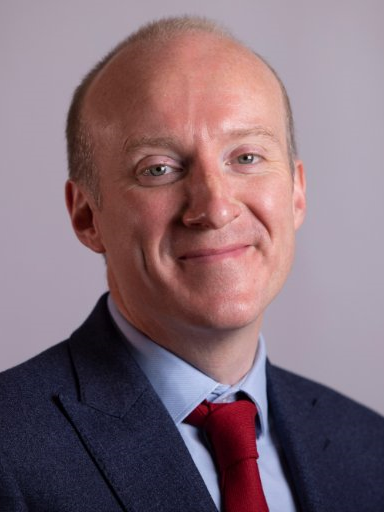
Michael Marra’s election as leader is unlikely to bring about the changes needed, argues Vince Mills.
From a left perspective, it is difficult to be positive about the future of the Scottish Labour Party (SLP), after the election on Saturday of its eleventh leader since the reconvening of the Scottish Parliament in 1999.
Although Michael Marra was the nominal winner, the largest number of Scottish Labour Party members voted for neither Marra nor his defeated opponent Joe Fagan. They simply did not vote: Marra received 4,266 votes, compared to Joe Fagan’s 2,485, with less than half of the party’s declining membership voting.
Worse still, just 5% of affiliate members voted. This is hardly surprising, given that Monica Lennon, the favoured candidate of the two largest affiliates, Unite and Unison, did not receive enough nominations from Scottish Labour MPs to get onto the ballot paper.
Marra’s message to members on his victory, was full of the usual platitudes: “Under my leadership, Scottish Labour will be the campaigning force for social justice in this country again. Ending child poverty, raising education standards, good jobs, good public services, and the good life for working people – not worrying about a holiday once a year or a pint once a week.”
Given Labour is in opposition in the Scottish Parliament with the same number of seats as Reform – 17, against the 58 seats held by the SNP – there is an obvious limit to what can be achieved there. However, the SLP could take a different approach to campaigning altogether and get involved with the unions and community groups fighting for all the things Marra mentioned in his speech and a few more, like decent housing, publicly owned transport, fair rents, ending austerity and a free Palestine. But that would mean seeing the SLP as more than a party whose sole purpose is electoral success, achieved by convincing the majority of voters that the SLP will manage existing economic and social structures better than the SNP – not challenge them.
Marra did talk about the need to re-engage with unions and communities, but with the kind of engagement offered by polling organisations: “We will take Labour into every Scottish parliamentary region, holding open assemblies that bring together local people, workers, community organisations, businesses, trade unions and public servants. We will ask what matters in their lives and places. Then we will do something too rare in politics: we will publish what Scotland told us, select issues raised by citizens for formal parliamentary action, and report honestly on what we achieve.”
This is not mobilising communities and workers for change. It is demobilising them in favour of, at best, limited actions of amelioration in the Scottish Parliament. Changing Scottish Labour, therefore, will be all the more difficult because the agenda offered by Marra will be of little, if any, interest to those who want to challenge the deep inequalities of Scottish society. The Scottish Labour left is going to have to continue to work outside the SLP in the many organisations challenging austerity, inequality and imperialism if it wants to win allies for making Scottish Labour a force for change and not conformity.
Otherwise, in the words of one the pollsters, Mark Diffley, that Marra would like to emulate: “The party has become a bit of an irrelevance, and I think that is the biggest hurdle that they face going forward.”
Vince Mills is a member of the Red Paper Collective.
Image: Michael Marra https://commons.wikimedia.org/w/index.php?curid=146295366 “Michael marra msp cropped” by Scottish Parliament is marked with CC0 1.0.
Read the full story at the source
Source: Labour Hub