
Politics Labour Hub
The 2026 Senedd election: what went wrong in the last year?
Mike Hedges reflects six months after Labour’s big losses in the Walsh elections. I am writing this six months after the Senedd election when I have had time to think and reflect. This is a personal r
English (original) ·Read in Deutsch ⇄
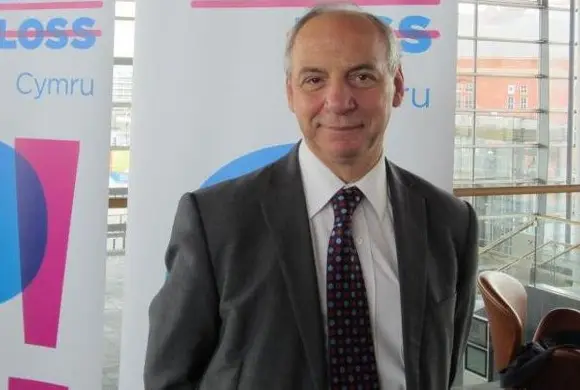
Mike Hedges reflects six months after Labour’s big losses in the Walsh elections.
I am writing this six months after the Senedd election when I have had time to think and reflect. This is a personal reflection from someone who was a successful candidate in Gwyr Abertawe.
In 2024, Labour won 27 of the 32 Welsh Westminster parliamentary seats and a very large majority.
The 2026 Senedd election result was nothing short of catastrophic for Welsh Labour, moving from 30 out of 60 members in 2021 to nine out of 96 at the 2026 election. Anyone who campaigned would have heard two things:
No matter what Welsh Labour had done they would have lost – but the result was made worse by Senedd activity.
The key posts of Cabinet member for Finance and Health were left with retiring members. When issues arose in these areas, there was no Minister able to plan for the future. We gave the initiative to Plaid Cymru and Reform. Other posts held by retiring members were the Economy, Children and Social Care, Delivery, and Social Justice. When you go into an election led by a Cabinet, many of whom are retiring, then you are planning for failure.
One of the last bills to pass in the sixth Senedd was the Planning Consolidation bill. Worthy as that may have been, using up precious legislative time on this was a waste of time and resources, and most importantly a wasted opportunity.
We had no housing bill, no animal welfare bill, no water pollution bill and no social care bill. We were not enthusing the electorate and the bizarre idea that the manifesto would put everything right was proven wrong.
There was no structure or plan in the pre-election period. There was a need for a consistent message – the idea that you could have a message a week was never going to work.
The areas where we were strong, such as environment, animal welfare and housing, were either completely ignored or dealt with superficially. There was a lack of boldness, and where we were bold, such as microchipping cats, was hidden in the middle of the manifesto.
The leaflets were all national, until we produced and printed a local leaflet. The one endorsement leaflet from someone we had never heard of was a waste of a leaflet. We did not sell the candidates; we had local candidates who were well known but we did not push it.
While their campaigns were not successful, the Green party, Conservatives and Liberal Democrats all promoted their lead candidate. Plaid Cymru and Reform, aided by TV, promoted the election as a two-horse race. Even before votes were counted in this year’s Senedd election, speculation was rife that one campaign narrative had firmly taken hold: that the contest had become a two-horse race between Plaid Cymru and Reform UK.
While the media were not solely to blame for Labour’s decline, analysis of election coverage found that more than one in four TV news items featured an opinion poll, often framing the contest as a battle between two parties. On UK-wide bulletins, that figure rose to more than half. In the final week of the campaign, almost half of all TV news items referenced a poll.
Both parties promoted that framing during the campaign, urging voters to see the election as a straight choice between them.
The campaign plan was based on a mass canvass of the new constituency. Areas and voters were chosen using an app which had previously good Labour areas not covered and historically poor areas targeted.
When canvassing, if one in four households answered the door, that was a successful area visit. In Swansea, from 2025 to the week of the election, our support hovered around 40%. That was not good by historical standards but did not predict the election result that followed.
On polling day, those who had said yes earlier in that week, wished us luck but said they had to vote for Plaid Cymru to stop Reform.
Opinion polls were very poor throughout the election, especially You Gov polls. You Gov admits online market research has come under increasing attack by fraudsters in the past several years. YouGov informed the Bible Society that the 2024 survey sample on which their report The Quiet Revival was based was faulty. Over a fifteen-month period, the Bible Society repeatedly sought and received assurances from YouGov, regarding both the robustness of the methodology and the reliability of the report’s conclusions until they apologised and said they had got it wrong.
The final result mirrored the You Gov polls, but I believe it was the polls that drove votes rather than votes being reflected in the polls. The failure to use Survation or More in common for constituency polls was a huge error of judgement which must not be repeated.
On polling day, we heard: “I hope you get elected but I have just voted Plaid Cymru to stop Reform”; “Sorry I could not vote for you – it was important to stop Reform”; “Best of luck but I have to vote Plaid Cymru to keep Reform out.”
After the election, we heard: “I am glad you got elected but I voted Plaid Cymru – I could not risk letting in Reform”; “You know I always vote for you but I had to vote Plaid Cymru to stop Reform”; “Sorry, but I wanted to stop Reform becoming the Government”; “I could not risk Reform winning.”
Mike Hedges is the Senedd Member for Gŵyr Abertawe.
Image: Mike Hedges. Author: Steve Cushen, licensed under the Creative Commons Attribution-Share Alike 3.0 Unported license.