
Politics · Labour Hub · · 3h
Sweden’s right wing government resigns
English (original) · Read in Deutsch ⇄
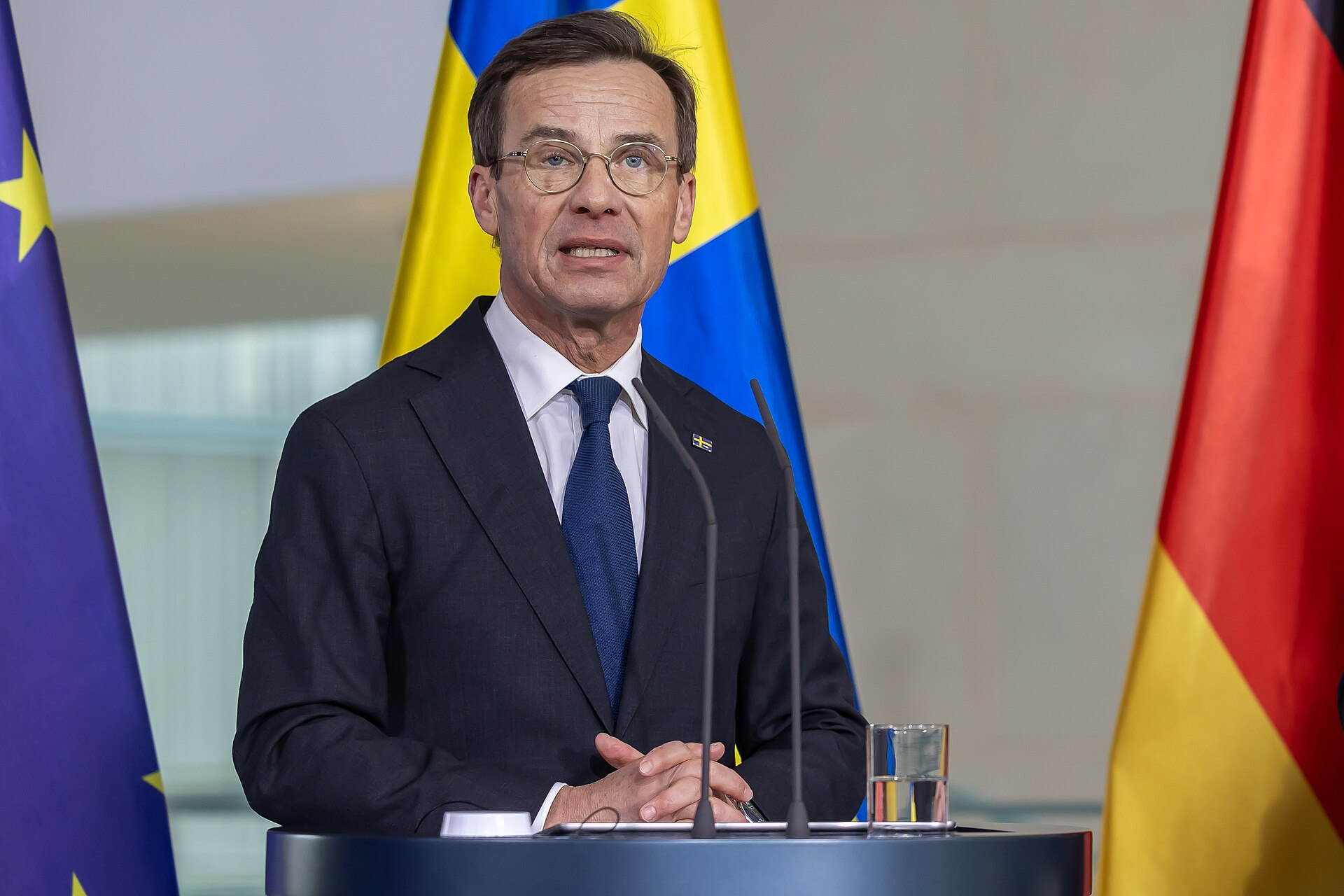
September 13th’s nail-biting election saw the centre-left inch ahead, but it is still unclear what kind of government the country will get. Göran Kärrman reports.
On Thursday September 17th, Ulf Kristersson, Prime Minister of arguably most right wing government in Sweden’s modern history, handed in his resignation. Since 2022 Kristersson has headed a government consisting of three right wing outfits in alliance with the extreme right wing party the Sweden Democrats (SD). The SD was newer a part of the government proper, but was in fact its major player, since it was the largest party of the right.
From the outset, the government’s politics was built on scapegoating. Unemployment, lack of housing, poverty and crime were all blamed on immigrants, first and foremost Muslim immigrants.
The smallest party in this cabal, the Liberals, stated that its role was to ensure that the SD never entered the government. That position soon changed, so much so that in the last couple of weeks of the election campaign the Liberals, on 2% in the polls (4% is needed to enter Parliament), told everyone that the only way to secure a right wing government, this time including the SD, was to vote for the Liberals!
The largest party in Parliament, the Social Democrats (SAP), supported nearly all of the ant-immigration policies put forward by the government, which to a large extent were tailored by the SD. This also applies to the ‘tough-on-crime’ programme which includes lowering the age for going to prison to 14 years old(!). Consequently, the election campaign was all about blaming immigrants.
Since Kristersson took office, the opposition have had a constant lead in the polls. The SAP, which got slightly more than 30% in the election of 2022, registered poll numbers of 35-36%, almost approaching its heyday when its numbers where in the 45% range. Over the last year, however, we have seen a slow but steady decline for the Social Democrats in the polls. There are many reasons for that decline, but there are two main ones: their support for the right wing parties’ anti-immigrant agenda and their inability to form an opposition bloc that could support a programme of reforms for the benefit of the working class.
Even worse, their stated aim was to form a ‘broad coalition’ – with some leading party members even wanting to form one with the Moderates of Ulf Kristersson, the traditional party of the bourgeoisie in Sweden.
On the left of the SAP there are two parties, the Left Party (V) and the Greens (MP). All governments in Sweden headed by the SAP, since 1945, has had the support in one way or another of the V, or its forerunners, the Communist Party and Left Party of Communists, sometimes more organized but never in the government. The MP, which is a relative newcomer, has been in office with the SAP as a junior partner.
For more than a year, the Left Party has openly stated that any government that needs support from the left has to accept including their party in the government. It has gone so far in its ‘remaking’ in order to be accepted by the SAP that it now supports record spending for the military, supports NATO and willingly goes along with right wing media smears and lies that portray activists in solidarity with the Palestine people as ‘antisemites’. They even expelled two members of Parliament and lost a third.
This has not ended the SAP leadership’s resistance to including V in a future government. The fourth party of the opposition, the Centre party (C), broke with the right wing parties in opposition to their anti-immigrant policies and their cooperation with the SD. But is by far the most right wing and neo-liberal party when it comes to economic policies. The C, for its part, say that they will not support a government that includes the V.
September 13th’s election produced a few surprises, first and foremost in the first election defeat for the SD. It tanked more than 3% and lost its position as the second biggest party to Kristerson’s Moderates.
The second surprise was that the other main losers were the Social Democrats who, with 28%, had their worst election since universal franchise was introduced more than 100 years ago.
All other parties made gains. The V was the biggest winner, gaining 1.8%, up to 8,4%. But it was a closer call than most people had expected – only a three seats margin in favour of the opposition.
One does not need to be a political scientist to understand that the formation of a new government headed by the SAP will not be an easy task. From a left point of view, a government led by the SAP in coalition with one or more right wing parties would in essence be a continuation of the Kristersson period, with the exception that the SD no longer have the veto on its policies.
There is a lot more that can be said about the shift to the right in the political landscape, including the Left Party, the openly racist rhetoric from the right wing and some Social Democrats, and a lot more will be said in the coming period. But for now we have to be satisfied with the resignation of Kristersson and his government.
Göran Kärrman is a political activist based in Stockholm.
Image: Ulf Kristersson https://commons.wikimedia.org/wiki/File:Ulf_Kristersson_Bundeskanzleramt_2025.jpg Author: Dr. Frank Gaeth, licensed under the Creative Commons Attribution-Share Alike 4.0 International license.
Read the full story at the source
Source: Labour Hub